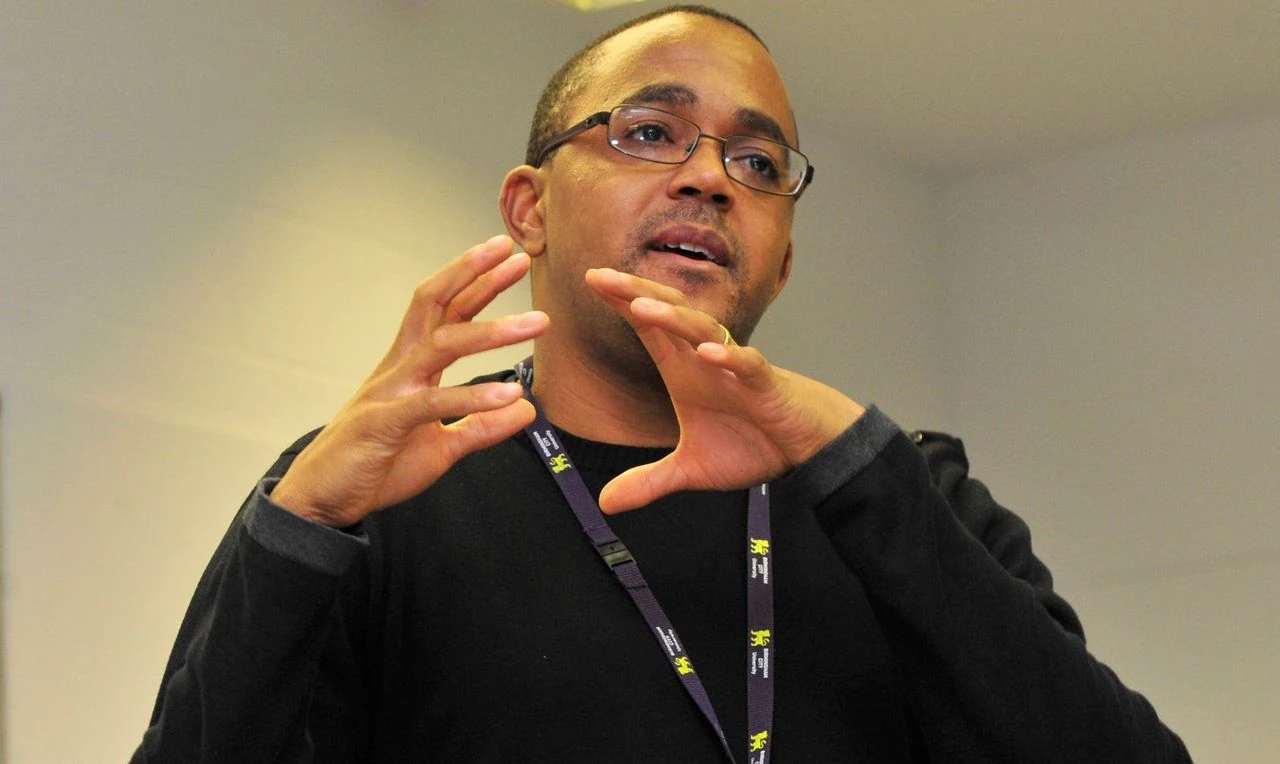
At Birmingham City University, Kehinde Andrews helped give Black Studies a formal place in British higher education. He became the United Kingdom’s first professor of Black Studies and led the establishment of Europe’s first undergraduate programme in the subject, launched in 2017. The distinction was more than a first: it created a degree through which students could study Black history, politics and experience as a sustained field, rather than encountering them only as part of other subjects.
That institutional work sits alongside a career in research, publishing, public commentary and community education. Andrews studied the Black supplementary school movement, wrote about Black radical politics and the continuing effects of colonialism, and helped build organisations and platforms for research and learning. His subject is not detached from Britain: it includes the country’s education system, imperial history and public debate about race. The significance of his work lies both in the arguments he has made and in the places he has helped create where those arguments can be studied and discussed.
Making Black Studies visible in Britain
Birmingham City University announced in 2016 that it would offer a degree in Black Studies, with teaching due to begin in September 2017. The university described it as the first degree of its kind in Europe. Its stated scope included the histories, social movements and contributions of people of African descent. Andrews helped develop the case for treating these questions as a field of study in their own right.
A dedicated course does more than gather relevant material under a new heading. It gives students a structured way to study a subject and makes room for teaching and research to grow around it. Black Studies examines how history and knowledge are shaped: which experiences enter a national story, which are sidelined, and how colonialism, migration, education and inequality relate to one another. At a British university, a degree in the field made those questions part of formal higher education.
Andrews grew up in Birmingham, the city where the programme took shape. The setting mattered: Black intellectual traditions could be studied in a British institution, in relation to British life, rather than treated as belonging only to another country or academic system. Andrews’s career repeatedly returns to that connection between ideas and institutions. Schools, universities and public debate are not simply places where arguments about race happen; they help determine which histories and perspectives receive attention.
His professorship and the degree represent related but distinct milestones. Andrews was the first Black Studies professor in the United Kingdom; at Birmingham City University he also led the creation of Europe’s first undergraduate programme in the subject. One established a recognised academic position, while the other provided an organised course of study. Together they made Black Studies more visible within British higher education.
The programme’s later history is a reminder that recognition does not guarantee permanence. The supplied article reports that Birmingham City University’s undergraduate Black Studies course closed in 2024 and that, in May 2026, the university planned to close its Black Studies MA. It also reports that Andrews was among staff then at risk of redundancy. A later account of his employment status in the supplied Wikipedia revision differs, so this feature does not state whether he was ultimately made redundant. The reported course closures are relevant in their own right: establishing a field and securing its long-term institutional support are separate challenges.
Education, research and structural questions
Andrews’s academic work began with education, before his best-known media appearances. He completed a PhD in sociology and cultural studies at the University of Birmingham in 2011. His thesis, Back to Black: Black Radicalism and the Supplementary School Movement, joined two themes that would remain important in his work: Black radical thought and the educational activity of communities.
His first book, Resisting Racism: Race, Inequality and the Black Supplementary School Movement, examined community-led supplementary schools. These schools developed in response to failures and exclusions in mainstream education. Studying them meant considering not only official systems, but also what communities built when those systems did not meet their needs. It gave Andrews’s work a concrete point of reference: the relationship between institutions and the people who have to find alternatives when those institutions fall short.
That focus helps explain the structural character of his later criticism. Schools and curricula influence what counts as knowledge; universities determine which fields are recognised and supported. The questions extend beyond education to the ways institutions distribute opportunity and decide whose accounts are authoritative. In Andrews’s work, education is connected to wider debates about race and power, rather than treated as a separate administrative matter.
Birmingham City University’s research account credits Andrews’s work with challenging Eurocentric structures in education in Britain and Europe. It says his research contributed to policy discussions at the European Parliament and to an information-gathering session for the United Nations special rapporteur on racism. That account does not suggest that one academic single-handedly changed international policy. It indicates that research rooted in questions of education and Black British experience reached discussions about curriculum and racism beyond the university.
Andrews also connects racism with capitalism, empire, class, labour and political economy. Rather than treating racial inequality only as a matter of individual prejudice, he examines wider arrangements that can sustain inequality. His arguments link schools, the state and global history. Readers may dispute his conclusions, but this recurring connection between institutions and systems gives his writing a recognisable line of enquiry.
Research has been only one part of his academic contribution. Birmingham City University’s Black Studies cluster describes Blackness in Britain as a book series bringing together research on Black experiences in Britain across sociology, politics, cultural studies, education, health and history. A series can provide a shared publishing platform for researchers whose work might otherwise remain dispersed across disciplines. Building a field therefore involves more than producing individual books: it also means supporting ways for scholarship to be published, taught and discussed.
Books and the argument about history
Published in 2018, Back to Black: Retelling Black Radicalism for the 21st Century presents the Black radical tradition as a resource for understanding the present. The book traces Black radical politics from resistance to slavery and colonialism through figures including Marcus Garvey, Angela Davis and the Black Panthers, and on to contemporary activism. Its emphasis is on a continuing political tradition, not simply a set of historical names.
In The New Age of Empire: How Racism and Colonialism Still Rule the World (2021), Andrews argues that contemporary inequality cannot be understood by treating colonialism as a finished chapter. He connects present patterns of power and wealth with imperial history, and links domestic debates about race to a wider global past. The book participates in a broader reconsideration of Britain’s imperial inheritance while insisting that colonialism remains relevant to understanding modern life.
His later books include The Psychosis of Whiteness: Surviving the Insanity of a Racist World (2023) and Nobody Can Give You Freedom: The Political Life of Malcolm X (2025). Their subjects range from racism to Malcolm X’s political life, but they share an interest in how history can illuminate present political arrangements. For Andrews, the past is not simply a matter of heritage or commemoration; it is also a means of interpreting the world now.
Books have also carried his work beyond specialist academic audiences. The supplied publisher biography lists writing for The Guardian, The Independent and CNN; the supplied Wikipedia revision records appearances on the BBC and Good Morning Britain. These outlets have provided settings in which he can address questions of race, colonialism and British identity in public. His presence in those discussions is part of his public work, though it does not mean that audiences necessarily accept his views.
Andrews narrated the 2018 film The Psychosis of Whiteness, described in the supplied Wikipedia revision as examining race and racism through cinematic representations of the slave trade. The same revision records his 2016 criticism of the lack of diversity in university reading lists. Both examples connect media and education to a recurring concern in his work: which histories and perspectives are given space in classrooms, books and public discussion.
Organisation and community learning
Andrews’s career has included organisation-building as well as academic research. Birmingham City University identifies him as director of the Centre for Critical Social Research, founder of the Harambee Organisation of Black Unity and co-chair of the Black Studies Association. These roles connect research and collective activity with the development of Black Studies in Britain.
The Harambee Organisation of Black Unity provides a community setting for education. Its supplied website advertises a six-week Black Studies 101 course taught by Andrews, online and at the Marcus Garvey Centre in Birmingham. It also describes events, membership and the Nicole Andrews Community Library. These details show an educational offer outside the formal degree programme, with learning and discussion taking place through a community organisation.
The different settings have different functions. A university degree offers a sustained academic course; a community class provides another route into the subject. A research centre supports organised scholarly work, an association connects people in the field, and a book series gives researchers a publishing platform. Andrews’s work across these settings is significant because it links teaching, research, publishing, organisation and public learning rather than confining Black Studies to a single institution.
Creating a degree should not be mistaken for a smooth institutional transition. The supplied article reports that Andrews described the strain involved in establishing the programme in a 2021 Guardian profile. This is a reported account, not an independently verified claim. It nevertheless belongs to the account of the work: a new academic field needs people to argue for it, organise it and try to maintain it. The subsequent reports of course closures underline that founding a programme and securing its future are different tasks.
Why Kehinde Andrews deserves a place in British Legacy
Kehinde Andrews deserves a place in British Legacy because he helped change what British higher education could formally teach. As the United Kingdom’s first professor of Black Studies, he held a recognised academic position in a field concerned with Black history, politics and experience. At Birmingham City University he led the establishment of Europe’s first undergraduate programme in the subject. These are specific institutional achievements: a professorship and a course through which students could study Black Studies in a sustained way.
His contribution extends beyond those milestones. His research on supplementary schools examined how communities responded when mainstream education failed them. His books connect Black radical thought and imperial history to present-day arguments about racism and inequality. Through research, publishing, the Black Studies Association and Harambee’s community teaching, his work has helped create settings for scholarship, organisation and learning. Those settings benefit students, researchers and community learners by making room for material and arguments that have often been treated as marginal.
The reported course closures and the conflicting supplied accounts of Andrews’s later employment are reminders that institutional gains can be vulnerable. They do not erase the professorship, degree, books and organisations associated with his work. His British legacy lies in helping establish Black Studies as a subject in a British university and in building routes through which its questions can be studied and debated. His arguments will remain open to challenge. The enduring value of the work is that students, researchers and communities have more opportunity to examine the histories and institutions he has brought into focus.
Sources
Adapted in part from Kehinde Andrews by Wikipedia contributors, under CC BY-SA 4.0. Text has been edited and combined with the existing article; this adapted text is shared under the same licence. Contributor history.