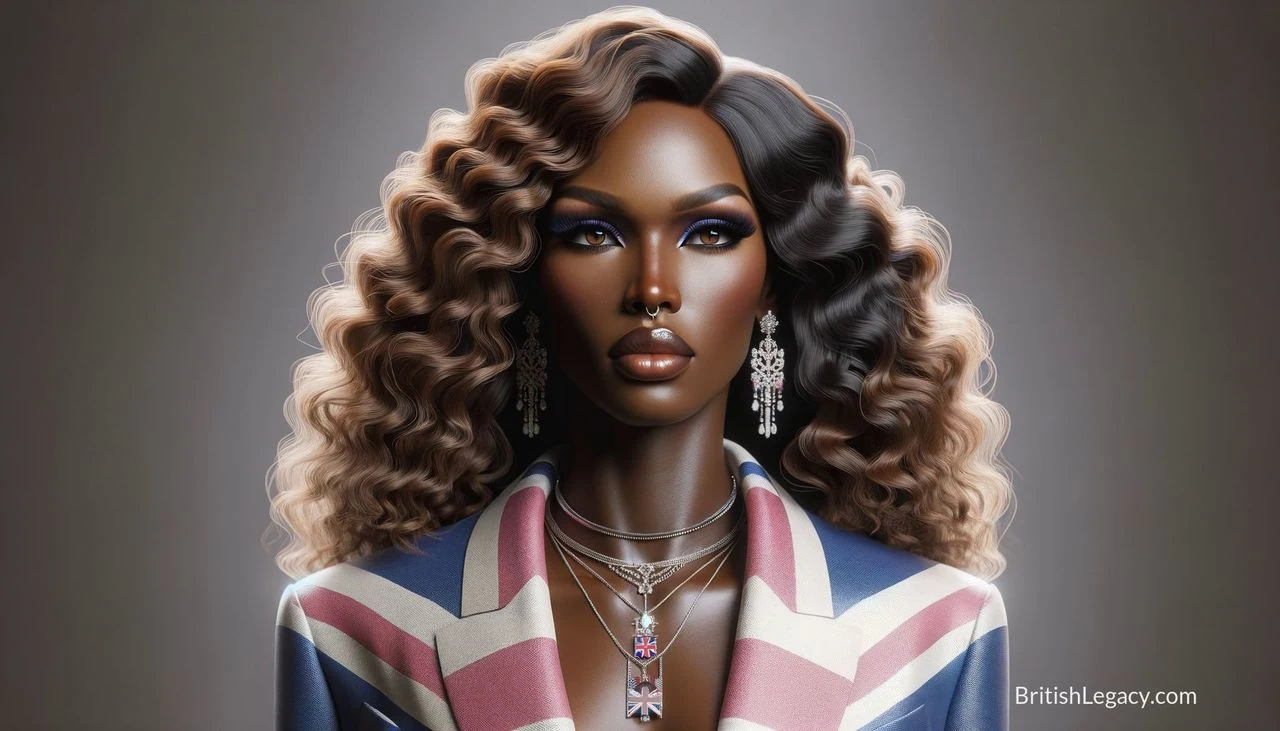
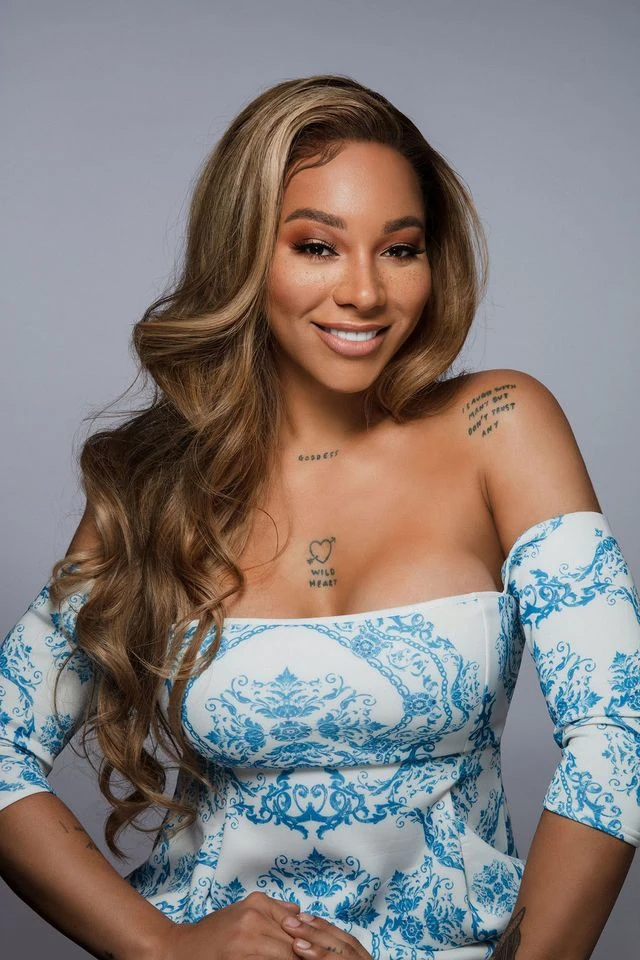
In 2017, Munroe Bergdorf became the first transgender model to front a L’Oréal campaign in the UK. Within weeks, the brand dropped her after a dispute over her comments on racism. The campaign had made representation part of a prominent commercial image; its abrupt end turned questions of inclusion, public speech and media framing into part of the story. Bergdorf’s career has since moved between fashion, activism, broadcasting and writing, bringing her into public debate while also exposing her to intense scrutiny and abuse.
Growing up in Essex and entering fashion
Bergdorf was born on 11 September 1987 in Stansted Mountfitchet, Essex, and grew up there. She attended Bentfield County Primary School and The Bishop’s Stortford High School. She has described herself as a very effeminate boy while growing up. Later, while studying English at the University of Brighton, she described herself as genderqueer. At 24, she began transitioning. Before modelling, she worked for three years in fashion public relations.
Her move into modelling was prompted in part by what she saw as a lack of diversity in the industry. Her first modelling job was for a Lebanese couture company, and she later walked for brands including Gypsy Sport at London and New York Fashion Weeks. In 2014, the London Evening Standard described her as a cornerstone of London’s trans scene. Bergdorf told the paper that she spoke out on trans issues because she saw them as a new frontier in public debate.
The L’Oréal campaign and a dispute over race
In August 2017, L’Oréal UK announced Bergdorf as one of 27 models in its True Match campaign. She was the first transgender model to front a L’Oréal campaign in the UK. Bergdorf said she hoped the campaign might help a young trans girl feel more hopeful about her future. The casting placed a transgender model at the centre of a major beauty campaign, making visibility a part of the brand’s public presentation.
The campaign became entangled in a dispute over comments Bergdorf had made about racism. In February 2017, she wrote that white people as a group were brought up racist and argued that white privilege and success were rooted in the historic exploitation of people of colour. After a Daily Mail article highlighted Facebook comments in which she made broader and more categorical statements about white people, L’Oréal dropped her from the campaign on 1 September. The company said those comments were at odds with its stated support for diversity and tolerance. Facebook also removed her posts, saying they breached its rules on hate speech.
Bergdorf defended her comments as an attempt to explain systemic racism. She said she had been responding to events in Charlottesville and argued that racism involved more than direct acts of hostility. She reported receiving racist and transphobic online abuse during the controversy. Other commentators argued that the newspaper had taken her remarks out of context and that her wider point about white supremacy and privilege deserved attention. The competing accounts are part of the episode’s record: the dispute involved not only what Bergdorf said, but how her words were presented and answered.
In September 2017, British cosmetics company Illamasqua made Bergdorf the face of its Beauty Spotlight campaign, which concerned gender fluidity. The company said it did not accept racism, but believed her comments had been edited out of context. In 2020, during the George Floyd protests, Bergdorf criticised L’Oréal for posting a message of solidarity with the Black community without having apologised to her. L’Oréal announced that it would create a UK Diversity and Inclusion Advisory Board and appoint her to it. Bergdorf shared abusive messages she received after the announcement.
Public advocacy and contested appointments
Bergdorf’s work has extended beyond modelling into political and public-facing roles. In February 2018, she was appointed an LGBT adviser to the Labour Party. She resigned the following month after homophobic and misogynistic posts she had made on Twitter in 2010 received renewed attention, and apologised for her past comments. She later argued that conservative media had used her as a political pawn and said the party’s LGBT advisory board was being targeted. This account differs from the earlier claim that she resigned over transphobic comments by party members: the supplied biographical account identifies the resurfacing of her own past posts as the immediate reason for her resignation.
In May 2018, Bergdorf appeared in Channel 4’s documentary What Makes a Woman. From April 2019, she made frequent guest appearances on ITV’s Good Morning Britain and This Morning. Her public advocacy has included speaking and social-media work about gender identity and racial equality. In February 2021, she deleted her Twitter account, saying that transphobia on the platform made it unsafe for transgender people and that she was tired of enduring abuse.
Some public appointments brought further scrutiny. In June 2019, the NSPCC withdrew Bergdorf’s appointment as a Childline ambassador after questions were raised publicly about her suitability, including claims about modelling for Playboy. Bergdorf denied having participated in pornography and objected to the demonisation of people who do such work. The NSPCC later offered her a full, frank and unreserved apology for how it had handled her dismissal. Its chief executive said the decision had been based on concerns about her public statements and the organisation’s risk assessments. The episode belongs in an account of her public career, but the distinction between allegations, her response and the organisation’s explanation matters.
Bergdorf has also worked with organisations and causes beyond party politics and fashion. In 2019, she joined UN Women UK as an advocate, supporting its campaign to end female genital mutilation. In November 2023, UN Women named her its first UK Champion. She has presented Queerpiphany on MTV UK and hosts the podcast The Way We Are. Her books include Transitional, published in 2023, and Talk to Me, published in 2025. Her documentary Love & Rage premiered in the UK in June 2025.
Recognition, writing and continuing work
Bergdorf received Cosmopolitan’s Changemaker of the Year award in 2018 and was included in the BBC’s 100 Women list in 2020. The University of Brighton awarded her an honorary doctorate in 2019 in recognition of her campaigning for transgender rights. In 2021, she was named British Community Trailblazer at the Gay Times Honours. The following year, she became the first transgender person to appear on the cover of Cosmopolitan, for the magazine’s 50th-anniversary issue. In 2025, Glamour UK featured her among its Women of the Year.
These milestones sit alongside work across commercial fashion, media and activism rather than a single professional track. Bergdorf has challenged a brand publicly, later taken an advisory role with that company, accepted political and charity appointments, and communicated through television, books and a podcast. The disputes and criticism attached to some of these roles resist a simple story of either unopposed progress or controversy. They show how visibility can bring opportunities and recognition while also exposing a public figure to scrutiny over her words, past actions and suitability for institutional roles.
Why Munroe Bergdorf deserves a place in British Legacy
Munroe Bergdorf deserves a place in British Legacy because her career records specific changes and arguments in British public life. Her appearance as the first transgender model to front a L’Oréal campaign in the UK made representation visible within a major commercial campaign. The rapid end of that relationship after her comments on racism exposed the difficulty of reconciling corporate inclusion with disagreement about how racism should be described. Her later appointment to L’Oréal’s UK Diversity and Inclusion Advisory Board, following her criticism of the company, adds a further chapter: public challenge and institutional engagement were not mutually exclusive. These events offer a concrete account of how advocacy, commercial decisions and public pressure can meet.
Her contribution also reaches beyond fashion. Bergdorf has worked in broadcasting, published books, presented and hosted programmes, and campaigned with UN Women UK, becoming the organisation’s first UK Champion in 2023. Those roles have brought discussion of trans rights and racial equality to audiences beyond specialist campaigning spaces. Recognition from the University of Brighton, the Gay Times and other organisations documents the value placed on aspects of her work. Her record includes criticism, difficult disputes and public scrutiny as well as appointments and honours; acknowledging that complexity makes the account more precise, not less significant. For British Legacy, her story matters because it shows how a British-born model and activist has used several public platforms to make questions of identity, representation and equality harder to ignore.
Sources
Munroe Bergdorf — Wikipedia revision 1351007847
Adapted in part from Munroe Bergdorf by Wikipedia contributors, under CC BY-SA 4.0. Text has been edited and combined with the existing article; this adapted text is shared under the same licence. Contributor history.