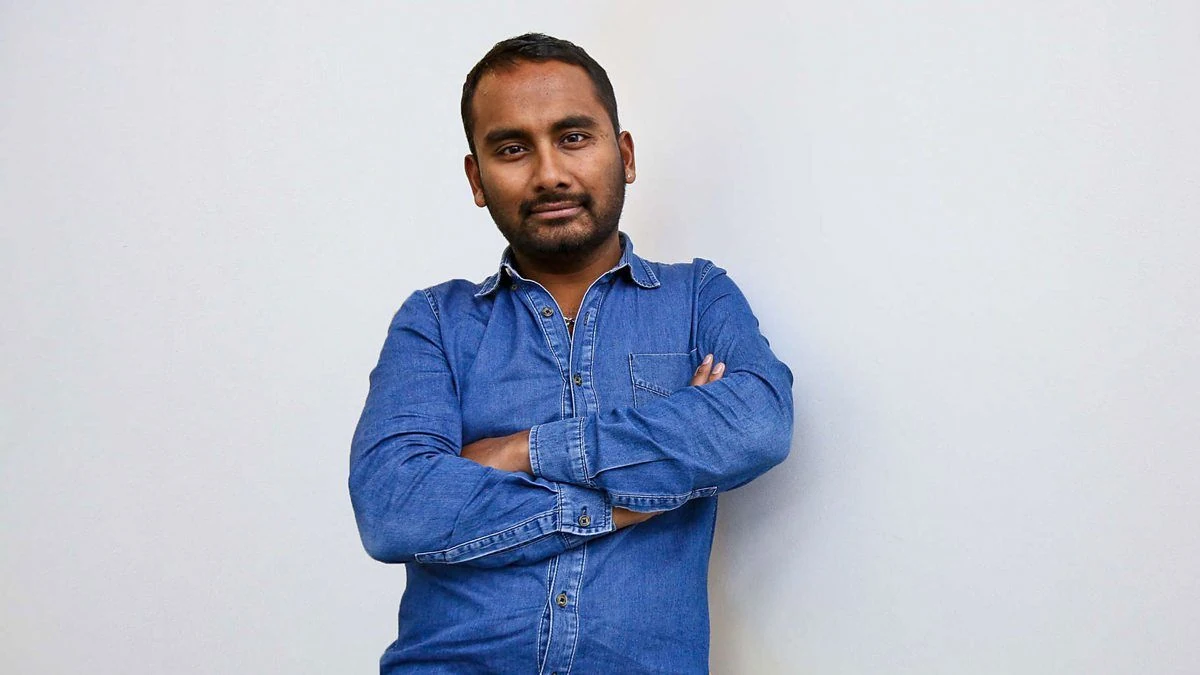
Amol Rajan’s career has crossed several of the institutions and formats that have shaped British journalism in the past two decades. He joined The Independent as a reporter, became its editor at 29 and remained with the company as it ended its print edition. At the BBC, he became its first Media Editor, presented on Radio 4’s Today programme and took over as host of University Challenge. The route between those roles is also a story of a journalist moving from newspaper reporting into broadcasting and public discussion.
From Kolkata to Tooting and Cambridge
Rajan was born in Calcutta, now Kolkata, on 4 July 1983. His family moved to England when he was three, settling first in Chiswick; he was raised in Tooting in south-west London. He attended Hillbrook Primary School and Graveney School, then studied English at Downing College, Cambridge. At university he contributed to and edited the student newspaper, Varsity. During a gap year, he worked at the Foreign and Commonwealth Office.
His route into journalism was not confined to print. In 2006–07, he worked as a researcher and secondary presenter on Channel 5’s daytime programme The Wright Stuff. That early broadcasting experience preceded his move to The Independent in August 2007.
Reporting at The Independent
Rajan held several roles at the newspaper, working as a news reporter, sports correspondent, columnist, comment editor and editor of Independent Voices. He also wrote a Monday column for the London Evening Standard and restaurant criticism for The Independent on Sunday. This progression took him from reporting and criticism into editorial work, before his appointment as editor of The Independent in 2013, aged 29.
He has been described as the first non-white editor of a national newspaper in the United Kingdom. For about 18 months before becoming editor, he had been a media adviser to the paper’s proprietor, Evgeny Lebedev. Rajan’s editorship coincided with a major change in the publication’s business and format. In February 2016, Lebedev announced that The Independent would become digital-only and close its print edition. Rajan stayed with the company to help facilitate the change, then continued as editor-at-large for its website until his appointment to the BBC.
BBC roles: media, radio and television
Rajan joined BBC News as its first Media Editor in November 2016, taking up the post the following month. The position put him in the role of reporting and commenting on the media industry at a public broadcaster whose own work and direction were part of that landscape. He also hosted The Big Debate on the BBC Asian Network. From 2017, he provided holiday cover for presenters on BBC Radio 2, and he occasionally presented The One Show.
In 2017, he succeeded Steve Hewlett as presenter of Radio 4’s The Media Show. He left that role when he joined the presenting team of Today in 2021. His BBC Media Editor tenure ran from 2016 to 2023. In 2023 he took over from Jeremy Paxman as host of University Challenge, having appeared on the programme’s Christmas edition in 2020 as a member of the Downing College team. Rajan presented his final Today programme on 2 September 2026. The supplied account says he confirmed that he would leave the programme to set up his own production company.
Writing, interviews and public debate
Rajan’s work has also included writing beyond his newspaper columns. His book Twirlymen: The Unlikely History of Cricket’s Greatest Spin Bowlers was published in 2011. He is a cricket enthusiast and plays for the Authors XI, bringing a subject he follows as a participant into his writing.
In June 2023, he interviewed former television presenter Phillip Schofield for the BBC; it was Schofield’s first television interview since resigning from ITV the previous month. Rajan has also presented and narrated BBC programmes about the relationship between the royal family and the media. Those assignments show the range of his broadcasting work, but they have also attracted criticism. A 2021 documentary about the princes and the press prompted close to a thousand complaints of bias, according to the supplied account. In 2021, Rajan apologised for comments about members of the royal family that he had written in 2012 and for an open letter to Prince William and Catherine.
Across changing media institutions
Rajan’s posts have placed him in organisations facing different pressures and audiences: a newspaper moving away from print, a public broadcaster reporting on media change, and programmes built around current affairs, discussion and long-running television formats. His career record is therefore not simply a sequence of prominent titles. It also traces how the work of a journalist can shift between reporting, editing, presenting and writing, with each role bringing a different relationship to the audience.
The available account documents these roles and transitions more clearly than it documents any single body of reporting as a defining achievement. It does not substantiate the current article’s broad claims about particular scoops, conference appearances or his standing in media-ethics debates. This feature focuses instead on the supported chronology: his newspaper career, the digital-only transition, his BBC appointments and his writing and presenting work.
Why Amol Rajan deserves a place in British Legacy
Rajan’s place in a record of British journalism rests on a career spent working within institutions that serve large and varied audiences. At The Independent, he moved through reporting, sports, comment and editing before becoming editor in 2013. His tenure overlapped with the paper’s decision to end its print edition and become digital-only; he stayed to help facilitate that change. The transition is a specific part of the newspaper’s recent history, and his role connects editorial leadership with the practical reorganisation of a national publication.
His subsequent work at the BBC extended that record across broadcasting. As the corporation’s first Media Editor, he reported on an industry of which the BBC itself is a prominent part. He then presented programmes on radio and television, including The Media Show, Today and University Challenge. Those jobs placed journalism, current affairs and public entertainment in the same career, while his book on cricket and his newspaper writing show interests beyond broadcast news. Rajan’s trajectory offers a useful account of how British journalism has crossed between print and digital publishing, radio and television. That combination of editorial responsibility and work across media formats is the grounded basis for his inclusion in British Legacy.
Sources
Adapted in part from Amol Rajan by Wikipedia contributors, under CC BY-SA 4.0. Text has been edited and combined with the existing article; this adapted text is shared under the same licence. Contributor history.