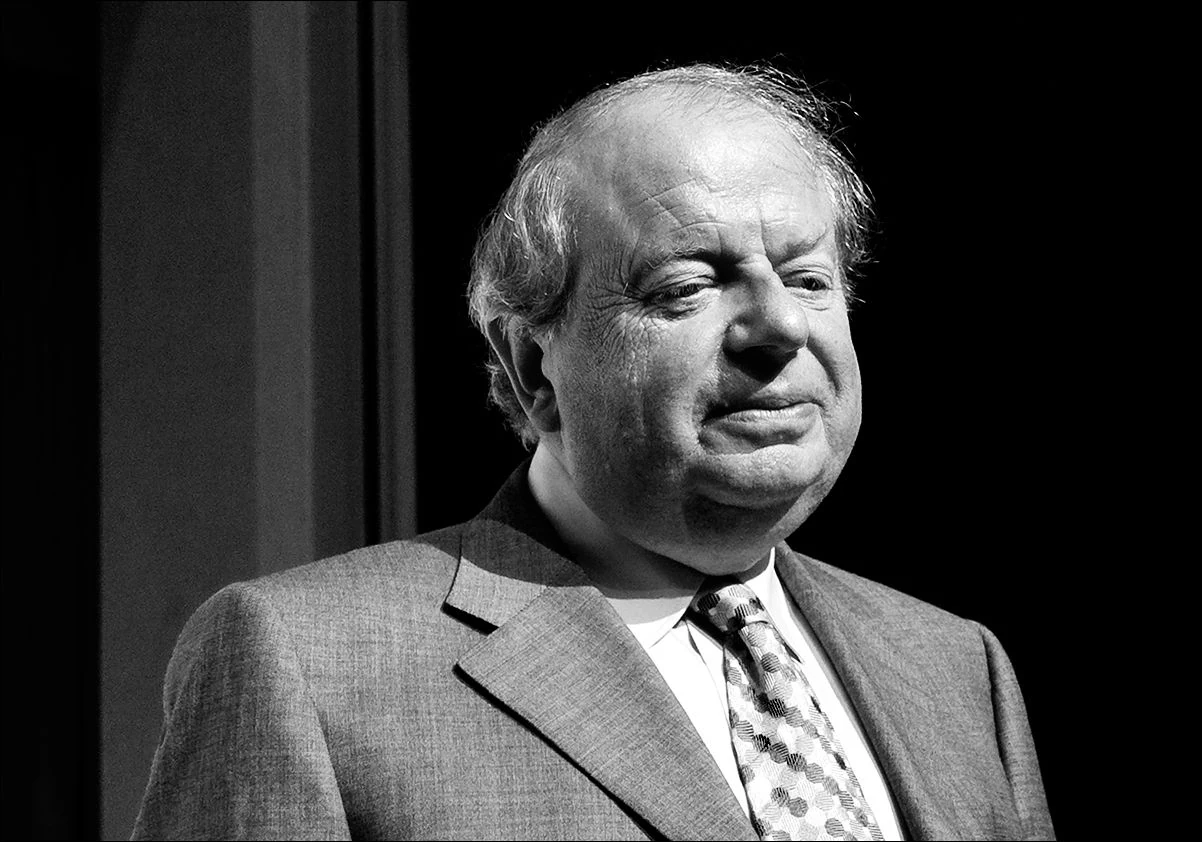
John Sergeant’s career has taken him from reporting for the Liverpool Echo to BBC radio, political television and the political editorship of ITN. Along the way, he covered events at home and abroad, became a familiar face to viewers and later brought his broadcasting experience to documentaries, discussion programmes and entertainment. His path through British media is not simply a story of one political beat: it spans print, radio and television, and includes both the close-up pressures of a Westminster correspondent and the wider reach of factual broadcasting.
Education, comedy and the first reporting jobs
Sergeant was born in Oxford on 14 April 1944. His early life included time in Jerusalem as well as Oxford, following his father’s work. He attended Great Tew Primary School, briefly went to Bloxham School and then studied at Millfield School in Somerset. He graduated from Magdalen College, Oxford, where he read philosophy, politics and economics. The current article gives a different account of his later schooling, naming Magdalen College School; the supplied Wikipedia biography instead identifies Millfield, so this feature follows that account.
At university, Sergeant took part in student comedy revues. After graduating, he appeared with Alan Bennett in BBC sketch shows called On the Margin and wrote comedy scripts. He then trained as a journalist at Darlington College while reporting for the Liverpool Echo, where he worked for about three years. That start gave him experience in both writing and performance before he joined the BBC.
During a gap year in Washington, DC, in 1963, he was in the crowd for Martin Luther King Jr’s “I Have a Dream” speech at the Lincoln Memorial. The moment belongs to the biography’s wider chronology, though his professional reporting career was still to come.
From BBC radio to political reporting
Sergeant joined the BBC as a radio reporter in 1970 and was assigned to its international desk, covering stories in more than 25 countries. He worked as a war reporter in Vietnam and Israel and reported the death of the first British soldier during the Troubles in Northern Ireland. He later covered the opening sessions of the European Parliament, moving through international and domestic stories before becoming a political correspondent in 1981.
His work at the BBC included documentary reporting as well as news. He worked on The Europe We Joined and presented programmes for BBC Radio 4, including Today and The World at One. In 1992 he became the BBC’s chief political correspondent, a role he held until 2000. These dates distinguish the start of his political-correspondent work from his later appointment as chief correspondent; the broad statement in the imported article that his tenure in the role ran from 1981 to 2000 does not make that distinction.
One of the best-known episodes in the supplied account of his political reporting came during the 1990 Conservative leadership election. Sergeant waited outside the British Embassy in Paris for Margaret Thatcher’s reaction to the first ballot. When Thatcher came out, her press secretary, Sir Bernard Ingham, pushed him aside. Sergeant’s report won the British Press Guild award for the most memorable broadcast of the year. The incident was not a tussle with Thatcher herself, as the imported article suggests; the supplied biography specifies Ingham’s role.
Other reports captured moments in British political life. In 1987, in Moscow, Sergeant suggested that Thatcher had already begun campaigning for the general election, before the contest had been formally declared. She replied, “I am serving my country.” In 1998, after Welsh secretary Ron Davies was forced to resign following what he called his “moment of madness”, Sergeant secured the only interview with him, according to the supplied biography.
ITN and a second phase of broadcasting
In 2000 Sergeant left the BBC to become ITN’s political editor, succeeding Michael Brunson. He held the post until 2002, when he retired and was succeeded by Nick Robinson. This chronology also clarifies a claim in the imported article that his BBC reporting included Tony Blair’s eventual resignation: Blair resigned in 2007, after Sergeant’s BBC and ITN political-editor roles had ended. That reference is not retained as part of his reporting record.
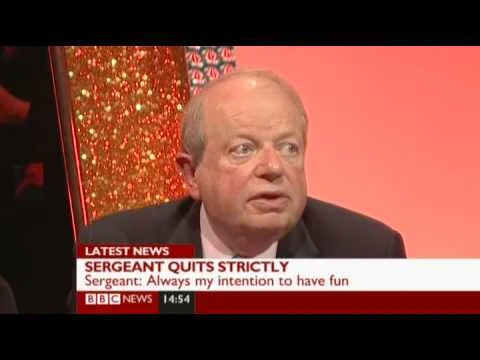
Sergeant’s retirement from ITN did not end his work in television. He appeared on Have I Got News for You, was a reporter for The One Show and guest-presented it with Myleene Klass in 2009. He also appeared in QI and Countdown, and narrated the first series of the game show Duck Quacks Don’t Echo. In 2008 he competed with Kristina Rihanoff in the sixth series of Strictly Come Dancing. Despite repeatedly scoring poorly with the judges, he remained in the competition through public votes and withdrew in week ten, joking that winning would be “a joke too far”.
His later factual programmes ranged across Britain and beyond. In John Sergeant’s Tourist Trail, he explored why visitors come to Britain. He presented Britain’s First Photo Album, a BBC Two series about Francis Frith’s pioneering photographs of Victorian Britain, in 2012. In 2013 he presented Tracks of Empire, a two-part BBC documentary following the history and legacy of India’s railways. From 2015 he presented Barging Round Britain with John Sergeant, also shown as Britain’s Best Canals with John Sergeant; the programme returned for a second series in 2016. He later appeared in Channel 5’s The Big Steam Adventure.
Writing and public life
Sergeant has written about politics, including the books Maggie: Her Fatal Legacy and Give Me Ten Seconds, named in the supplied article. The available material does not give publication details or a fuller account of their contents, so their significance should not be overstated. His television work, by contrast, is documented across a range of formats: political reporting, factual programmes, comedy and entertainment.
He married Mary Smithies in 1969 and has two sons, Will and Mike; Mike is a BBC reporter. Sergeant received an honorary Doctor of Letters from the University of Lincoln in 2013. He was president of the Johnson Society in 2003 and became president of the Arthur Ransome Society in 2023. These details offer a glimpse of a life beyond the news desk without obscuring the work that made him a public broadcaster.
Why John Sergeant deserves a place in British Legacy
John Sergeant deserves a place in British Legacy for a career that documents several changes in British broadcasting and political journalism. He began at the Liverpool Echo, joined the BBC as a radio reporter in 1970 and moved through international reporting, war coverage, European affairs and political correspondence. As the BBC’s chief political correspondent, he covered British politics during a period that included the Thatcher years and the rise of New Labour. His move to ITN as political editor in 2000 carried that experience into another major British broadcaster.
His record also shows how a reporter’s work can travel beyond a single format. Sergeant presented BBC Radio 4 programmes, reported for television, made documentaries and later appeared in entertainment programmes watched by a different audience. His reporting on the 1990 Conservative leadership contest and the 1998 interview with Ron Davies give specific examples of his work around moments of political consequence. Later series about British tourism, photography and canals turned his attention to the country’s places and cultural history. The value of this legacy lies not in unsupported claims that one journalist transformed public life, but in the breadth of a documented career: sustained reporting, political editorship and an ability to carry factual broadcasting into new settings.
Sources
John Sergeant (journalist), revision 1338144991
Adapted in part from John Sergeant (journalist) by Wikipedia contributors, under CC BY-SA 4.0. Text has been edited and combined with the existing article; this adapted text is shared under the same licence. Contributor history.