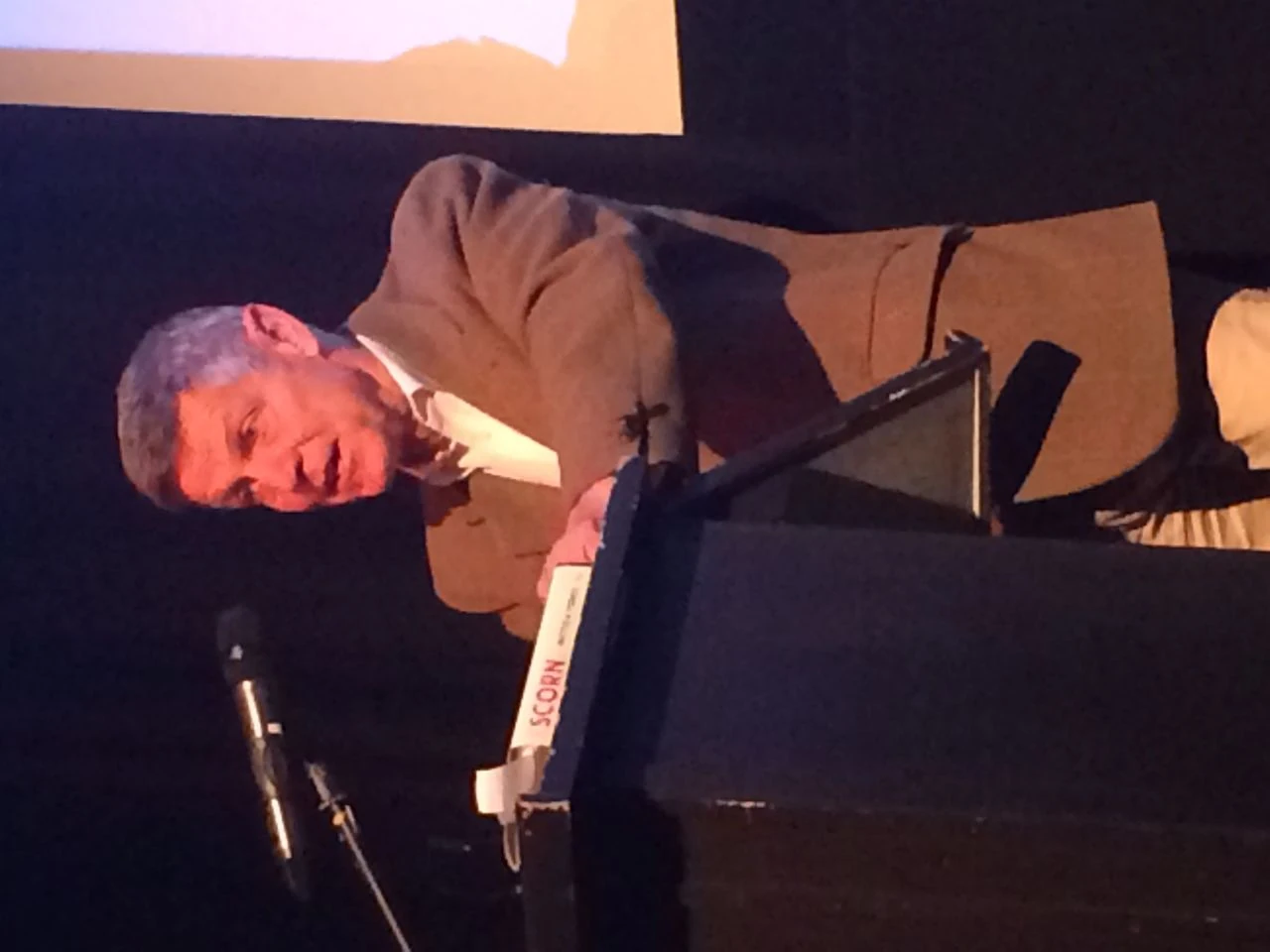
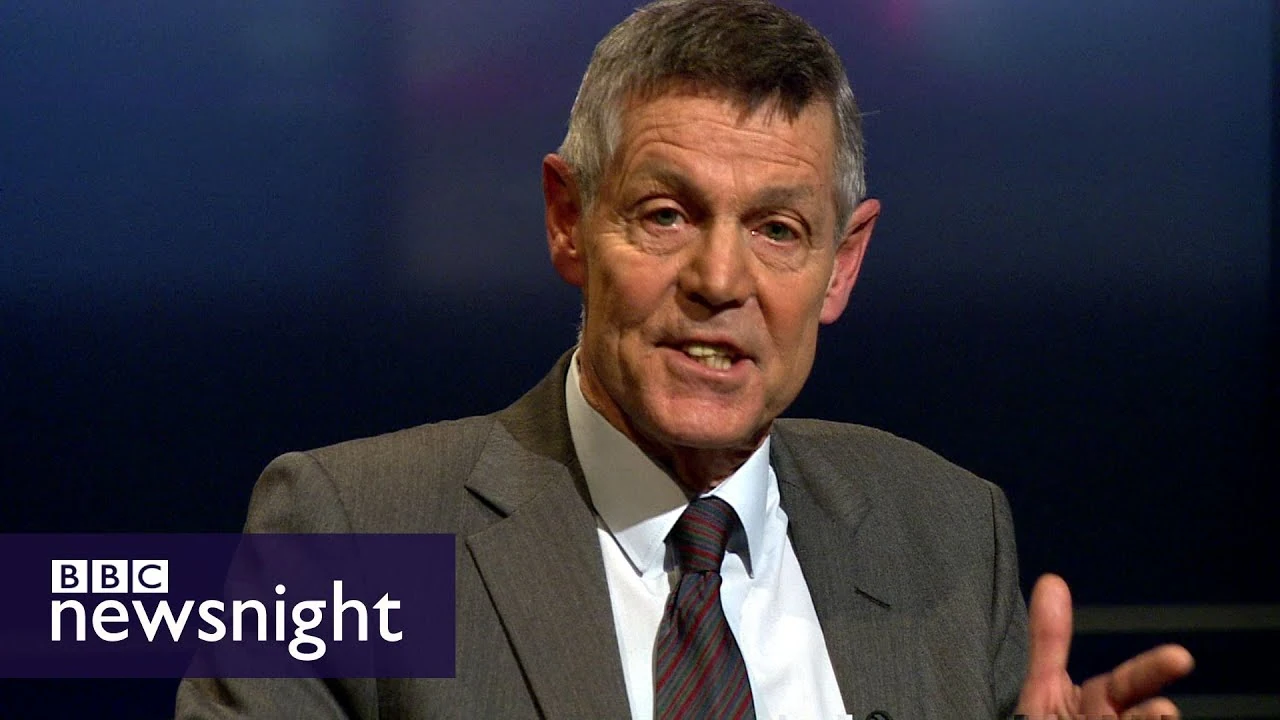
Matthew Parris has worked in Parliament, on television and in newspapers, bringing to political writing both experience of Westminster and a willingness to challenge its assumptions. A Conservative MP for West Derbyshire from 1979 to 1986, he left the Commons to present ITV’s Weekend World. He went on to write parliamentary sketches, political columns and books, and to present programmes for television and radio. His career has moved between political involvement and commentary on the people, parties and institutions of British public life.
A childhood across continents
Parris was born in Johannesburg on 7 August 1949 to British parents. His father worked as an electrical engineer, and his childhood took him between South Africa, Cyprus, Rhodesia, Swaziland and Jamaica. He attended Waterford Kamhlaba United World College of Southern Africa in Swaziland and Sessions School in Cyprus before studying law at Clare College, Cambridge. He gained a first-class degree and was a member of the university’s Liberal Club. A Paul Mellon scholarship took him to Yale University to study international relations.
After university, Parris worked for the Foreign and Commonwealth Office for two years. He left in 1976, later explaining that he disliked its formality and wanted to enter Parliament. He joined the Conservative Research Department and subsequently became correspondence secretary to Margaret Thatcher. A story from this period became part of his political biography: he jumped into the Thames to rescue a dog and received an RSPCA medal from Thatcher, then Leader of the Opposition. Parris later attributed his selection as a parliamentary candidate to the rescue.
West Derbyshire and the move to television
Parris entered the Commons as Conservative MP for West Derbyshire in 1979 and remained in Parliament until 1986. He spoke in support of gay rights while a Conservative politician. During the 1983 Bermondsey by-election, he wrote in The Times objecting to the homophobic tactics used against Peter Tatchell. Parris later said that he attempted to come out during a late-night Commons debate in 1984, but that nobody noticed; he subsequently announced that he was gay in a newspaper column.
He also took part in a World in Action experiment about living on a limited income. In 1984, he spent a week in Newcastle on £26.80, the social-security payment then set by the government he supported for a single adult. The experiment ended when he ran out of money for the electricity meter. In 2004, he attempted it again for the documentary For the Benefit of Mr Parris, Revisited.
In 1986, Parris resigned his seat by taking the Crown appointment of Steward of the Manor of Northstead. He did so to take over from Brian Walden as presenter of ITV’s Sunday current-affairs series Weekend World. The programme had been broadcast since 1977; Parris presented it for its final two years, until it ended in 1988. Leaving Parliament for a prominent broadcasting role marked a deliberate change in his work, rather than a straightforward move from politics into newspaper journalism.
Columns, broadcasting and books
After Weekend World ended, Parris became a freelance columnist for The Times. From 1988 to 2001, he worked as the paper’s parliamentary sketch writer. He also wrote weekly columns for The Times and The Spectator. His knowledge of political life informed his writing, but his commentary was not simply an account of party business: he developed a reputation for taking views that went against the grain and wrote critically about politicians with whom he had once been associated.
His broadcasting has included more than political interviews. Parris presents BBC Radio 4’s biography series Great Lives, has appeared on Have I Got News for You and presented After Dark. In 2007, his Radio 4 programmes Not My Words, Mr Speaker examined politicians’ use of cliché and jargon. These roles extended his work beyond the newspaper column, bringing political discussion and commentary to television and radio audiences.
Parris has written books on politics and travel, as well as collections of his journalism. So Far, So Good, a collection of pieces from The Times, appeared in 1991. His autobiography, Chance Witness: An Outsider’s Life in Politics, was published in 2002. In A Castle in Spain (2005), he wrote about his family’s project to restore a derelict sixteenth-century mansion in Catalonia. His travel writing also includes Inca Kola (1990), about Peru.
His humour has sometimes prompted a response he did not intend. In 2007, a satirical Times article about cyclists drew two hundred letters to the Press Complaints Commission. Parris apologised, saying that although he had meant the piece humorously, he had misjudged how readers would take it. The episode is a reminder that a writer’s intention does not determine how a joke is received.
Recognition, disagreement and later work
Parris received Columnist of the Year at the British Press Awards in 1991 and 1993, and a What the Papers Say award in 1992. In 1990, the London Press Club named him Edgar Wallace Outstanding Reporter of the Year. He was named Writer of the Year at Granada Television’s What the Papers Say Awards in 2004, in part for reporting on elections in Iraq and Afghanistan. The awards recognise work across reporting and commentary, rather than a single aspect of his career.
His public positions have also attracted disagreement. Parris was a founding member of the gay-rights charity Stonewall in 1989, after speaking out for gay rights during the 1980s. He later criticised Stonewall’s decision to include trans rights in its remit. His public commentary has covered other divisive questions, too: he criticised the concept of fundamental human rights and, in 2021, made comments about Gypsy, Roma and Traveller people that prompted a response from the anti-racism group Hope not Hate. These controversies form part of the record of a commentator whose opinions have drawn opposition as well as attention.
Parris has also written about places and events well beyond Westminster. His travels included expeditions to Peru and Bolivia, and in 2000 he spent the Antarctic winter on Grande Terre in the Kerguelen Archipelago, where he wrote about the small community of people wintering there. During his stay, one of the researchers was fatally shot in an accident. In July 2024, a few weeks before his 75th birthday, Parris ended his long-running Saturday political column in The Times. He continued to write a Wednesday diary column for the newspaper.
Why Matthew Parris deserves a place in British Legacy
Parris’s place in British Legacy rests on a career connecting several forms of British public life. He served as a constituency MP, worked in the Conservative Research Department and as Margaret Thatcher’s correspondence secretary, then left elected office to present a major ITV current-affairs programme. As a parliamentary sketch writer and columnist, he turned the detail and theatre of Westminster into material for newspaper readers. His experience as a politician gave his journalism a direct relationship with its subject; his subsequent work let him scrutinise that subject from outside elected office.
His contribution is not confined to political columns. Parris has worked in television and radio, written about travel, and published an account of his life in politics. His career also records positions and arguments that have been contested, including his later criticism of Stonewall’s direction and other public interventions. That mixture of political experience, reporting, humour and disagreement makes for a more useful legacy than uncomplicated praise. It shows how a British journalist can move between political institutions and the media that interpret them, while remaining answerable to readers who may challenge his conclusions. For British Legacy, Parris offers a specific perspective on the changing relationship between Parliament, broadcasting and political journalism.
Sources
Matthew Parris — Wikipedia revision 1371969356 · Matthew Parris — Wikipedia
Adapted in part from Matthew Parris by Wikipedia contributors, under CC BY-SA 4.0. Text has been edited and combined with the existing article; this adapted text is shared under the same licence. Contributor history.