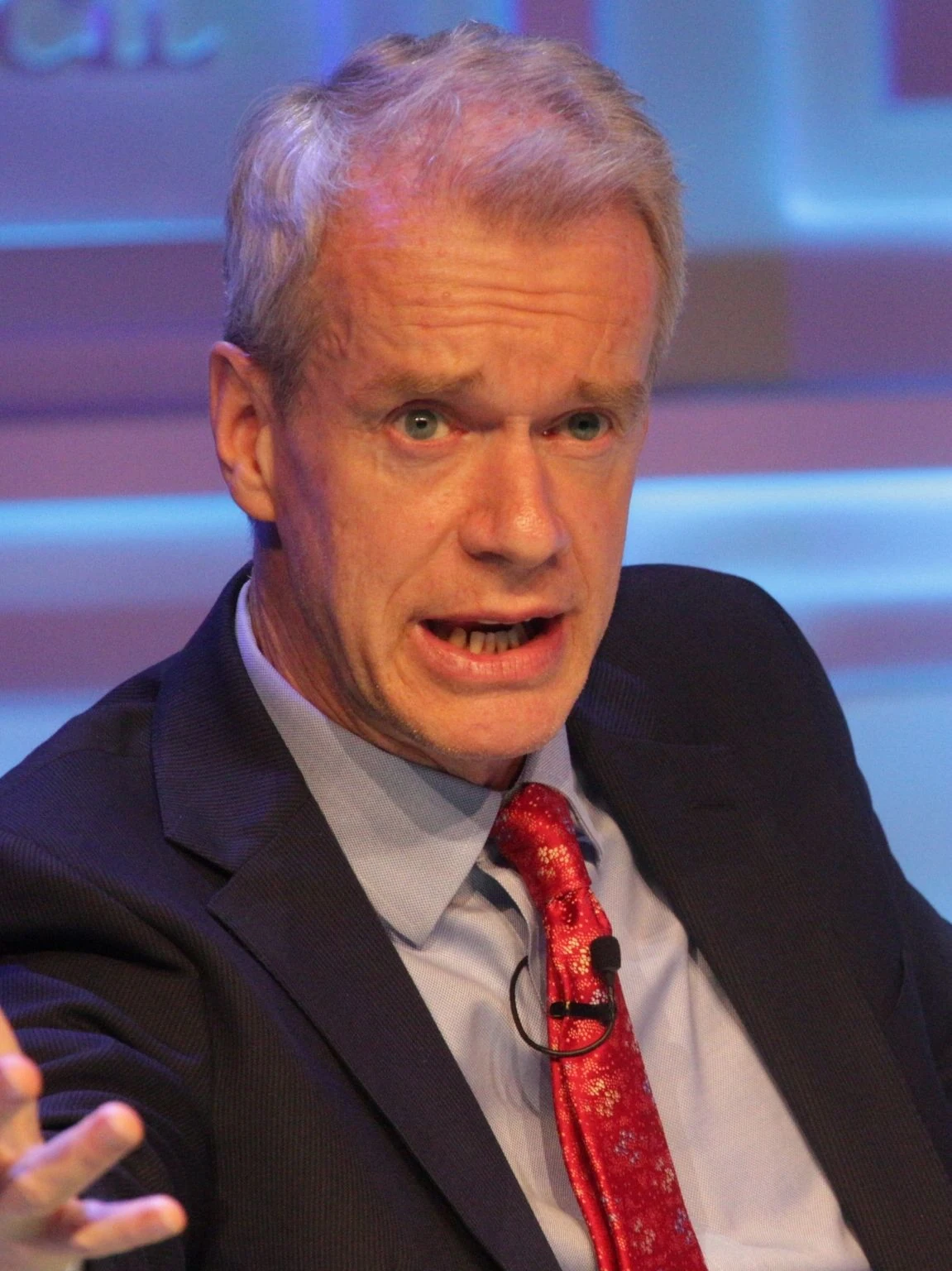
Stephen Sackur’s career has moved between the field and the studio: from reporting political change and conflict for the BBC abroad to questioning leaders and cultural figures on HARDtalk. He spent fifteen years as a BBC foreign correspondent before becoming associated with the programme’s interviews. That work brought him into public view, but his career also includes reporting from the Middle East and Washington, recognition for international broadcasting and criticism of the way he handled particular exchanges.
Education and a BBC beginning
Stephen John Sackur was born in Lincolnshire on 9 January 1964. He attended King Edward VI Grammar School in Spilsby, then studied history at Emmanuel College, Cambridge, where he gained an honours BA. He went on to Harvard University’s John F. Kennedy School of Government as a Henry Fellow. The supplied account establishes his education and fellowship; it does not give further detail about the course of study there.
Sackur joined the BBC as a trainee in 1986. In 1990, he became one of its foreign affairs correspondents. His early reporting included the Velvet Revolution in Czechoslovakia in 1989 and the reunification of Germany in 1990. During the Gulf War, he was part of a BBC team covering the conflict and spent eight weeks embedded with the British Army. The supplied biographical account says he was the first correspondent to report the massacre of retreating Iraqi troops on the road out of Kuwait.
From Cairo and Jerusalem to Washington
Between 1992 and 1995, Sackur was based in Cairo as the BBC’s correspondent in the Middle East. He then moved to Jerusalem, where he reported from 1995 to 1997. His coverage included the assassination of Israeli prime minister Yitzhak Rabin and the growth of the Palestinian Authority under Yasser Arafat. These postings put him in the region during consequential political developments and formed a substantial part of his work as a foreign correspondent.
In 1997, Sackur became the BBC’s correspondent in Washington, a post he held until 2002. He covered the Clinton–Lewinsky scandal and the 2000 US presidential election, and interviewed President George W. Bush. The sequence of assignments—from the Middle East to the United States—shows the range of his reporting before his best-known presenting role. Rather than beginning as a studio interviewer, he arrived at that work after years reporting from overseas.
HARDtalk: interviews and scrutiny
Sackur became the regular host of HARDtalk, a current-affairs interview programme shown on BBC World News and the BBC News Channel. The supplied Wikipedia account gives conflicting start dates: its career summary lists a 2004–2025 hosting period, while the article text says he replaced Tim Sebastian as regular host in 2005. It also says the BBC announced in October 2024 that it was ending the programme for financial reasons. As the supplied account does not reconcile these dates, this feature does not assign a single start or end year to his tenure.
The interviewees named in that account range across politics and culture. Among the political figures are Venezuela’s Hugo Chávez, Equatorial Guinea’s Teodoro Obiang, Burma’s Thein Sein, Ethiopia’s Meles Zenawi and Getachew Reda, spokesperson for the Tigray Defence Force. Cultural interviewees include Gore Vidal, Annie Lennox, Charlize Theron, Vladimir Ashkenazy and William Shatner. This range reflects the programme’s international scope: Sackur’s conversations were not confined to elected politicians or to one region.
Some interviews also became subjects of criticism. The Lemkin Institute for Genocide Prevention criticised Sackur’s interview with Ruben Vardanyan about the blockade of Nagorno-Karabakh. The Institute objected to his framing of the choices facing Armenians in the region, and to his treatment of the name Artsakh and the question of self-determination. In March 2024, an interview with Guyana’s president, Irfaan Ali, drew widespread criticism over Sackur’s tone and questioning about oil, gas and climate change. Ali responded by pointing to Guyana’s forest and low deforestation rate. These disputes form part of the public record around his interviewing: robust questioning may test a guest’s account, while the interviewer’s own framing can also be challenged.
Recognition and broadcasting beyond the programme
In November 2010, the Association for International Broadcasting named Sackur International TV Personality of the Year. He was nominated for Speech Broadcaster of the Year at the Sony Radio Awards in 2013, and received an honorary doctorate from the University of Warwick in July 2018. The distinctions encompass international television, radio and recognition from a British university.
The supplied account also identifies Sackur as the main Friday presenter of GMT on BBC World News from 2010 to 2019. It describes him as a regular attendee and moderator at the Yalta European Strategy annual meetings, founded and sponsored by Ukrainian businessman Victor Pinchuk. The account identifies his later work as one of the presenters of The Times at One on Times Radio. Together, these roles extend his broadcasting career beyond HARDtalk, though the supplied details do not elaborate on his responsibilities on Times Radio.
Why Stephen Sackur deserves a place in British Legacy
Sackur’s place in British Legacy rests on a career built within British broadcasting and carried across international assignments. He joined the BBC as a trainee, became a foreign affairs correspondent and reported from Cairo, Jerusalem and Washington. His coverage included the Velvet Revolution, German reunification and the Gulf War. Those experiences give substance to the familiar image of the interviewer: his work began with reporting events as they unfolded, often far from the studio, and continued through explaining international affairs to BBC audiences.
HARDtalk gave that reporting career a different public form. Sackur questioned political leaders and cultural figures on an international programme, and his interviews also prompted scrutiny of how questions are framed and delivered. His record is therefore more instructive than a simple account of a presenter who challenged powerful guests: it includes both a long period of foreign reporting and public disagreement about the responsibilities of the interviewer. Recognition from the Association for International Broadcasting and the University of Warwick adds to the record, while work on BBC World News and Times Radio connects his career to broadcasting beyond one programme. British Legacy can remember Sackur for this specific contribution: carrying British journalism from overseas reporting into an international interview format, and making the conduct of that questioning part of the discussion.
Sources
Stephen Sackur — supplied revision
Adapted in part from Stephen Sackur by Wikipedia contributors, under CC BY-SA 4.0. Text has been edited and combined with the existing article; this adapted text is shared under the same licence. Contributor history.