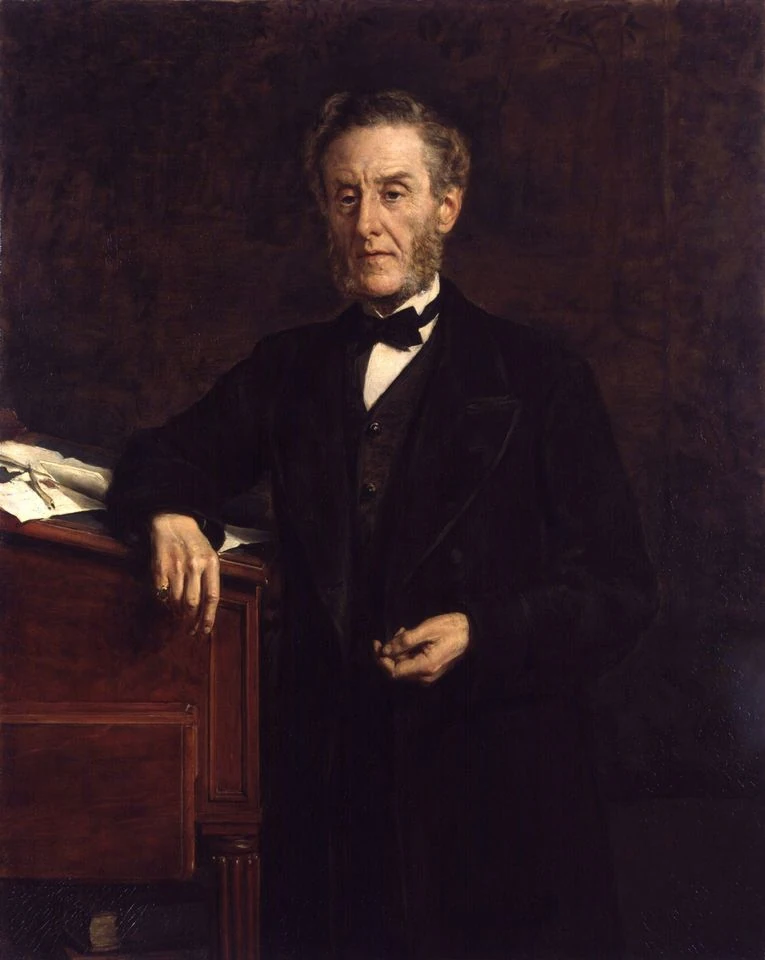
Anthony Ashley-Cooper, 7th Earl of Shaftesbury, used the influence of his position to press Parliament and the public to confront abuses in asylums, mines, factories and lodging houses. A Tory politician and evangelical Anglican, he was neither responsible for every reform associated with his name nor successful in every campaign. But over decades he returned to questions that others might have left aside: who was being harmed, what could the law do, and how could it be made to work?
A difficult childhood and a start in Parliament
Born in Mayfair, London, on 28 April 1801, Ashley was the eldest son of Cropley Ashley-Cooper, the 6th Earl of Shaftesbury, and Lady Anne Spencer. The family housekeeper, Maria Millis, and his sisters gave him affection in a childhood otherwise described by his biographer as loveless. At school, too, he experienced harsh treatment. The contrast between that early neglect and Millis’s practical care helped shape his Christian outlook, though it is more useful to see it as part of his background than as a complete explanation for a lifetime of public work.
He was educated at Manor House School in Chiswick, Harrow and Christ Church, Oxford, where he took first-class honours in classics in 1822. Elected Tory MP for Woodstock in 1826, he was appointed the following year to a select committee examining pauper lunatics and asylums in Middlesex. The committee heard evidence about the conditions in private madhouses. Ashley visited one, the White House in Bethnal Green, on its behalf; the investigation helped bring the treatment of people with mental illness into his parliamentary work.
In 1828 he seconded a bill based on the committee’s recommendations and spoke in Parliament for the first time. That year, legislation established commissioners with powers to license and inspect asylums. Ashley was one of the commissioners. The position gave him a continuing role in oversight, not simply a single opportunity to speak for reform.
Changing laws and scrutinising care
In 1845 Ashley sponsored two Lunacy Acts, one regulating asylums and the other concerning care and treatment in England and Wales. They tightened record-keeping and certification, and provided for a continuing Lunacy Commission. The legislation built on earlier measures; it did not, on its own, settle how people with mental illness should be treated. Ashley remained involved in the debate for decades, giving evidence to parliamentary committees in 1858 and 1877. He defended the commission’s work while arguing that proper treatment required timely intervention and effective inspection.
His advocacy also met limits and controversy. In 1884 he opposed a proposal to require a magistrate’s signature on certificates of lunacy, arguing against a change he believed could obstruct treatment. When a later bill included that requirement, he resigned from the commission; after the bill was withdrawn, he resumed its chairmanship. The episode shows that his reforming record was not a simple march towards broader safeguards: his judgements could place weight on treatment and administrative authority as well as protection against wrongful detention.
Factory reform was another sustained campaign. Ashley introduced a Ten Hours bill in 1833, seeking limits on the hours worked by children and young people in cotton and woollen industries. The measure was amended, and the law that passed did not deliver his original limit for all young workers. He continued to support restrictions and challenged the enforcement of the 1833 Act. After earlier attempts failed, John Fielden’s Ten Hours Bill passed in 1847. Ashley was a strong supporter, but did not author every stage of that legislative process.
In 1842 Ashley introduced the Mines and Collieries Bill, which became the Mines and Collieries Act. It prohibited the employment of women and children underground in coal mines. The measure addressed a distinct and dangerous workplace; it should not be confused with a general ban on all children under ten working in mines. His support for the factory and mining campaigns drew on parliamentary investigation, public advocacy and pressure from reformers outside Parliament.
Beyond factories and mines
Children employed as chimney sweeps were another focus. Ashley supported legislation against the practice from 1840, and later introduced further bills after the first measure proved ineffective. The Chimney Sweepers Regulation Act of 1864 did not end the use of child sweeps. The 1875 Act required chimney sweeps to be licensed annually and provided for police enforcement; it was intended to make the prohibition effective. The repeated attempts matter: legislation on paper did not automatically protect children in practice.
In 1844 Ashley became president of the Ragged School Union, which promoted schools for poor children. Their work depended on volunteers and offered education to children who might otherwise have had little access to it. His education advocacy sat alongside practical action on living conditions. In 1851, two lodging-house laws addressed the registration and inspection of common lodging houses and enabled local authorities to establish and manage accommodation for working people. They linked public health and housing standards to local responsibility.
His public commitments extended to animal welfare. He was vice-president of the Royal Society for the Prevention of Cruelty to Animals and president of the Victoria Street Society for the Protection of Animals from Vivisection. He argued for the abolition of vivisection. His religious and philanthropic roles were wide-ranging: he led the British and Foreign Bible Society from 1851 until his death, and was an early supporter of the YMCA. He also advocated the restoration of Jews to Palestine, a position rooted in his evangelical beliefs and expressed in proposals that connected Jewish resettlement with British political and economic interests. That aspect of his record belongs in its own historical context, rather than being folded uncritically into his domestic reform work.
Public memory and private complexity
After his father’s death in 1851, Ashley became the 7th Earl of Shaftesbury. His continuing work on social questions earned him the popular name “the Poor Man’s Earl”. He died in Folkestone on 1 October 1885, aged 84, and was buried at the parish church on his estate at Wimborne St Giles, as he had wished. A funeral service was held at Westminster Abbey. The Shaftesbury Memorial Fountain in Piccadilly Circus, erected in 1893, commemorates his philanthropic work; its statue of Anteros is popularly, though mistakenly, known as Eros.
His public reputation should not obscure the complexity of the record. Several campaigns required repeated attempts, and measures could fall short of their intended effect. His work on lunacy laws included both stronger oversight and opposition to a proposed safeguard he considered obstructive. Remembering those tensions gives a more useful account of reform than treating each Act as an uncomplicated victory.
Why Anthony Ashley-Cooper deserves a place in British Legacy
Shaftesbury deserves a place in British Legacy for the range and persistence of his efforts to change conditions in Victorian Britain. He took part in the development of asylum inspection from the late 1820s, sponsored the two Lunacy Acts of 1845 and remained involved in scrutiny of the system in later decades. He pressed for limits on child labour in factories, introduced legislation against women and children working underground in coal mines, and pursued action against the employment of child chimney sweeps over many years. These were different problems, but each demanded more than a statement of sympathy: they called for investigation, law, enforcement and continued attention to results.
His contribution also reached beyond Parliament. As president of the Ragged School Union, he supported education for poor children; his work on lodging-house legislation addressed the conditions in which working people lived. These efforts connect social reform to practical questions of health, safety and opportunity. His record was not flawless or uniformly successful, and the laws he supported did not instantly end the abuses they sought to address. That is part of why it remains worth examining. Shaftesbury’s career shows how a politician could use parliamentary office, public advocacy and institutional roles to keep neglected conditions in view—and how reform depended on returning to a problem when the first measure proved insufficient.
Sources
Anthony Ashley-Cooper, 7th Earl of Shaftesbury
Adapted in part from Anthony Ashley-Cooper, 7th Earl of Shaftesbury by Wikipedia contributors, under CC BY-SA 4.0. Text has been edited and combined with the existing article; this adapted text is shared under the same licence. Contributor history.