
William Morris made cars at a scale that helped transform Oxford’s economy, then used a large part of his fortune to support colleges, hospitals and charitable causes. The name Nuffield became attached to enduring institutions, among them a college at Oxford and a foundation for education and social welfare. But a full account of his public legacy must also reckon with his substantial financial support for Oswald Mosley’s fascist movement and his antisemitism.
From bicycle repair to motor manufacturing
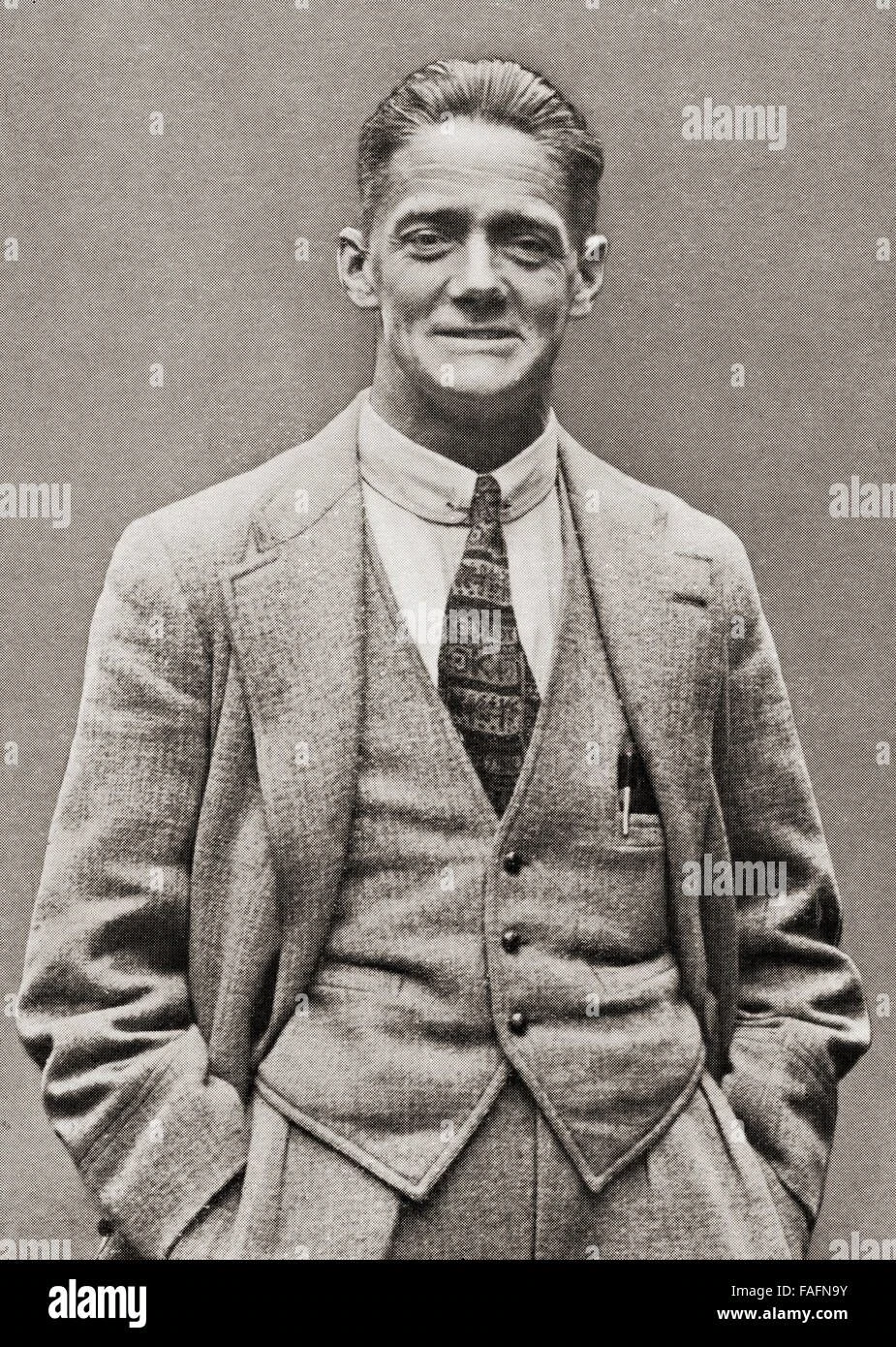
Morris was born in Worcester on 10 October 1877. When he was three, his family moved to Oxford. He left school at 15 and was apprenticed to a bicycle seller and repairer. A dispute over pay led him, aged 16, to start repairing bicycles in a shed behind his parents’ house. The business grew: he opened a shop on Oxford’s High Street, assembled bicycles as well as repairing them, and raced his own machines.
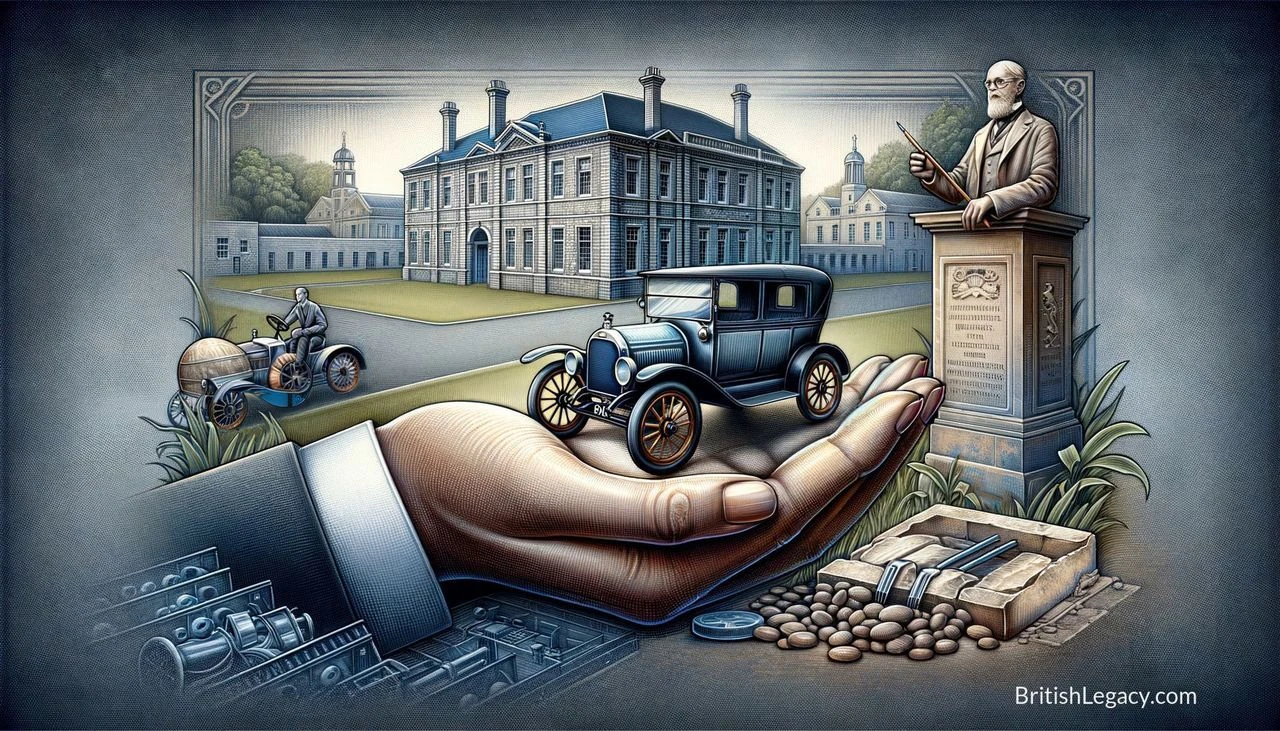
In 1901 he began working with motorcycles. The following year he acquired premises in Longwall Street, where he repaired bicycles, ran a taxi service and sold, hired and repaired cars. His business expanded into further premises, and in 1910 he renamed it the Morris Garage. In 1912 he designed the car later known as the bullnose Morris and began building it, using bought-in components, at a former military training college in Cowley.
The outbreak of the First World War redirected the young factory towards munitions production. After the war, car output rose from 400 vehicles in 1919 to 56,000 in 1925. Morris brought Henry Ford’s mass-production techniques to the United Kingdom and built or acquired factories in Oxford, Abingdon, Birmingham and Swindon. He also bought businesses that made components, including Morris Engines, Morris Commercial Cars and the SU carburettor manufacturer. These acquisitions helped him secure supplies and widen the range of vehicles his organisation could make.
In 1927 he bought the assets of the failed Wolseley Motors. The purchase led to the launch of the Morris Minor in 1928; the first MG Midget, introduced the following year, was based on the Minor. His attempt to develop a major steel-body manufacturing venture with the American businessman Edward G. Budd ended in dispute. In 1930, a High Court ruling required Morris and his colleagues to leave the Pressed Steel board and surrender their holdings, costing Morris the capital he had invested.
A growing industrial city
Morris’s factories made him Oxford’s largest employer. As the business grew in the 1920s and 1930s, people from areas affected by unemployment came to the city for work. That expansion brought jobs, but the factories were also marked by low pay and harsh working conditions. Morris opposed trade unions and resisted their recognition.
In July 1934, around 180 workers walked out at a Morris factory. Their grievances included wages and conditions. The Communist Party sent the experienced organiser Abraham Lazarus to help lead the strike. On its eleventh day, management agreed to wage increases and to allow unions in Morris’s factories. The action strengthened local trade-union and Labour organising, as well as Communist support among some factory workers. The growth of Oxford’s industrial workforce was therefore not simply a story of production: it also shaped the city’s labour politics.
Morris’s business interests expanded further in the 1930s. He acquired Riley and Autovia in 1938, and his personal enterprises became known collectively as the Nuffield Organization, though that grouping had no legal substance. His title also developed over time: he became Baron Nuffield in 1934 and Viscount Nuffield in 1938.
War work and industrial setbacks
During the Second World War, Morris was put in charge of the project to build a new factory at Castle Bromwich for the production of Spitfires. He offered his organisation’s industrial expertise, and the proposed factory was approved in 1938. The project suffered from changing designs, rising costs and delays. Morris had claimed it could produce 60 aircraft a week, but by May 1940 it had produced none. Lord Beaverbrook took charge of aircraft production that month, Morris was removed from the project and the plant was handed to Vickers, Supermarine’s parent company. Construction and financial close-out continued for years afterwards.
After the war, Morris Motors merged with the Austin Motor Company in 1952 to form the British Motor Corporation. Morris chaired the new company during its first year. At 75, he retired as a director and became honorary president, continuing to attend his office and advise colleagues.
Giving, institutions and public standing
Morris married Elizabeth Anstey in 1903; they had no children. He gave substantial sums to charitable causes during his lifetime. In 1937 he founded Nuffield College at Oxford, a postgraduate college and the university’s first co-educational college. That year he also gave money to expand the Sea Cadet Corps and to the University of Birmingham for a building to house a cyclotron.
In 1938 he offered an iron lung made in his factory to any hospital in Britain and the Empire that requested one; more than 1,700 were distributed. In 1943 he endowed the Nuffield Foundation with £10 million to advance education and social welfare. His philanthropy also included support for medical research and health services. The name Nuffield became associated with institutions and projects well beyond the original motor business, though those continuing institutions should not be treated as proof that every specific claim made about their work or impact is established here.
His honours included appointment as an Officer of the Order of the British Empire in 1918, election as a Fellow of the Royal Society in 1939, appointment as a Knight Grand Cross of the Order of the British Empire in 1941, and membership of the Order of the Companions of Honour in 1958. He was also made an honorary colonel of an anti-aircraft regiment. These honours record his public standing; they do not cancel out the less honourable parts of his record.
Political record and final years
Morris was politically anti-union and antisemitic. He gave £50,000 in 1930 to finance Mosley’s New Party, which was later absorbed into the British Union of Fascists, and £35,000 between 1931 and 1932 to fund the antisemitic newspaper Action. He continued subscribing to antisemitic publications after he stopped giving public support to fascism. In 1934 he issued a public statement repudiating fascism and antisemitism and announced a donation to the Central British Fund for German Jewry, which supported Jewish refugees from Europe. That statement and donation belong in the record, but they do not erase his earlier financing or private views.
Morris died on 22 August 1963, aged 85. He was cremated, and his ashes were buried in Nuffield churchyard beside his wife’s. Nuffield Place, his former Oxfordshire home, passed to Nuffield College and was later transferred to the National Trust; it is open to the public. His life connects a major chapter in British motor manufacturing and philanthropy with the consequences of industrial power, workplace conflict and political patronage.
Why William Morris deserves a place in British Legacy
Morris’s place in British history rests in part on the scale and reach of his industrial enterprise. Starting with bicycle repair in Oxford, he built a network of vehicle businesses and factories that made the city a major centre of motor manufacturing. The growth in production after the First World War, and the employment his factories provided, had a lasting effect on Oxford. So did the conditions under which people worked: the 1934 strike and its outcome show how workers organised against low pay and poor conditions, and how industrial growth could change local politics.
His philanthropy also left a substantial institutional legacy. Nuffield College, the Nuffield Foundation, the iron-lung offer to hospitals and support for education and medical research linked his wealth to institutions intended to serve the public. These contributions merit recognition for their concrete reach, not for claims of unqualified benevolence. Morris also gave large sums to Mosley’s fascist movement and supported antisemitic publications. British Legacy should remember both sides: the institutions and opportunities he helped establish, and the political choices that make a simple celebratory portrait untenable. His story is a specific British legacy of industry, giving, labour conflict and political responsibility.
Sources
William Morris, 1st Viscount Nuffield (revision 1379411855)
Adapted in part from William Morris, 1st Viscount Nuffield by Wikipedia contributors, under CC BY-SA 4.0. Text has been edited and combined with the existing article; this adapted text is shared under the same licence. Contributor history.
.jpg)