The Battle of the Bulge: A Defining Chapter in British Military Legacy
In the annals of history, certain events stand as defining moments of courage, strategy, and resilience. The Battle of the Bulge, which raged from December 1944 to January 1945, is one such pivotal chapter in the Second World War. While the British forces played a supporting role, their contribution, resilience, and strategic acumen were undeniably significant, reinforcing Britain’s great military legacy and underscoring its broader heritage and impact on the global stage.
Prelude to a Fierce Offensive
The backdrop of the Battle of the Bulge is set against the waning months of 1944. The Allies, having successfully invaded Normandy in June, were advancing steadily across Western Europe. However, Adolf Hitler, in a desperate gamble to turn the tide of the war, orchestrated a surprise offensive through the Ardennes forest, a densely wooded area deemed impenetrable by many military strategists.
On the frigid morning of December 16, 1944, German forces launched a massive and unexpected attack, intending to split the Allied lines, seize the vital port of Antwerp, and encircle and destroy four Allied armies. This offensive aimed to force a negotiated peace on the Western Front, allowing Nazi Germany to concentrate its efforts against the encroaching Soviet forces in the east.
The British Role: A Strategic Support
Though primarily an American engagement, British forces played a crucial and supportive role. The 21st Army Group, under the command of Field Marshal Bernard Montgomery, was instrumental in the eventual Allied counter-offensive. Montgomery, a storied British military leader renowned for his earlier triumph at El Alamein, quickly recognized the gravity of the German advance and took decisive action.
Montgomery's 21st Army Group provided critical reinforcements and supplies to the beleaguered American forces. His leadership ensured the coordination and consolidation of the defensive line north of the German thrust, which was essential in halting the advance and setting the stage for a counter-attack. The British XXX Corps, a key component of Montgomery’s group, was deployed to bolster the defences and secure vital supply lines. Their presence provided much-needed stability in a tumultuous and rapidly evolving battlefield.
Adverse Conditions and Unyielding Spirit
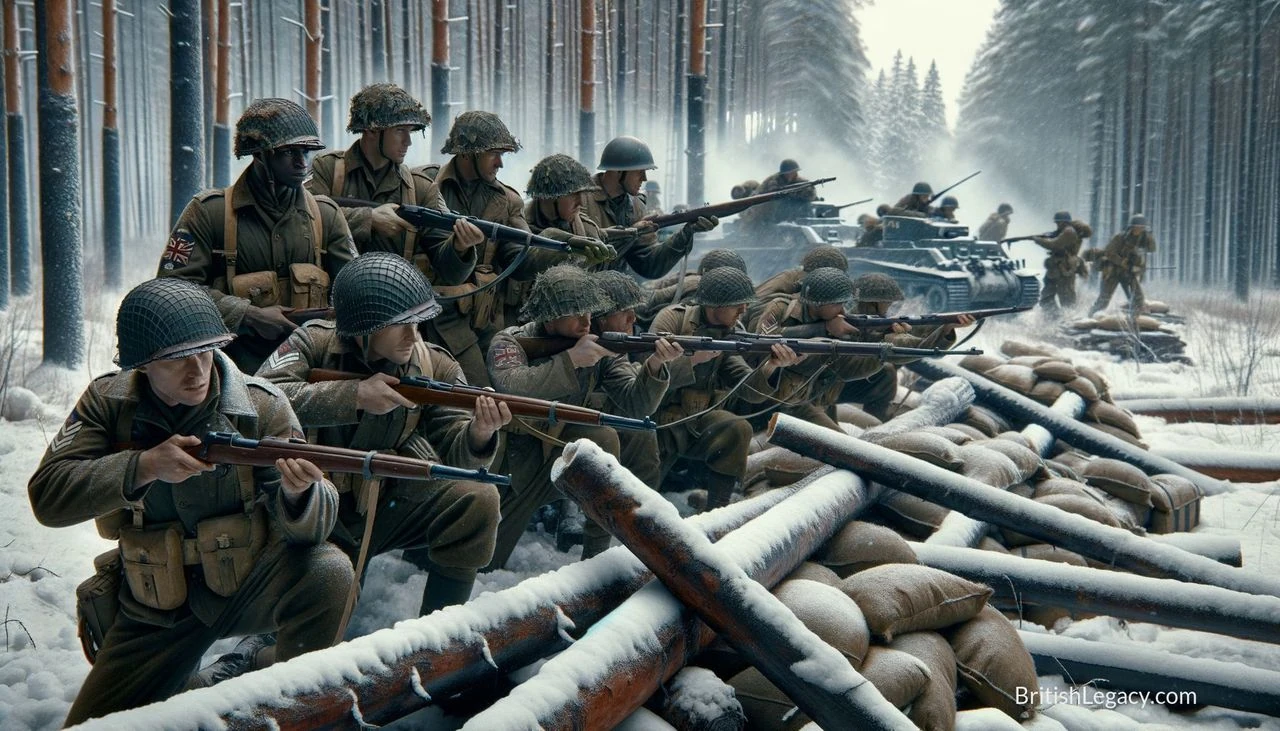
The Battle of the Bulge was marked by harsh winter conditions, with freezing temperatures and heavy snowfall hampering both sides. The tenacity and endurance of British forces in supporting roles were exemplified by their ability to adapt and continue operations despite the grueling environment. The resilience displayed not only highlighted their robustness but also served to boost the morale of their American counterparts, fostering a sense of unity and shared purpose.
The Turn of the Tide
As the German advance faltered due to logistical constraints and staunch Allied resistance, Montgomery’s forces were pivotal in the ensuing counter-offensive. By January 1945, the combined strength of American and British forces had effectively neutralized the German salient, regaining lost ground and inflicting severe casualties on the enemy.
The defeat of the German offensive at the Battle of the Bulge represented the last significant attempt by Nazi Germany to alter the course of the war on the Western Front. The British contribution, though supporting in nature, was critical to the Allied success and underscored the strategic dexterity and steadfastness that have become hallmarks of British military heritage.
Legacy and Global Impact
The Battle of the Bulge remains a testament to the courage, strategy, and cooperation that epitomised the Allied efforts in the Second World War. The British role, particularly under the leadership of Field Marshal Montgomery, reinforced the importance of unity and flexibility in the face of adversity. This engagement not only showcased Britain’s military prowess but also highlighted the nation's ability to support and sustain its allies in crucial times.
Through comprehensive strategic support and unwavering resilience, the British forces exemplified the spirit that has indelibly shaped the great British legacy. The lessons of the Battle of the Bulge have transcended time, imparting valuable insights into collaboration and tactical ingenuity that continue to influence military doctrines worldwide. In reflecting upon this historic battle, one can appreciate the depth of Britain's contribution to global peace and security, a legacy that remains enshrined in the annals of world history.