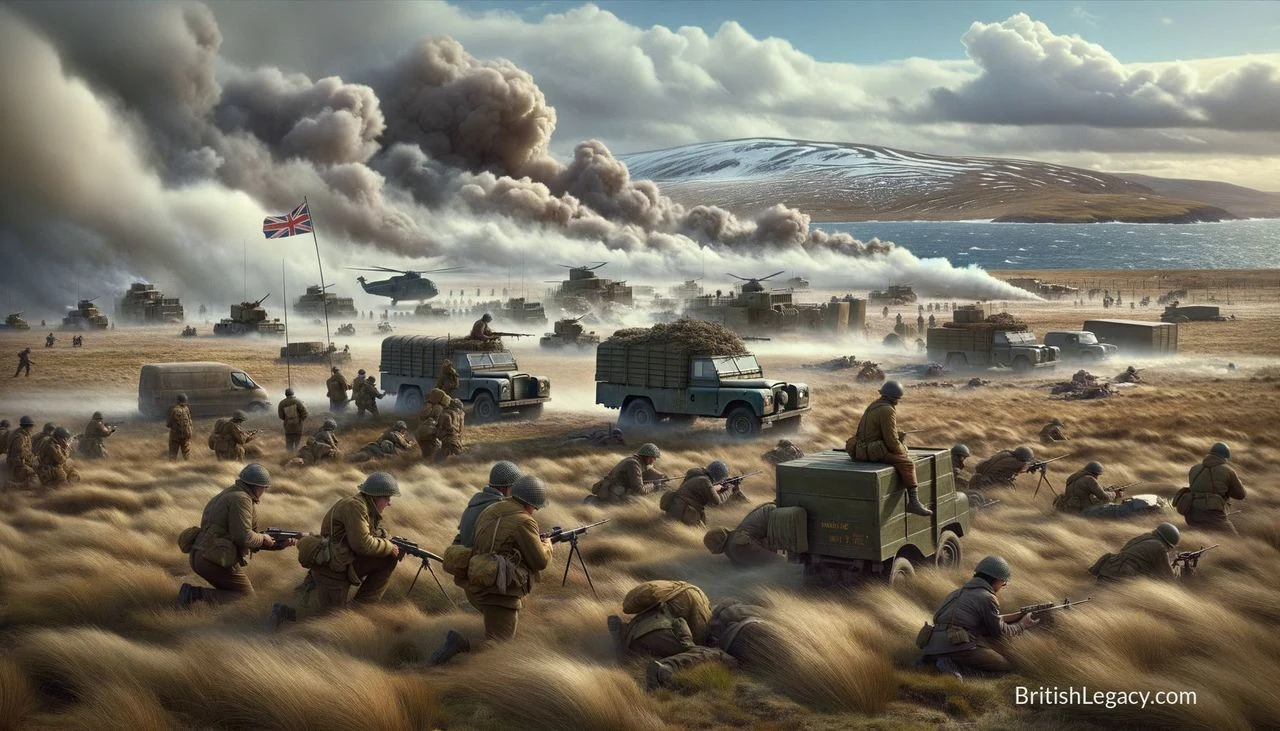
The Battle of Goose Green, fought on 27 and 28 May 1982, was one of the first major land engagements of the Falklands War. British forces attacked Argentine positions at the East Falkland settlement, where around 1,200 Argentine troops were reported to be stationed. The fighting ended with an Argentine surrender, but at a heavy cost: 18 British soldiers were killed and 64 wounded. The battle became an early, hard-fought stage in the campaign to recover the islands after Argentina’s invasion in April.
From invasion to the attack on Goose Green
Argentina invaded and occupied the Falkland Islands in April 1982. The British campaign to retake the territory brought 2nd Battalion, Parachute Regiment (2 Para), led by Lieutenant Colonel Herbert ‘H’ Jones, to Goose Green. The battalion numbered around 600 men, facing a larger Argentine force described in the account as dug in and prepared to defend its positions.
Goose Green was a settlement on East Falkland and a position the British considered important to their campaign. The account also describes the attack as having symbolic value: taking the settlement would demonstrate British intent to continue the effort to regain the islands. Difficult terrain and poor weather added to the challenges facing the troops.
Two days of fighting
The engagement began in the early hours of 27 May, with British troops advancing under cover of darkness against Argentine positions. Fighting was intense. The existing account describes resistance from entrenched defenders and close-quarters combat, though it does not provide a detailed sequence of the fighting.
Jones was killed while leading an assault on an Argentine machine-gun position. He was posthumously awarded the Victoria Cross. The fighting continued into 28 May, when Argentine resistance ended in surrender. The British casualties were 18 killed and 64 wounded. The account gives Argentine losses as around 250 killed, wounded or captured; that combined figure does not distinguish between the three categories.
An early victory, at a cost
Goose Green was a British victory, but it was not the end of the campaign. Its outcome preceded further operations that led to the eventual recapture of the Falkland Islands. The battle’s immediate significance lay in the result at the settlement and the price paid by the forces involved, rather than in any claim that it alone decided the war.
The account describes the victory as a boost to British morale and a demonstration of the armed forces’ ability to continue the campaign. It also presents the battle as a test of leadership and endurance. Those assessments should be understood as interpretations of its significance; the concrete record set out here is a two-day engagement, the surrender of the Argentine force at Goose Green and substantial casualties on both sides.
Why the Battle of Goose Green deserves a place in British Legacy
Goose Green deserves a place in British Legacy as a significant early engagement in the 1982 Falklands campaign. After Argentina invaded and occupied the islands, the British effort to retake them depended on a succession of operations. The attack on Goose Green, led by 2 Para under Herbert Jones, ended in the surrender of the Argentine force there. Its place in that larger campaign matters: it was an early British victory, but not the final recovery of the islands, which followed later operations.
The battle’s legacy also requires attention to its cost. Eighteen British soldiers were killed and 64 wounded; the account records Argentine losses as around 250 killed, wounded or captured. Jones’s death during the attack and his posthumous Victoria Cross form part of the battle’s history, alongside the experience of the troops who fought and those who suffered casualties. Remembering Goose Green responsibly means setting military achievement beside human loss, rather than relying on broad claims of national character or inevitable triumph. That balance makes the engagement important to a British account of the Falklands War and to the history of the campaign to regain the islands.