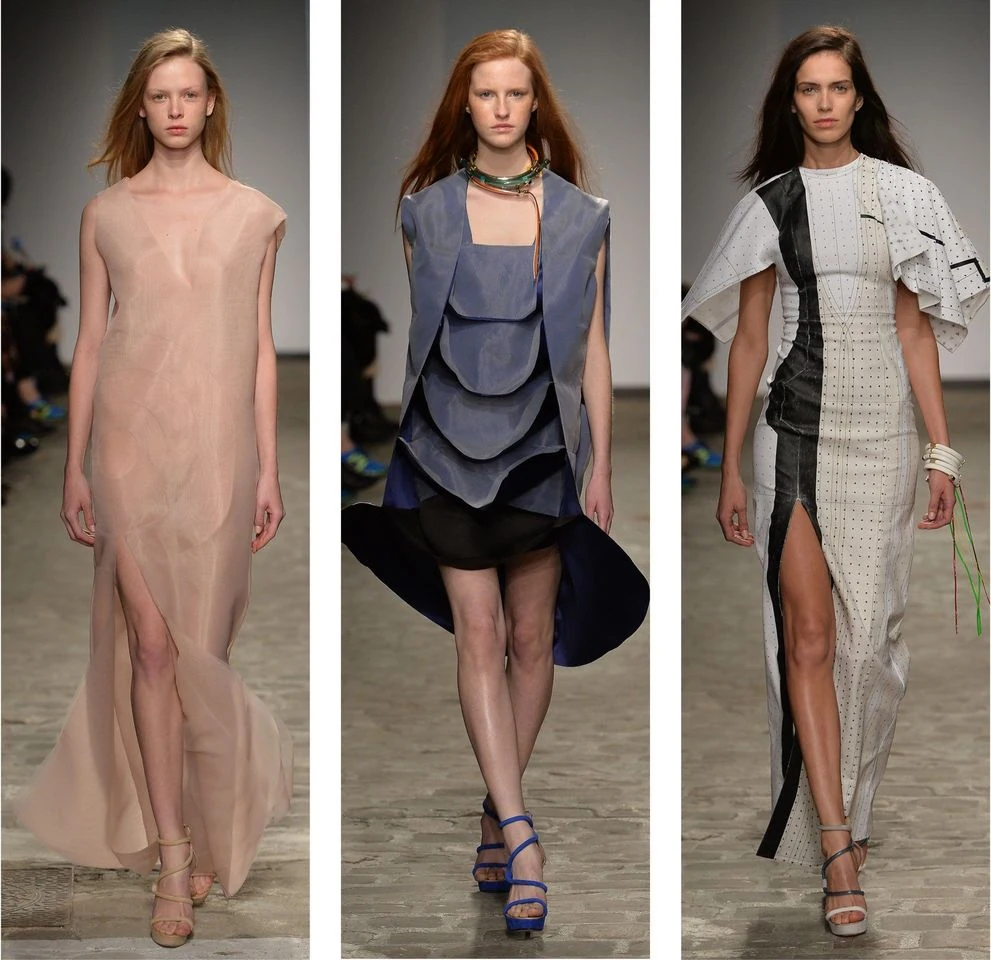
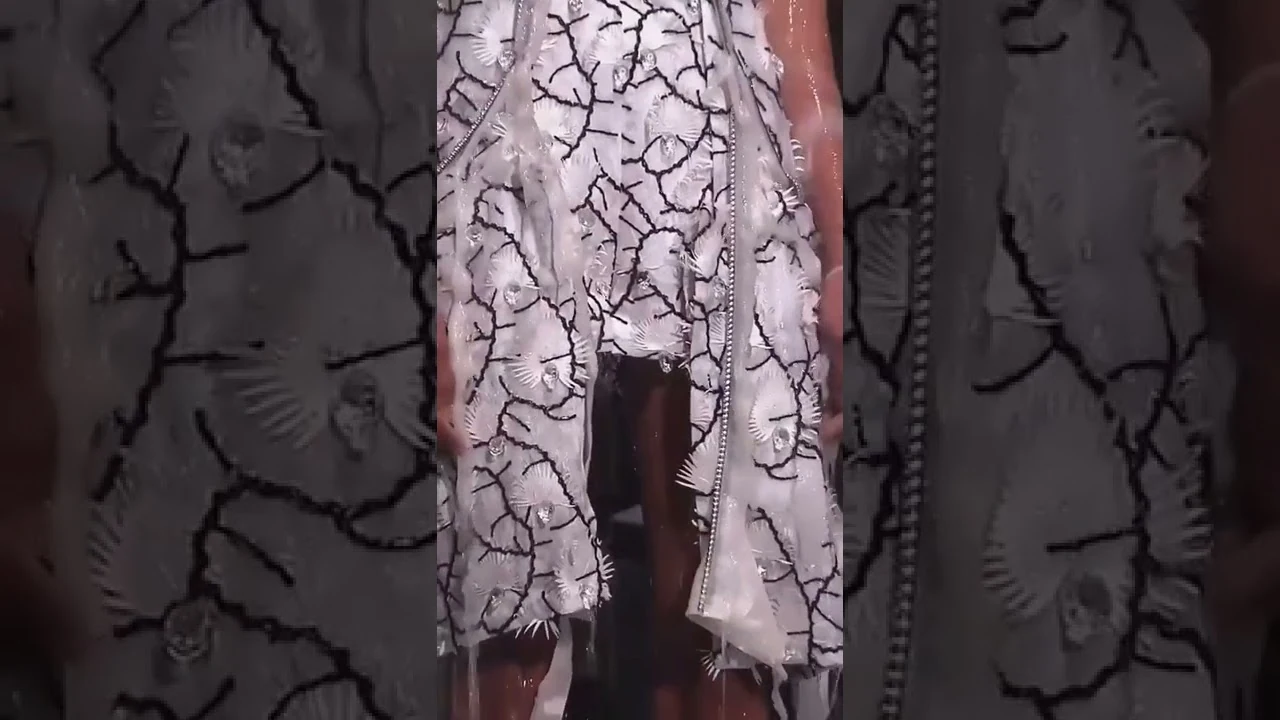
Hussein Chalayan’s clothes have turned into furniture, carried the shape of an aeroplane cabin and, in one runway show, changed the meaning of a domestic object. These were not experiments with technology or spectacle for their own sake. Across collections including After Words and Before Minus Now, Chalayan has asked how people carry identity with them when their surroundings change. Born in Cyprus and educated and established as a designer in Britain, he brought that perspective into British fashion through work that treats clothing as both an object and an idea.
From Nicosia to London
Chalayan was born in Nicosia, Cyprus, on 12 August 1970 to Turkish Cypriot parents. He attended Türk Maarif Koleji in his home city. His family moved to England in 1978, and he went on to study at Highgate School. He later took a National Diploma in fashion and clothing at Warwickshire School of Arts before studying fashion design at Central Saint Martins in London.
His 1993 graduation collection, The Tangent Flows, established an early pattern: the clothes came with an idea about what fashion could communicate. Chalayan buried garments in a backyard and exhumed them shortly before the show, presenting them with a text explaining the process. The burial and return gave the work associations with life, death and urban decay. The London boutique Browns noticed the collection and borrowed it for a window display; it was not promptly purchased.
In 1994 Chalayan established Cartesia Ltd. and his ready-to-wear line, Hussein Chalayan. His early work developed through a series of collections that made the relationship between body, clothing and environment central. For Lands Without, shown for spring/summer 1997, he created “Kite” dresses whose architectural proportions drew attention to how garments occupy space around the wearer. In Panoramic the following year, geometric forms and enlarged pixel-like shapes made the body part of an altered visual landscape.
Clothing as a record of movement
Displacement became especially direct in After Words, his autumn/winter 2000 collection. Presented at Sadler’s Wells in London, it imagined the sudden evacuation of a home during war: people hiding possessions before a raid and having to leave quickly. In the finale, models turned 1950s-style furniture into clothing or carried it away. A mahogany coffee table became a telescopic skirt. The transformation gave household objects a portable form, connecting the practical act of escape with the loss of possessions that can carry personal and cultural meaning.
The collection drew on Chalayan’s Turkish Cypriot background and the political events that affected his childhood. Rather than treating migration as an abstract theme, it made visible the material problem of what can be taken when a home must be left. The table skirt and the show’s set were later included in Tate Modern’s Century City exhibition in London in 2001.
Another treatment of identity appeared in Between, shown for spring/summer 1998. Models wore black chadors of varying lengths; the sequence moved from a face mask on an otherwise nude model to a garment covering most of the body, leaving an opening for the eyes. Chalayan described the work as being about defining cultural territory. Its changing degrees of concealment brought the body, clothing and cultural boundaries into the same frame.
Technology, architecture and the runway
Chalayan’s interest in technology also developed through collaborations and experiments with the construction of garments. In Before Minus Now, for spring/summer 2000, architectural drawings were transferred to silk and cotton. The collection also included the “Remote Control” dress, which used wireless technology and was presented as a functioning garment. Its form drew on the aerodynamics of air travel, making the connection between the body, its surroundings and technological systems part of the design.
Mobility and portable environments had already appeared in the “Chair Dresses” of Geotrophics, for spring/summer 1999. The later After Words collection extended that thinking into the emotional consequences of forced migration. The Airmail clothing project also belongs to this wider body of work: the supplied account of his exhibitions records it at the Musée de la Mode at the Palais du Louvre in December 1999. The available evidence does not support the original article’s specific account of a 2000 collection made to fold into airmail envelopes, so that detail is not repeated here.
In autumn/winter 2007, the Airborne collection brought technological change to the runway; its LED dress was later among the nominees shown at the Design Museum in London. In 2008 Chalayan also created laser LED dresses with Swarovski for a presentation in Tokyo. These projects sit within a career that has moved between fashion, film and exhibition. His short film Absent Presence represented Turkey at the 2005 Venice Biennale. In 2010, his multimedia installation I Am Sad Leyla opened at Lisson Gallery in London.
A designer through changing circumstances
Chalayan’s career has included both major recognition and financial difficulty. He received the Absolut Creation Award in 1995 and won British Designer of the Year in 1999 and 2000. Yet sponsorship and funding remained precarious. After knitwear label TSE did not renew his contract, he faced substantial debt and his company went into voluntary liquidation. He restructured and returned with a collection in 2001, staged without a catwalk presentation, while also designing for Marks & Spencer. Italian manufacturer Gibo and British jeweller Asprey were among those who supported his work; Asprey appointed him fashion director in 2001.
He added menswear in 2002 and, in 2004, another diffusion line. In 2008 German sportswear company Puma appointed him creative director and bought a majority stake in his label; Chalayan bought the brand back in 2010. From the spring collections of 2012, the label used the name Chalayan. His work has also been shown in solo exhibitions, including a retrospective at London’s Design Museum in 2009 and Fashion Narratives in Paris in 2011. He has held teaching posts in Vienna and Berlin, including a professorship at HTW Berlin from 2019.
Why Hussein Chalayan deserves a place in British Legacy
Chalayan’s place in British Legacy rests on a specific contribution to British fashion: he made design a way to think through technology, place and cultural identity. His British education and London-based career gave him a platform for work that reached beyond conventional dressmaking, while his Turkish Cypriot background informed collections concerned with migration and the experience of leaving home. In After Words, furniture becoming clothing was not simply a runway transformation. It offered a concrete image of what people might try to preserve when forced to move. In Before Minus Now, the functioning “Remote Control” dress brought technology into direct contact with the body and its environment.
His influence is also visible in the range of forms his practice has taken: collections, film, multimedia installations, exhibitions and teaching. That breadth matters to British fashion because it demonstrates how a designer can work across disciplines while remaining attentive to the construction and meaning of garments. His two British Designer of the Year awards mark national recognition, but the work itself explains its value more clearly: it gives audiences ways to consider who owns a space, what clothing conceals or reveals, and how identity travels with its wearer. Chalayan’s career also records the practical uncertainty of sustaining an independent label, making its achievements more than a story of uninterrupted acclaim.
Sources
Hussein Chalayan — Wikipedia, revision 1369004684
Adapted in part from Hussein Chalayan by Wikipedia contributors, under CC BY-SA 4.0. Text has been edited and combined with the existing article; this adapted text is shared under the same licence. Contributor history.