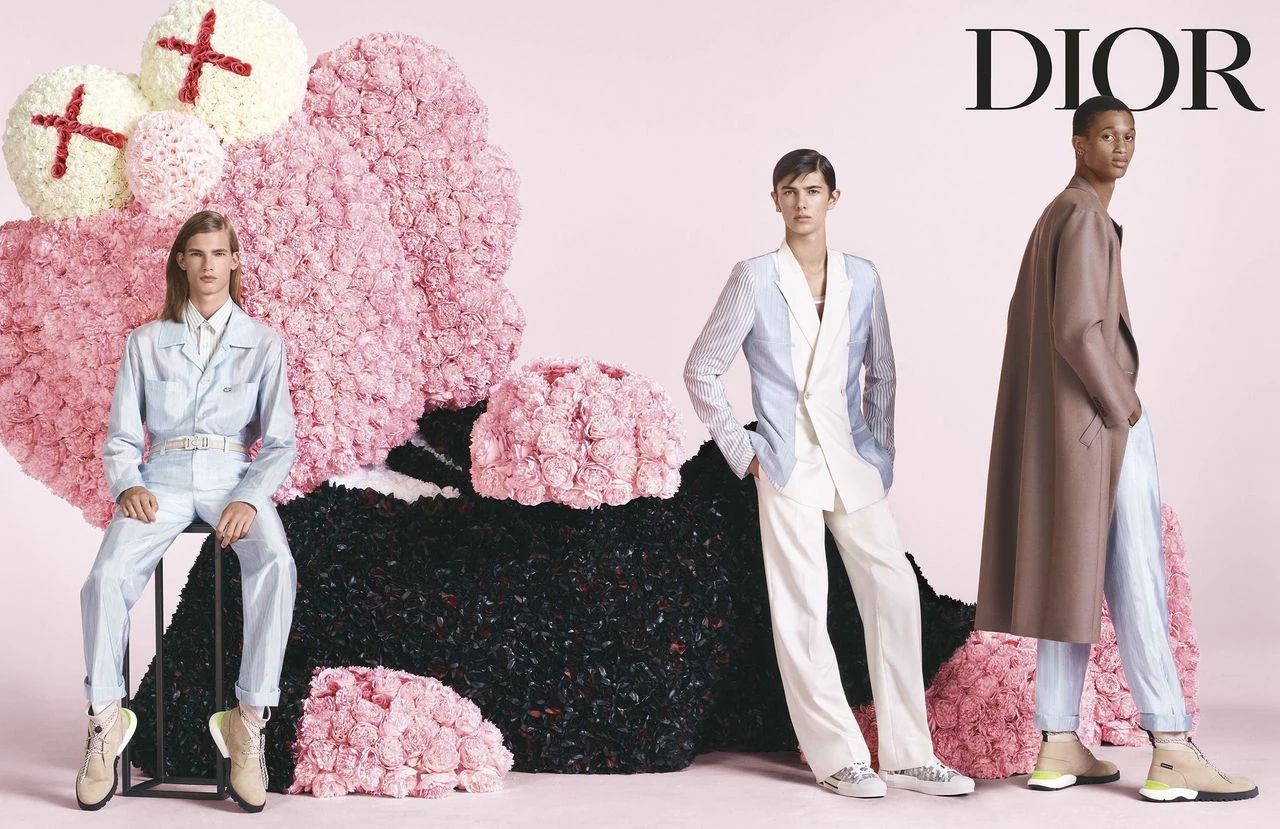
Kim Jones’s career has taken him from a London fashion education to senior creative roles at Louis Vuitton, Dior Men and Fendi. His work has crossed menswear, couture and womenswear, with collaborations including Supreme at Louis Vuitton and artist KAWS at Dior Men. Those appointments and partnerships give a concrete outline of his career: a designer educated in Britain working across international fashion houses.
London beginnings and a fashion education
Jones was born in London in 1979. The supplied account describes an early life shaped by travel, including time in Ecuador and the Caribbean, before he studied fashion at Central Saint Martins. This combination of a London birth, time spent abroad and formal study in Britain provides the background to his later work across fashion houses with different identities and audiences.
His graduation collection appeared in 2002. The original account calls its reception immediate acclaim, but supplies no details of the collection or of who praised it. What can be stated from the material is that the collection marked the end of his course and that he went on to senior positions in the industry. The education and the subsequent appointments form a clearer account of his professional trajectory than the original article’s broader claims about his influence.
Louis Vuitton: menswear and streetwear
From 2011 to 2018, Jones was artistic director of menswear at Louis Vuitton. The supplied account describes his work there as bringing luxury fashion and streetwear together, and identifies the collaboration with Supreme as a notable example. It does not give details of particular garments or document the collaboration’s reception or commercial effects. The partnership is therefore most useful as a specific marker of the period, rather than as evidence for larger claims about its impact on fashion.
The role placed Jones in charge of menswear at a major international fashion house. His British education is part of the story of how he arrived there; the source does not establish that the work itself represented a general British influence on international style. Keeping those points distinct makes it possible to describe the reach of his career without attributing unsubstantiated national qualities to his designs.
Dior Men and Fendi
In 2018, Jones became artistic director of Dior Men. The original article describes his debut collection as combining classic elegance with contemporary tailoring, and names his collaboration with artist KAWS. These are details of the work and its collaborators, although the source gives no further examples from the collection and no evidence for the claimed worldwide response. The appointment nevertheless marks a new stage after his seven years at Louis Vuitton.
In 2020, Jones took on the role of artistic director of couture and womenswear at Fendi. The original account describes this as his first venture into womenswear and presents it as a move beyond his menswear work. It provides no collection examples to support its description of a blend of Italian luxury and British modernism, so that judgement is not treated as established fact here. The stated scope of the role does, however, show the breadth of his appointments: menswear leadership at Louis Vuitton and Dior Men, alongside responsibility for couture and womenswear at Fendi.
Why Kim Jones deserves a place in British Legacy
Jones’s place in British Legacy rests on a clear connection: he was born in London and studied fashion at Central Saint Martins before taking senior roles at international houses. The sequence from his education to Louis Vuitton, Dior Men and Fendi gives the account a specific British dimension without suggesting that every aspect of his work is uniquely British. His career shows a designer with British training working across several prominent fashion businesses and areas of design.
The collaborations with Supreme and KAWS add further detail to that record. They locate particular parts of his work at Louis Vuitton and Dior Men, while the Fendi appointment extends the account beyond menswear. The supplied material does not establish the wider cultural or commercial effects of these projects, so their significance should not be overstated. Taken together, the documented education, roles and collaborations make Jones’s career worth recording: it links a British design education with a professional life spanning menswear, couture and womenswear at international fashion houses.