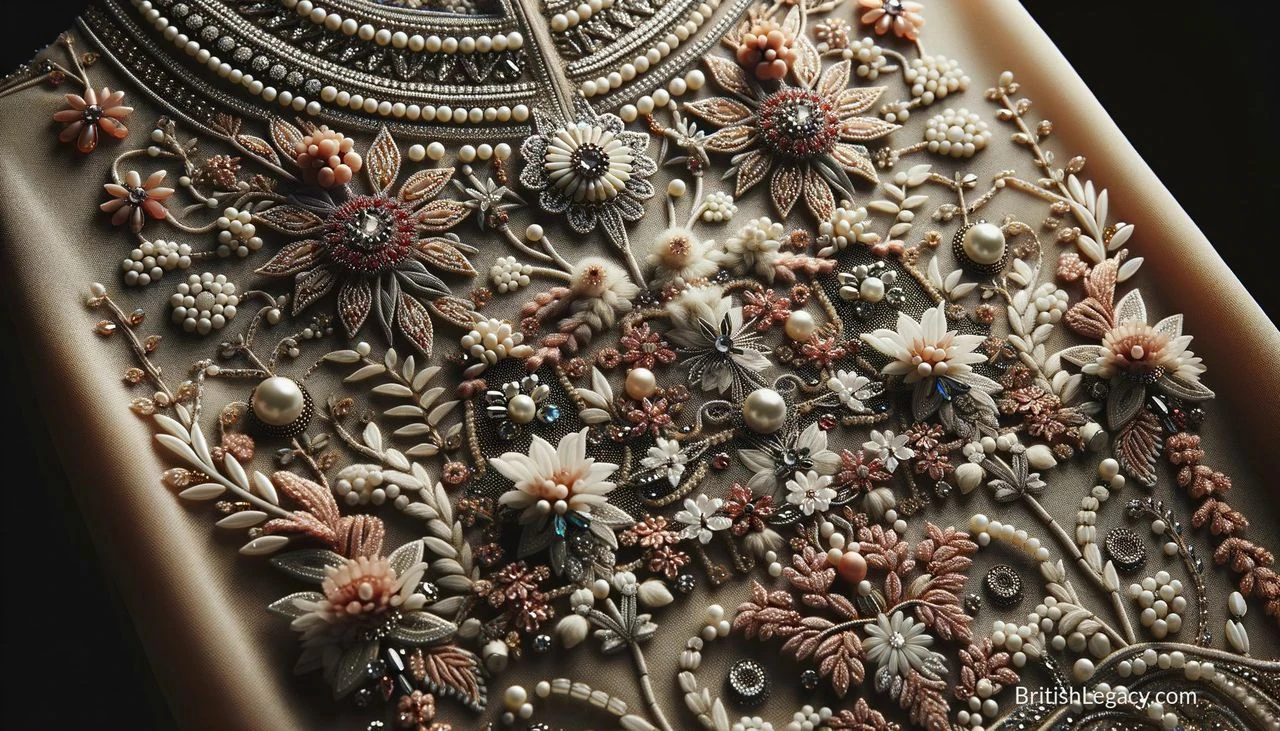
Temperley London brings together two strands of Alice Temperley’s story: a fashion house founded in 2000 and a creative outlook associated with Somerset and detailed textile work. Its collections have included evening gowns and daywear, with beadwork and embroidery among the features identified with the label. The brand’s profile has also extended beyond Britain, through appearances at London Fashion Week and garments worn at high-profile events.
A Somerset background and London training
Alice Temperley was raised in Somerset and studied textile design at Central Saint Martins and the Royal College of Art, according to the supplied article. It presents those experiences as part of the background to her later work, linking a rural upbringing with training in London. The article also describes the label as an eponymous brand founded in 2000.
Temperley London’s stated design ambition was to make collections that felt distinctive and lasting. Luxurious fabrics, beadwork and delicate embroidery became recurring features in its presentation. These details place the emphasis not only on a garment’s outline but on the work involved in its surface and finish. The supplied account also identifies vintage fabrics, travel and craftsmanship as sources of inspiration, though it does not give examples of particular collections or explain how those influences were used.
Detail, occasionwear and a public profile
The label’s range has included evening gowns as well as daywear. Its appeal, as described in the original account, rests partly on the contrast between those uses and a recognisable attention to ornament: embroidery and beadwork feature across its descriptions of the brand’s style. Rather than treating such details as evidence of a single unchanging look, they are best understood as recurring elements of the label’s identity.
The supplied text names the Duchess of Cambridge, Angelina Jolie, Beyoncé and Scarlett Johansson among people reported to have worn Temperley designs. It also describes the label as a regular presence at London Fashion Week. Together, those details indicate a public profile spanning British fashion events and international celebrity coverage. The source does not provide dates or specific garments for the named appearances, so they do not establish the scale or continuity of that association.
Somerset and the brand’s British setting
The original article describes a Mayfair flagship store and a rural Somerset retreat as physical expressions of the brand’s connection to both London and the countryside. That pairing echoes the account of Temperley’s own background: a designer raised in Somerset who studied in London and established a London-named fashion house. The supplied material offers no dates or further operational details for either location, so they are best treated as reported elements of the brand’s setting rather than a complete account of its retail history.
The article also characterises Temperley London as committed to ethical production and reducing waste. It gives no examples, targets or details of particular practices. Those claims therefore cannot be used here to measure the label’s environmental performance. The more clearly described evidence of its identity lies in the textile detail, the range of occasionwear and its presence in London fashion settings.
Why Temperley London deserves a place in British Legacy
Temperley London merits a place in British Legacy as a fashion label whose story, in the supplied account, connects a Somerset upbringing with study at two London art colleges and a business founded in 2000. That connection gives the brand a specific British setting rather than relying on a general claim of national importance. Its recognised design vocabulary—luxurious fabrics, beadwork and embroidery—also provides a concrete way to understand what distinguishes its work in the article. The collections’ reported span from evening gowns to daywear suggests an ambition to carry that detailed approach across different kinds of dressing.
The brand’s presence at London Fashion Week and the reported wearing of its designs by public figures have helped give Temperley London visibility beyond its immediate setting. These details do not, on their own, prove a broad influence on the fashion industry, and the original text supplies no evidence with which to measure such an effect. They do show how a British fashion house can develop an international public profile while retaining a connection to its founder’s Somerset background and London training. That combination of place, design detail and public reach is the strongest basis for its place in this collection.