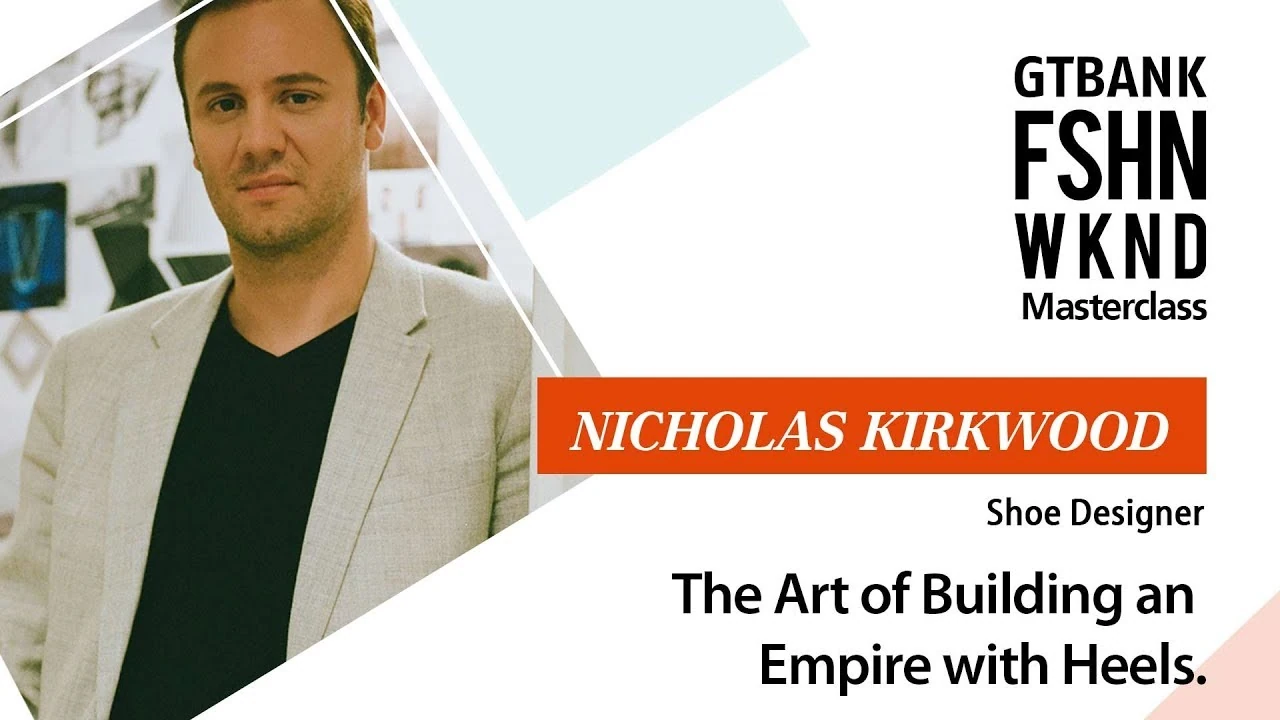
Nicholas Kirkwood’s footwear brings a sculptural sensibility to a practical craft. Trained in shoemaking in London, he formed a British label with Christopher Suarez and developed a career that spans independent business, international retail and creative direction at an established Italian fashion house. His designs have been described for their geometric forms and detailed finishes; his awards and the reach of his collections give a more tangible measure of their place in the industry.
Learning the craft
Nicholas Matthew Schneidau Kirkwood was born in July 1980 and is identified in the supplied biographical reference as a British footwear designer. He learned shoemaking at London-based Cordwainers College. That training is a useful starting point for understanding work often characterised as architectural: a striking outline still has to be made as footwear, with the practical knowledge and construction that entails.
The imported account describes an early interest in millinery and study at Central Saint Martins before Cordwainers. Those particulars are not confirmed by the supplied reference, which names Cordwainers as his shoemaking training. They are therefore not presented here as established parts of his biography. The details that can be traced in the evidence lead from London craft training to the formation of a company under his own name.
Forming a label
In 2004, Kirkwood and his business partner Christopher Suarez formed his eponymous British brand. This correction to the imported article’s 2005 launch date also gives the company’s development a clearer context: it began as a business founded by Kirkwood and Suarez, rather than as an unspecified solo launch. The supplied reference does not give details of their respective responsibilities, so the partnership should not be made more specific than that.
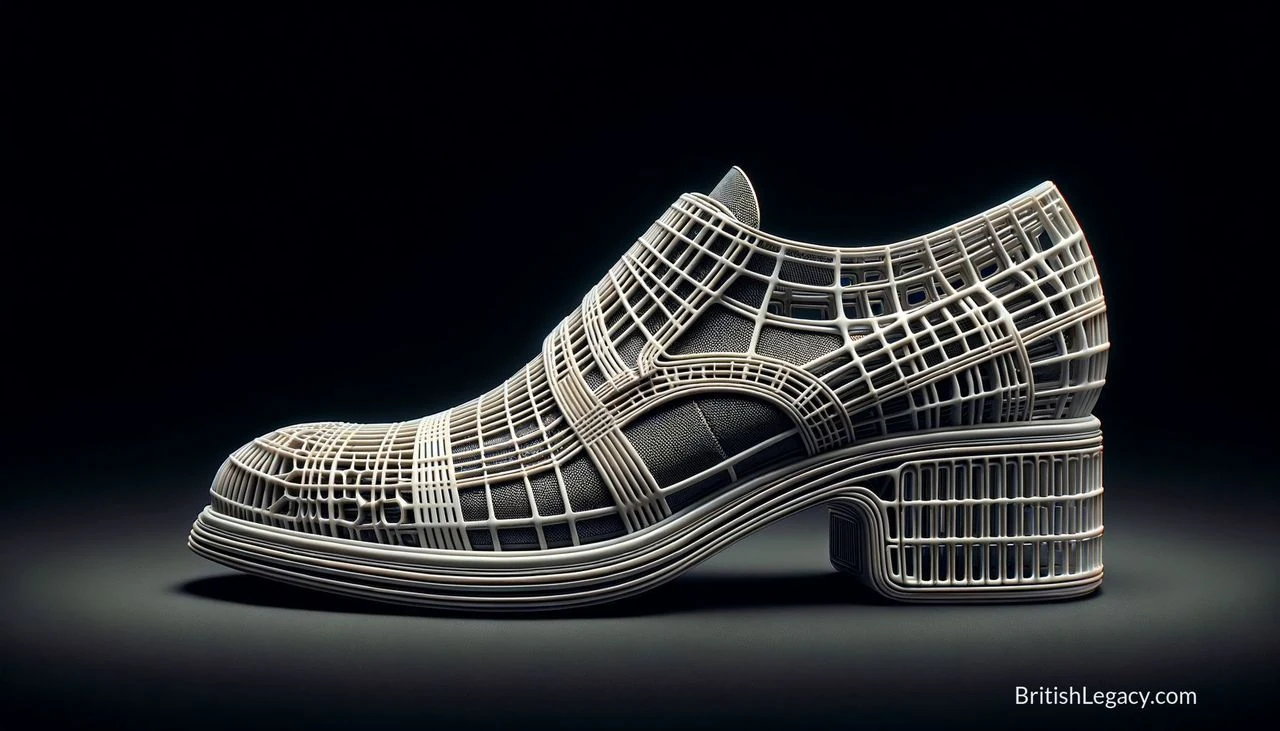
The earlier account characterises Kirkwood’s designs through bold geometric forms and details such as mirrored leather, pearls and intricate beading. These descriptions suggest a focus on silhouette and finish, as well as on the shoe as a sculptural object. They are features reported in that account, not a claim that every collection used the same materials or followed a single formula. The supplied sources do not give a technical history of individual models, and a broader claim about the effect of these designs on the whole luxury market would go beyond the evidence.
The label acquired an international retail presence. Its collections were distributed through 150 leading department and specialist stores worldwide, and the business had three flagship stores: in London, New York and Las Vegas. Together, those details indicate the scale of its reach without requiring general claims about universal popularity. London remained one of the brand’s flagship locations as its commercial presence extended well beyond Britain.
Awards and creative direction
Kirkwood’s recognition developed over a number of years. In 2005, he received the Conde Nast and Footwear News Vivian Infantino Award for Emerging Talent. In 2007, he won the Who’s on Next award for accessory designer, given by Vogue Italia and Alta Roma. These early distinctions were followed in 2008 by the Conde Nast and Footwear News Designer of the Year award and the British Fashion Awards’ Swarovski Award for Emerging Talent in Accessories.
He also received support through the British Fashion Council’s New Gen scheme, listed for the autumn/winter 2008, spring/summer 2009 and autumn/winter 2009 seasons. The British Fashion Awards named him Accessory Designer of the Year in 2010 and Accessories Designer of the Year in 2012. In 2013, he became the first accessories designer to win the British Fashion Council/Vogue Designer Fashion Fund. The distinctions came from different bodies and across different stages of his career; taken together, they show sustained industry recognition rather than a single breakthrough moment.
In 2010, Kirkwood succeeded Jonathan Saunders as creative director of Pollini, a Milan-based fashion house. He left the role in 2014. This appointment placed him in a senior creative position beyond his own label and provides a specific example of his work within another fashion business. It is more precise than the imported article’s general suggestion of collaborations with international houses, which the supplied reference does not substantiate.
Business growth and LVMH
In 2013, LVMH acquired a majority stake in Kirkwood’s company for an undisclosed sum. This describes a change in ownership of the business, rather than Kirkwood simply joining the group, as the imported account puts it. The transaction connected the label with a major international luxury group, but the supplied material does not state the deal’s terms beyond the majority stake or explain its later commercial effects.
The sequence from the 2004 formation of the brand to international distribution, flagship stores and the 2013 investment shows different parts of a designer’s career working together. Design recognition alone does not explain how a label reaches customers; nor do store numbers or investment explain its creative identity. In Kirkwood’s case, the evidence places craft training and a distinctively described design approach alongside the business arrangements and professional recognition that carried his work across markets.
The future-facing claims
The imported account included a section headed “The Future of Nicholas Kirkwood” and predicted that his influence and legacy would endure. That is a forecast, not a documented event or achievement, and the supplied evidence does not establish what followed. The account is therefore treated as a future-facing claim rather than repeated as biography. The career described here rests instead on dated awards, a documented creative-director appointment, the formation of a company and reported retail distribution.
Why Nicholas Kirkwood deserves a place in British Legacy
Kirkwood’s place in British Legacy can be grounded in specific connections to British design and enterprise. He is identified as a British footwear designer, learned shoemaking at London’s Cordwainers College and formed a British brand with Christopher Suarez. His recognition included two British Fashion Awards for accessory design, in 2010 and 2012, and the British Fashion Council/Vogue Designer Fashion Fund in 2013. These achievements connect his career to British training, a British-founded business and institutions that recognise work in the UK fashion industry. They make a stronger case than broad claims about national character or influence that the supplied evidence cannot demonstrate.
The reach of the label adds another dimension. Its collections were distributed through 150 leading department and specialist stores around the world, with flagship stores in London, New York and Las Vegas. Kirkwood also took on the creative-director role at Pollini, and LVMH acquired a majority stake in his company in 2013. These details show a designer and a British-founded label operating across both domestic and international settings. The earlier account’s descriptions of geometric forms and detailed finishes help explain the creative identity associated with the brand, while the awards, retail distribution and business history document its professional and commercial reach. Together, those elements make his contribution specific: a London-trained British designer built a recognised footwear business whose work reached audiences well beyond the UK.
Sources
Nicholas Kirkwood, revision 1215850075
Adapted in part from Nicholas Kirkwood by Wikipedia contributors, under CC BY-SA 4.0. Text has been edited and combined with the existing article; this adapted text is shared under the same licence. Contributor history.