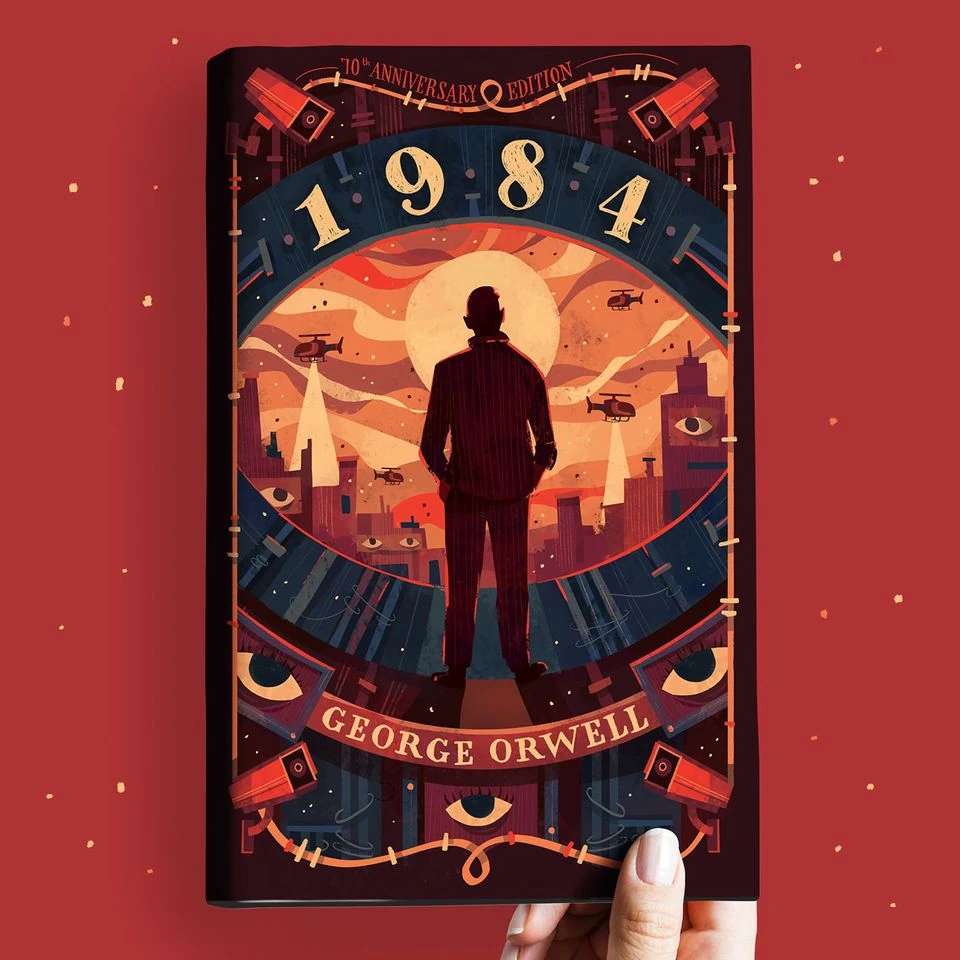
"1984" by George Orwell: A Pillar of British Literary Heritage
Overview and Summary
"1984," a seminal work by George Orwell, is a dystopian novel that has left an indelible mark on global literature and continues to fuel discussions about privacy, surveillance, and governmental power. Written in 1949, the novel is set in a totalitarian society ruled by the Party and its iconic figurehead, Big Brother. The narrative follows Winston Smith, a low-ranking member of the Party who becomes increasingly disillusioned with the oppressive regime. The novel’s exploration of political manipulation, language control, and thought censorship remains as relevant today as it was upon its publication.
The Writing and Its Significance
George Orwell, born Eric Arthur Blair, wrote "1984" amidst the burgeoning fears of totalitarian ideologies following World War II. Orwell's experiences during the Spanish Civil War and the rise of Nazi Germany and Stalinist Soviet Union deeply influenced his portrayal of a dystopian future. His writing was not merely a reflection of the political anxieties of his time; it was also a stark warning of what could happen should democratic freedoms be obliterated.
Orwell employed a direct, unembellished prose to create a chillingly plausible world where individual freedom is extinguished, and truth is what the Party deems it to be. This novel introduced concepts and terminology such as "Big Brother," "doublethink," and "newspeak," which have since permeated modern discourse.
Impact and Legacy
Since its publication, "1984" has been translated into more than 65 languages and ranked as one of the most influential books of the 20th century. Its foresightful criticism of authoritarianism has made it a staple in discussions about political science, ethics, and privacy. The influence is evident in literature, academics, films, and even policy debates where Orwellian concepts are invoked to highlight government overreach and the erosion of civil liberties.
According to The Guardian, "1984" was one of Orwell’s finest works and has continually been cited by scholars, scientists, and writers when discussing political theory and human rights. It remains a pertinent warning and a call to vigilance in safeguarding democratic principles.
Contribution to British Legacy
"1984" embodies the quintessential British literary tradition of exploring complex, often uncomfortable truths through compelling narrative fiction. Orwell's work is a testament to the enduring power of literature to provoke thought, inspire dialogue, and challenge authority. The novel's continued relevance affirms its status as a cornerstone of British literary heritage.
For those wishing to delve into Orwell's haunting vision of a world stripped of freedom and truth, "1984" is widely available for purchase.
You can buy it on Amazon.
In sum, "1984" is not merely a book; it is a critical exploration of power and corruption, and an essential piece of literature that will continue to influence and resonate for generations to come.