Barbara Castle’s reforms reached into places where politics becomes part of ordinary life: the wages in a pay packet, the risks of a journey by road, and the support available to a family or a person providing care. As a Labour minister, she helped advance equal-pay legislation, roadside breath tests and child benefit. Her career was not a sequence of easy victories. She fought within government, met resistance from unions and colleagues, and sometimes lost the argument. But she repeatedly pressed institutions to address problems that had too often been treated as inevitable.
Born Barbara Anne Betts in Chesterfield in 1910, she represented Blackburn in the House of Commons from 1945 to 1979. She became the first woman to hold the office of First Secretary of State and served in several Cabinet posts. Her record joined political campaigning to the detailed business of government: taking a case into Parliament, negotiating policy and helping to give it legal or administrative form.
From a Labour household to Blackburn
Castle grew up in a politically active family and joined the Labour Party as a teenager. Her childhood took in Pontefract, Bradford and Hyde, as her father’s work led the family to move. In Bradford, her parents became involved with the Independent Labour Party; her mother also ran a soup kitchen for coal miners. The household exposed Castle early to political argument and to the material conditions behind it.
At St Hugh’s College, Oxford, she studied philosophy, politics and economics, graduating in 1932. She became treasurer of the Oxford University Labour Club and developed a reputation as an assured speaker. She was also sharply critical of the university’s social hierarchy. Her politics were shaped by a belief in equality, but she did not confine herself to slogans: she learned how organisations worked, from local government to Parliament.
Castle was elected to St Pancras Metropolitan Borough Council in 1937 and spoke at the Labour Party Conference for the first time in 1943. During the Second World War she worked as a senior administrative officer at the Ministry of Food and served as an Air Raid Precautions warden during the Blitz. She wrote for the Labour magazine Tribune and, after marrying Edward “Ted” Castle in 1944, became housing correspondent for the Daily Mirror.
Local Labour women in Blackburn pressed for Castle to be added to the parliamentary shortlist, which had initially been all male. She was elected at the 1945 general election, when Blackburn returned two MPs. Although she had grown up in northern industrial towns, she had no previous connection to the constituency. To learn the place rather than arrive as a stranger with a ready-made answer, she studied weaving and spinning and spent time with a local family. That practical preparation accompanied her throughout her political life.
In the Commons, Castle became parliamentary private secretary first to Stafford Cripps and then to Harold Wilson. She built a reputation as a forceful speaker and a Labour left-winger, and was an early supporter of equal pay. In 1954 she joined a cross-party group of MPs presenting Parliament with a petition for equal pay in public services, signed by more than 80,000 people. The campaign preceded her later chance to turn the issue into government policy.
Equal pay: from Dagenham to legislation
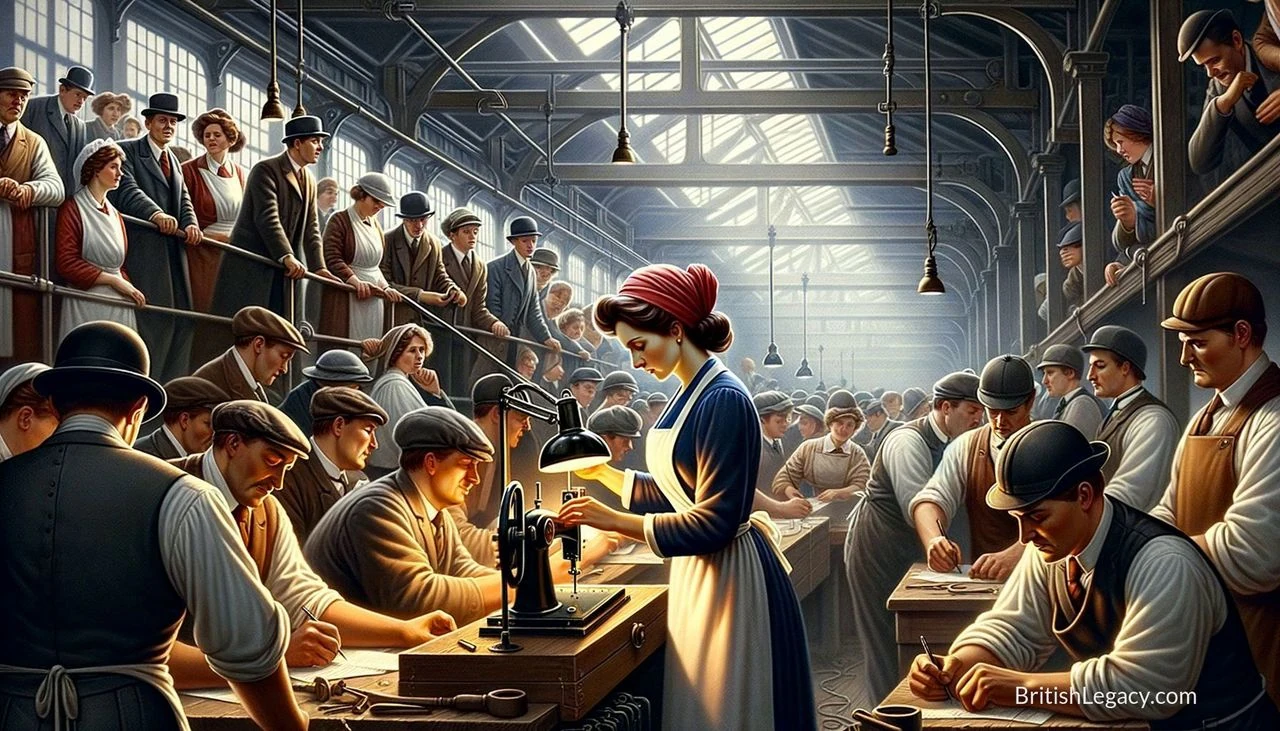
The 1968 strike by sewing machinists at the Ford plant in Dagenham brought the question of women’s pay into sharper national focus. The House of Commons Library account supplied for this feature reports that 850 women walked out after being paid 15 per cent less than male colleagues for work of comparable skill. Castle, then Secretary of State for Employment and Productivity, intervened in the dispute and gave the workers’ case the attention of a senior minister.
The strike did not itself settle the question of equal pay, but it made the inequality harder to ignore. Castle’s role was to connect a workplace dispute to parliamentary action. On 9 February 1970 she introduced the Equal Pay (No. 2) Bill in the Commons, explicitly recognising the women whose action had helped bring the issue before the country. The Equal Pay Act received Royal Assent on 29 May that year and came into force on 29 December 1975.
The Act did not eliminate the gender pay gap or resolve every dispute about equivalent work. Its importance was more specific and enduring: it established a legal basis for challenging employment terms that were less favourable because of sex. A disparity that could once be defended as custom could now be contested as a matter of law. Castle had supported equal pay before holding the office that gave her influence over legislation; the Dagenham strike gave the campaign urgency, and her ministerial work helped carry it through Parliament.
Her record in the department was not limited to that achievement. In 1969 Castle promoted In Place of Strife, a white paper proposing changes to industrial relations and the handling of strikes. The proposals divided the Cabinet and provoked strong opposition from the trade union movement. Much of the plan was withdrawn after negotiations. The episode damaged Castle’s standing with some on the Labour left and was later drawn into arguments about Labour’s 1970 election defeat. It also shows a politician willing to pursue a difficult policy rather than speak only for causes guaranteed to win approval.
Transport policy and the cost of road deaths
As Minister of Transport from 1965 to 1968, Castle argued that road deaths and injuries should be treated as preventable, not as an unavoidable cost of motoring. The Road Safety Act 1967 established provisions for roadside breath tests and set a drink-driving limit in law. Castle also made the national 70 mph speed limit permanent after it had first been introduced as a trial. These were contentious interventions in a country adapting to greater car use, but she was prepared to risk unpopularity in pursuit of safer roads.
Her approach extended to the design of vehicles. Castle pressed for seat belts and anchorage points to be fitted in new cars and light vans. That is not the same as introducing a general legal requirement for people to wear seat belts: the fitting requirement and the later wearing law are distinct measures. Her transport legacy also includes a willingness to look beyond private motoring. While examining traffic problems in New York, she spoke of a possible congestion charge for London and argued for better public transport rather than simply building more roads.
Not every decision made during her ministry was an expansion of public provision. Castle presided over substantial railway closures as part of the Beeching cuts, despite Labour’s earlier commitment to halt the proposals. She did resist some closures, and the Transport Act 1968 introduced government subsidies for socially necessary but unprofitable railways. Taken together, these decisions show the practical and sometimes conflicting demands of transport policy: reducing costs and restructuring the network while retaining services judged necessary to communities.
She also supported the construction of the Humber Bridge, securing government backing for a project in the region of a marginal seat that Labour feared losing. The bridge opened in 1981, after her period as minister. Castle’s transport work was therefore varied: road-safety rules, vehicle standards, rail services and debates about congestion all sat within a department whose decisions affected daily movement across Britain.
Families, carers and social security
When Labour returned to office in 1974, Castle became Secretary of State for Social Services. One of her department’s significant reforms was the Child Benefit Act 1975, which replaced the earlier family-allowance structure with support that included a family’s first child. In introducing the measure, Castle described a universal, tax-free benefit. The legislation also gave priority to payment to the mother when both parents lived with the child. The change made child support more direct and altered how public assistance reached families.
Her department also established Invalid Care Allowance in 1976, the benefit that became Carer’s Allowance. It recognised that caring for a severely disabled relative could restrict a person’s ability to take full-time paid work. The recognition was significant: care within a family could carry an economic cost, even when it did not appear as a conventional job. Castle’s reforms helped bring that cost within the scope of social security.
The Social Security Pensions Act 1975 also advanced earnings-related state pension provision and required equal access for men and women to occupational pension schemes. The legislation sat within a wider argument about how retirement income should be supported and distributed. Castle’s work in social services addressed different stages and circumstances of life: raising children, providing care and preparing for old age. Her record is best understood not as one isolated benefit, but as an effort to shape the machinery through which support was provided.
Castle also sought to remove private “pay beds” from the National Health Service, a policy that brought her into conflict with the British Medical Association. In the 1975 referendum on continued membership of the European Economic Community, she campaigned for leaving. She remained in Cabinet until Harold Wilson resigned in 1976. His successor, James Callaghan, dismissed her soon after becoming prime minister, ending her ministerial career.
Beyond Westminster
Castle left the House of Commons at the 1979 general election, having represented Blackburn for nearly 34 years. She moved to the European Parliament, representing Greater Manchester from 1979 to 1989 and leading the Labour delegation there. Her political position on Europe changed over time: after campaigning against continued membership in the 1975 referendum, she later argued that Labour should accept membership and fight for Britain’s interests from within.
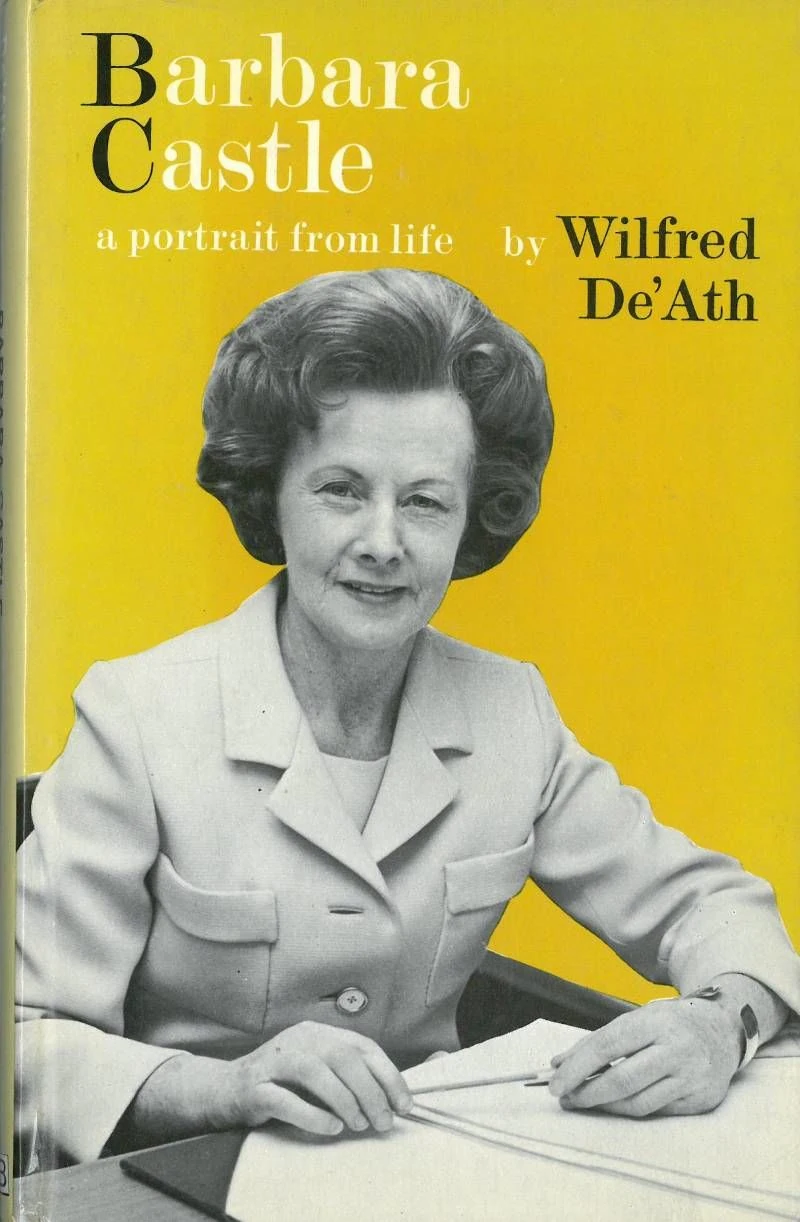
In 1990 she became Baroness Castle of Blackburn in her own right. She remained active in political debate, including criticism of New Labour’s economic direction and of the decision not to link pensions to earnings. Her political life also reached readers through her diaries, published in two volumes covering her years in government. They offered an account of Cabinet politics from someone who had been both an advocate of reform and a participant in its compromises.
Castle died on 3 May 2002, aged 91. Her later recognition included the unveiling of a bronze statue in Blackburn in 2021. The sculpture shows her carrying a copy of the Equal Pay Act, placing her most familiar achievement within the town she represented for decades. Her name is also given to a road in Blackburn, and she was commemorated on a Royal Mail stamp in 2008 as part of its Women of Distinction series.
Why Barbara Castle deserves a place in British Legacy
Barbara Castle deserves a place in British Legacy because her work helped change the expectations people could bring to employers and government. The Equal Pay Act made discriminatory employment terms open to legal challenge; the Dagenham machinists’ strike helped force the issue into public view, while Castle used her position to carry the case into Parliament. The law did not end unequal pay, but it changed the terms on which it could be defended. That distinction matters: a reform can be consequential without solving every problem it addresses.
Her contribution to road safety was equally concrete. Breath-testing provisions, a statutory drink-driving limit, a permanent national speed limit and requirements for seat-belt fittings treated safety as a responsibility of public policy and vehicle design. In social security, child benefit extended support to a first child, while Invalid Care Allowance recognised the economic consequences of caring. Her work on pensions addressed equal access and earnings-related provision. These measures touched different parts of life, rather than serving a single constituency or interest.
Castle’s legacy should include the difficulties as well as the successes. In Place of Strife failed to secure the changes she sought; railway closures formed part of her transport record; and her social-security reforms emerged amid political and institutional disagreement. Such tensions make her career more instructive, not less. She believed that policy required detailed work inside institutions, and she was prepared to accept political risk in trying to change them. For a British Legacy devoted to people whose actions shaped the country, Castle’s record is unusually direct: laws, transport rules and benefits that altered the relationship between citizens, employers and the state.
Sources
Barbara Castle — Wikipedia revision 1373172464
Adapted in part from Barbara Castle by Wikipedia contributors, under CC BY-SA 4.0. Text has been edited and combined with the existing article; this adapted text is shared under the same licence. Contributor history.