The Battle of Arsuf: A Defining Victory in the Third Crusade
The stage was set on a blistering day in September 1191. Under the relentless sun of the Levant, the Crusaders, led by Richard the Lionheart, would clash with Saladin’s formidable forces in one of the most consequential battles of the Third Crusade - the Battle of Arsuf. This encounter was not merely a skirmish over arid soil; it was a decisive moment that solidified Richard’s renown as a military tactician and significantly bolstered the crusading effort to reclaim the Holy Land.
Richard the Lionheart: England’s Crusading King
Born in 1157, Richard I, known as Richard the Lionheart, carries a larger-than-life legacy intricately woven into the tapestry of British history. A king more often remembered for his exploits abroad than his reign in England, Richard epitomised the ideal medieval monarch: courageous, chivalrous, and strategically astute. His role in the Third Crusade cements his reputation, particularly his leadership and victory at Arsuf.
Prelude to the Battle
The Third Crusade was launched in response to Saladin's capture of Jerusalem in 1187. The Christian forces, united under the banners of European monarchs, aimed to reclaim the Holy City. En route, Richard captured the city of Acre in July 1191, a significant achievement. Yet the path to Jerusalem was fraught with peril, peril personified by the ever-looming threat of Saladin’s army.
The Battle of Arsuf: Clash of Titans
On 7th September 1191, near the coastal stronghold of Arsuf, the Crusader army confronted Saladin’s forces. Richard’s army was composed of a coalition of European knights and soldiers, including the steadfast Knights Templar and Hospitaller. Despite the Crusaders' numerical superiority, the confrontation with Saladin’s agile and disciplined troops was no assured victory.
As the Crusaders advanced, Saladin launched incessant attacks. Richard’s command, however, was masterly. He instructed his men to maintain formation and resist the urge to break rank for counter-attacks prematurely. The discipline of Richard’s army was both a testament to his leadership and crucial in withstanding Saladin’s harassment.
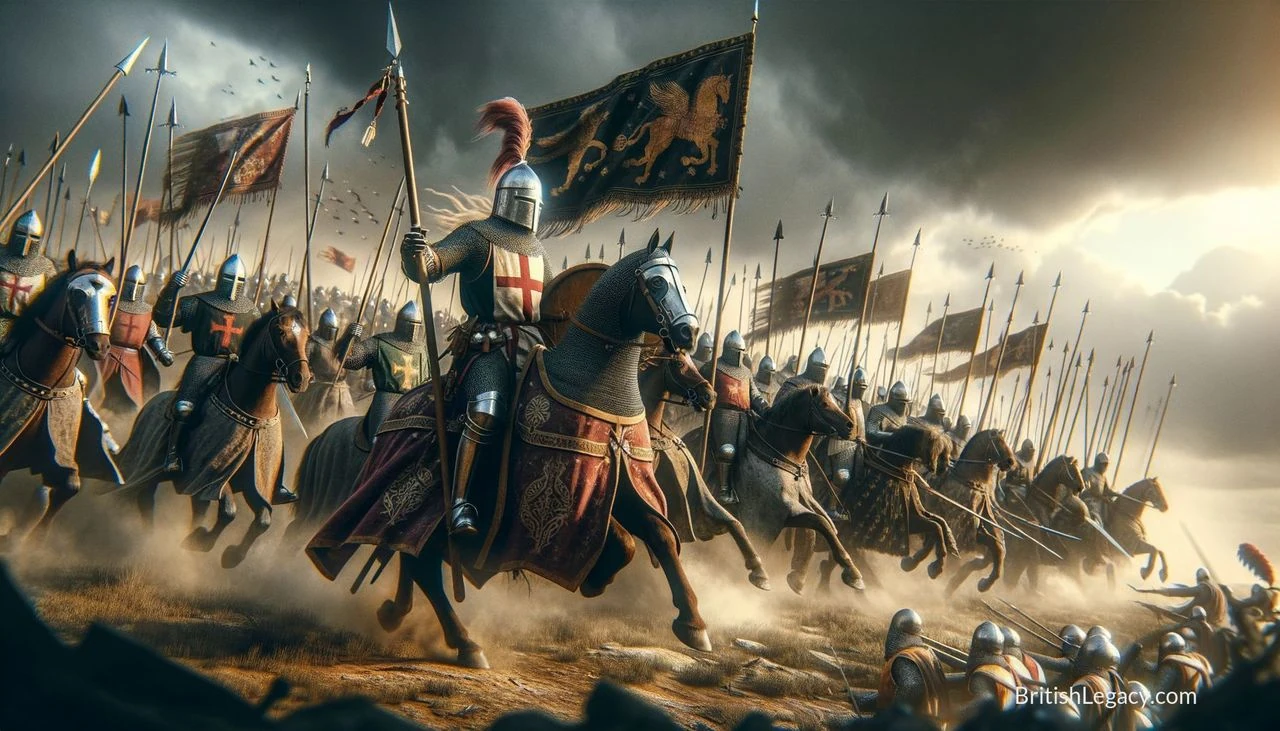
The turning point came when Richard ordered a full-scale counter-offensive. The Crusader knights charged with unbridled ferocity, breaking Saladin's lines. This charge, led by Richard himself, demonstrated his exceptional courage and tactical brilliance. The Muslim army, unable to withstand the onslaught, retreated, conceding a significant victory to the Crusaders.
The Aftermath and Legacy
The Battle of Arsuf’s importance extends beyond its immediate military triumph. It solidified the Crusader grip on key coastal territories, vital for supplies and reinforcements. This victory also significantly diminished Saladin’s prestige, proving that his forces could be defeated.
Richard’s success at Arsuf epitomised the virtues of medieval kingship: valour, strategic acumen, and inspirational leadership. His reputation as one of history's finest military leaders was cemented, contributing richly to the mythical grandeur of the British monarchy.
Broader Impact on British Heritage
The Battle of Arsuf is more than an episode on the battlefield; it is a cornerstone of British imperial narrative. Richard’s exploits during the Third Crusade exemplified the reach and influence of the English Crown, prefiguring a legacy of global engagement that would define Britain through the ages.
The valorisation of Richard the Lionheart in British culture, from folklore to literature, attests to the enduring impact of his deeds. His moniker, “the Lionheart,” continues to resonate as a symbol of kingly virtue and courage. Monuments and historical recounting of his life and the battle itself serve not only as a testament to his skill but as a celebration of British martial tradition and imperial ambition.
Wrap-Up
The Battle of Arsuf stands as a pivotal moment in the annals of the Crusades and British history. Richard the Lionheart’s victory was not merely a military triumph but a bold statement of British resolve and leadership. It underscores a heritage of strategic brilliance and valiant combat that would characterise British endeavours for centuries.
Thus, the Battle of Arsuf remains ingrained in the rich mosaic of British legacy, marking a defining chapter in the story of a nation whose influence has spanned continents and centuries.