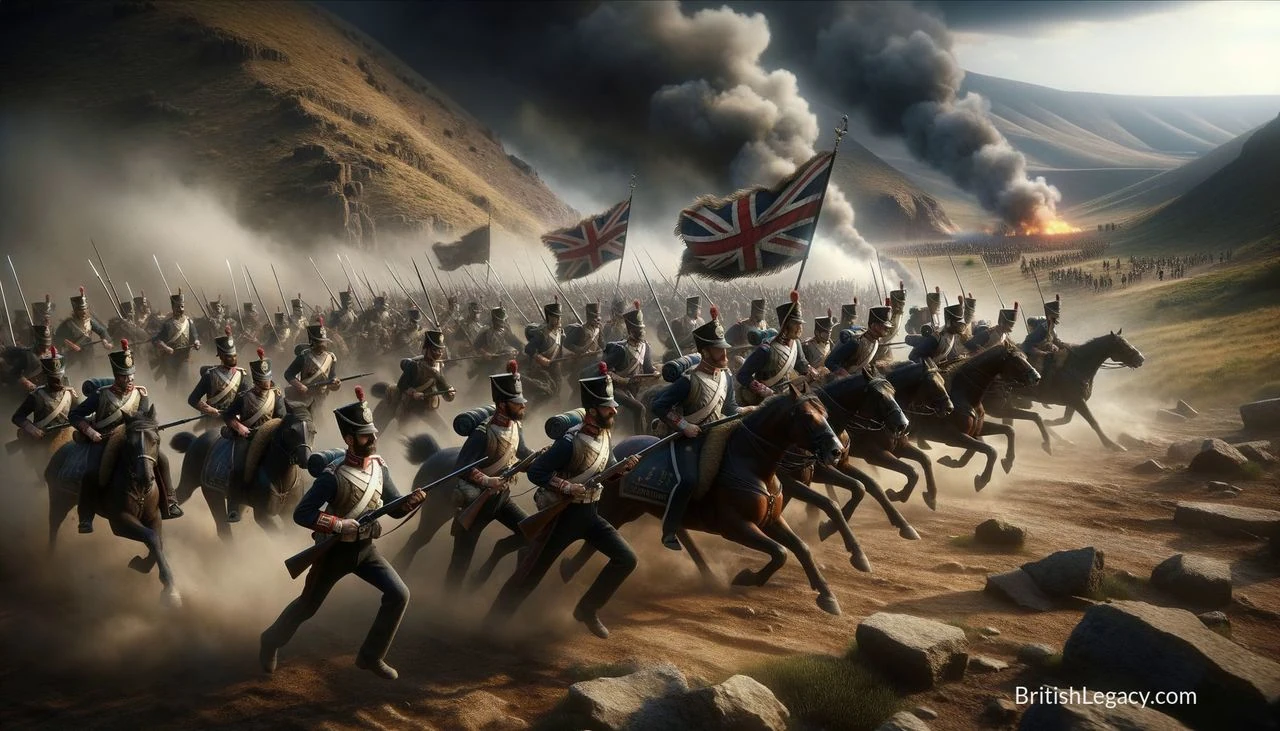
On 25 October 1854, British troops at Balaklava faced Russian attacks while the allied campaign against Sevastopol continued. The battle is remembered above all for two contrasting episodes: the 93rd Highlanders holding their ground against Russian cavalry, and the Light Brigade riding into artillery fire after receiving orders whose meaning was misunderstood. Balaklava’s history brings individual courage into close view, but it also shows the grave costs of decisions and communication failures in war.
A battle on the road to Sevastopol
The Crimean War pitted Russia against an alliance that included the Ottoman Empire, Britain, France and Sardinia. Disputes over the position of Christian minorities in the Holy Land, then under Ottoman control, formed part of the conflict’s origins; the struggle also became a contest over influence in the weakening Ottoman Empire. The Crimean Peninsula was consequently a central theatre of the war.
Balaklava was fought near Sevastopol, a Russian naval base on the Black Sea and the principal objective of the British and their allies. The campaign sought to capture the city and neutralise Russian naval power there. At Balaklava, Russian forces attempted to break the British defences. The fighting placed pressure on the allied position and produced the episodes that would shape the battle’s later reputation.
The Thin Red Line and the Light Brigade
Under Sir Colin Campbell, the 93rd Highland Regiment held its position against Russian cavalry. Its defence became known as the “Thin Red Line”, a phrase that would outlast the immediate military events as a symbol of steadfastness. The stand was one part of a larger and costly engagement; the battle’s fame, however, came to rest chiefly on the fate of the Light Brigade.
About 600 light cavalrymen rode towards Russian artillery after a misunderstanding over orders. The intended task was to prevent the removal of captured guns, but the order as understood sent the brigade into a valley exposed to fire from three sides. The charge became known as the “Valley of Death”. Roughly two-thirds of the men involved were killed, wounded or taken prisoner. The episode is remembered both for the discipline and courage of the riders and for the consequences of unclear direction.
From battlefield to public memory
Alfred, Lord Tennyson’s poem “The Charge of the Light Brigade” gave the event a lasting place in British literature. Its lines, “Theirs not to reason why, / Theirs but to do and die”, helped frame the charge as a story of obedience, sacrifice and tragic futility. That literary legacy is closely associated with Balaklava, though it represents only one episode of the battle.
The charge has also become a reminder of how communication and command can shape events in battle. The older account connects the disaster with later British military reforms, but gives no particular reforms or evidence for the extent of its influence; the claim is therefore not repeated here as a demonstrated consequence. More broadly, Balaklava shows how an engagement can be remembered through both a successful defence and a disastrous advance, rather than through a simple account of victory or defeat.
Why the Battle of Balaklava deserves a place in British Legacy
Balaklava deserves a place in British Legacy because its best-known episodes illuminate different aspects of military history. The 93rd Highlanders’ defence under Campbell became the “Thin Red Line”, a concise expression of a stand made under pressure. The Light Brigade’s charge, by contrast, has endured as a story of courage entangled with confused orders and severe loss. Remembering both prevents the battle from being reduced to a single image of heroism: it keeps the actions of the soldiers in view while recognising the consequences of command decisions.
The battle’s cultural afterlife is equally specific. Tennyson’s poem brought the charge into British literary memory, and its famous lines continue to shape how the episode is understood. That remembrance has value not because it proves a broad claim about national character, but because it preserves a difficult account of duty, risk and leadership. Balaklava offers British Legacy a way to consider how public memory is formed: a battlefield event becomes a shared reference through poetry and commemoration, while its strategic failures remain part of the story. The result is a legacy that honours endurance without obscuring the cost of misjudgement.