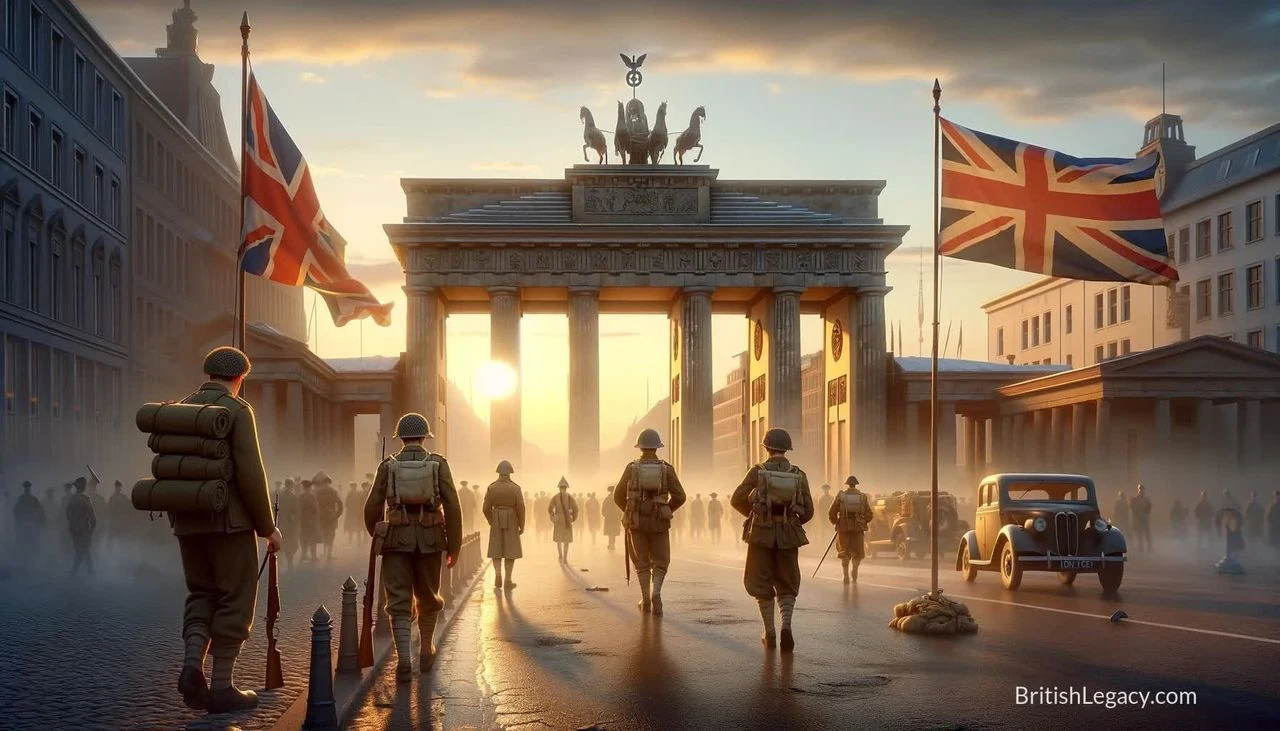
The Battle of Berlin: Britain's Role in the Twilight of the Third Reich
In the annals of British history, the Second World War occupies a magisterial place, with numerous battles and campaigns defining the epoch. Among these seminal episodes, the Battle of Berlin in 1945 stands as a vivid testament to the tenacity, valor, and strategic acumen of the Allied forces, including those of Britain. This monumental clash not only precipitated the capitulation of Nazi Germany but also signalled the end of a harrowing chapter in global history. Herein lies an account of Britain's pivotal role in this decisive battle, a contribution that underscores the great British legacy and its enduring heritage.
Prelude to the Battle: The Road to Berlin
As the tides of war turned in favour of the Allies following the successful D-Day landings in Normandy (June 1944) and the subsequent liberation of Western Europe, the march towards Berlin became an inexorable objective. The Yalta Conference in February 1945 saw the 'Big Three'—Winston Churchill, Franklin D. Roosevelt, and Joseph Stalin—converge on post-war strategies, including the final assault on Germany. It was decided that the Soviets would capture Berlin, yet the British forces played an indispensable support role in ensuring the success of this plan.
Strategic Bombing Campaigns: The Silent Thunder
Before the infantrymen stormed Berlin, the British Royal Air Force (RAF) was already delivering a series of strategic bombing campaigns designed to weaken the German resolve and infrastructure. These aerial assaults not only inflicted substantial damage but also disrupted supply lines, communications, and mobility, making it harder for German forces to mount a coordinated defence. The relentless bombing by the RAF, including the devastating raids on Berlin, significantly softened up the German defences prior to the ground invasion.
The Final Push: British Forces on the Ground
While the Soviet Red Army led the direct assault on Berlin, British forces were involved in crucial operations that facilitated this final push. The British Army contributed to securing the flanks and surrounding regions, ensuring that German reinforcements could not reach Berlin and bolster its defences.
Notably, Field Marshal Bernard Montgomery’s 21st Army Group played an important role in the Northern theatre, containing German forces in the Ruhr Pocket in April 1945. This manoeuvre effectively crippled the German Army’s ability to mount any significant counterattacks against the advancing Soviet troops.
Intelligence and Planning: The British Prowess
The British also excelled in the realm of intelligence and strategic coordination. The efforts of the British codebreakers at Bletchley Park ensured that the Allies had vital information regarding German troop movements and fortifications. This intelligence was crucial for planning and executing operations that encircled Berlin and cut off German forces from reinforcements and supplies.
Capturing the Heart of Darkness
As the Soviet forces entered Berlin from the East, the British strategic operations ensured that the German Army was isolated and incapacitated. The British soldiers, while not directly storming Berlin, stood as sentinels in the periphery, ready to crush any German resurgence. Their presence was a psychological and tactical Linchpin, underlining the multi-faceted nature of the Allied victory.
The Capitulation and Aftermath
Nazi Germany’s unconditional surrender was cemented with Adolf Hitler’s death on 30th April 1945 and the subsequent fall of Berlin. The official date marking the end of the war in Europe, VE Day (Victory in Europe Day) on 8th May 1945, was a moment of triumph and relief across the British Isles and the world.
The aftermath of the Battle of Berlin and the end of the war saw Britain emerge as one of the prime architects of the post-war world order. The British contribution laid the groundwork for rebuilding Europe, culminating in the establishment of institutions aimed at preserving peace and cooperation—a lasting legacy enshrined in the formation of the United Nations and the Marshall Plan.
A Lasting Legacy
The Battle of Berlin was not merely a military feat but a defining moment that highlighted the indomitable spirit of the British forces and the Allied coalition. It marked the zenith of a concerted effort to free Europe from tyranny and set the stage for a new era of relative peace and reconstruction.
The British role in the Battle of Berlin, although supporting in essence, was critical to the overall success of the mission. It is a chapter in British history that epitomises strategic brilliance, courage, and the relentless pursuit of justice. This legacy continues to resonate, shaping how we view Britain's place in the world and its continued commitment to upholding the principles of freedom and democracy.
Thus, the Battle of Berlin remains an indelible part of the great British legacy, a story of triumph over adversity, and a beacon of what can be achieved through unity and resolve.