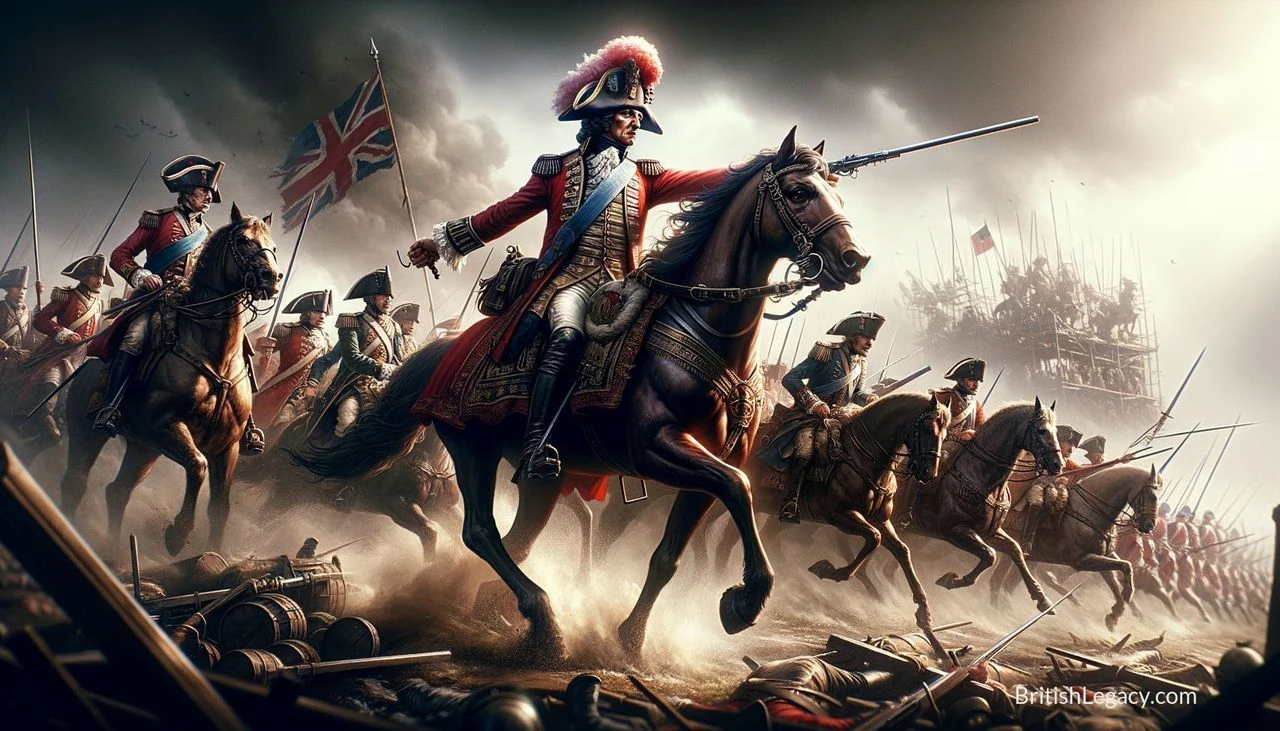
On 13 August 1704, British and Allied forces under John Churchill, the Duke of Marlborough, defeated the French and Bavarians at Blenheim in Bavaria. The victory was a major turning point in the War of the Spanish Succession: it checked French ambitions in central Europe, helped secure the Habsburg position and made Marlborough a celebrated figure at home. Its legacy is also visible in the name of Blenheim Palace, built after the battle with Queen Anne’s support.
A European war reaches Bavaria
The War of the Spanish Succession began in 1701 after the death of Charles II of Spain, who had no children. Competing claims to the Spanish throne drew much of Europe into a struggle over dynastic inheritance and political influence. The Grand Alliance, which included England, the Dutch Republic and the Holy Roman Empire, opposed the ambitions of France and Spain under Louis XIV.
Marlborough was one of the Alliance’s leading commanders. In Bavaria, French and Bavarian forces threatened to advance into Austria, putting pressure on the Habsburg Empire and the balance of power in the region. Marlborough and his ally Prince Eugene of Savoy planned to meet that threat. The battle took its name from Blenheim, also known as Blindheim, the Bavarian village around which the opposing armies were positioned.
The march and the battle
Marlborough’s army covered more than 250 miles in five weeks before reaching the battlefield. The march enabled the Allies to approach with tactical surprise, an important advantage in a campaign in which the opposing forces were trying to shape events in central Europe. On the day of battle, the Allies fought the French and Bavarians in a costly engagement that ended in a decisive defeat for the latter.
The fighting involved infantry, cavalry and artillery. The Allied victory shattered the Franco-Bavarian army; the account of the battle gives a combined total of about 30,000 soldiers killed, wounded or captured. The result was more than a local success. It interrupted the advance that had threatened Austria and marked a significant defeat for Louis XIV’s forces. The scale of the reported losses also conveys the human cost of the outcome, rather than making the victory merely a story of planning and command.
Victory, recognition and Blenheim Palace
The battle strengthened the Habsburg position and damaged French expansionist ambitions. For Britain, it demonstrated the importance of acting in concert with allies in a European war. The victory raised Marlborough’s standing at home, where he returned as a hero. Queen Anne’s reward was the construction of Blenheim Palace, an enduring link between the battle and the British landscape.
The palace commemorated a victory fought far from Britain, in a conflict whose stakes were European. That connection helps explain why Blenheim entered British military memory: the battle joined British command and troops with the forces of other members of the Grand Alliance, and its outcome affected the wider struggle against Louis XIV. The victory’s reputation has endured, although claims that it alone established Britain as a global power or determined the course of modern Europe go beyond the specific details of the battle presented here.
Why the Battle of Blenheim deserves a place in British Legacy
Blenheim merits a place in British Legacy because it shows Britain’s role in an alliance that fought to prevent French and Bavarian forces from advancing into Austria. Marlborough’s march of more than 250 miles in five weeks and the Allied victory on 13 August 1704 give the campaign a clear military shape: a long approach, tactical surprise and a decisive result. The defeat of the Franco-Bavarian army helped protect the Habsburg position and checked Louis XIV’s ambitions. It was a consequential British and Allied achievement, while remaining part of a wider European war rather than a victory Britain won alone.
The battle’s British legacy is also embodied in the response at home. Marlborough returned to public acclaim, and Queen Anne’s support for Blenheim Palace gave the victory a lasting place in the country’s built heritage. Together, the campaign and its commemoration connect military action abroad with a landmark in England. Remembering Blenheim in those terms preserves both the strategic importance of the Allied effort and the cost of the fighting, without reducing the event to claims of national destiny or military brilliance alone.