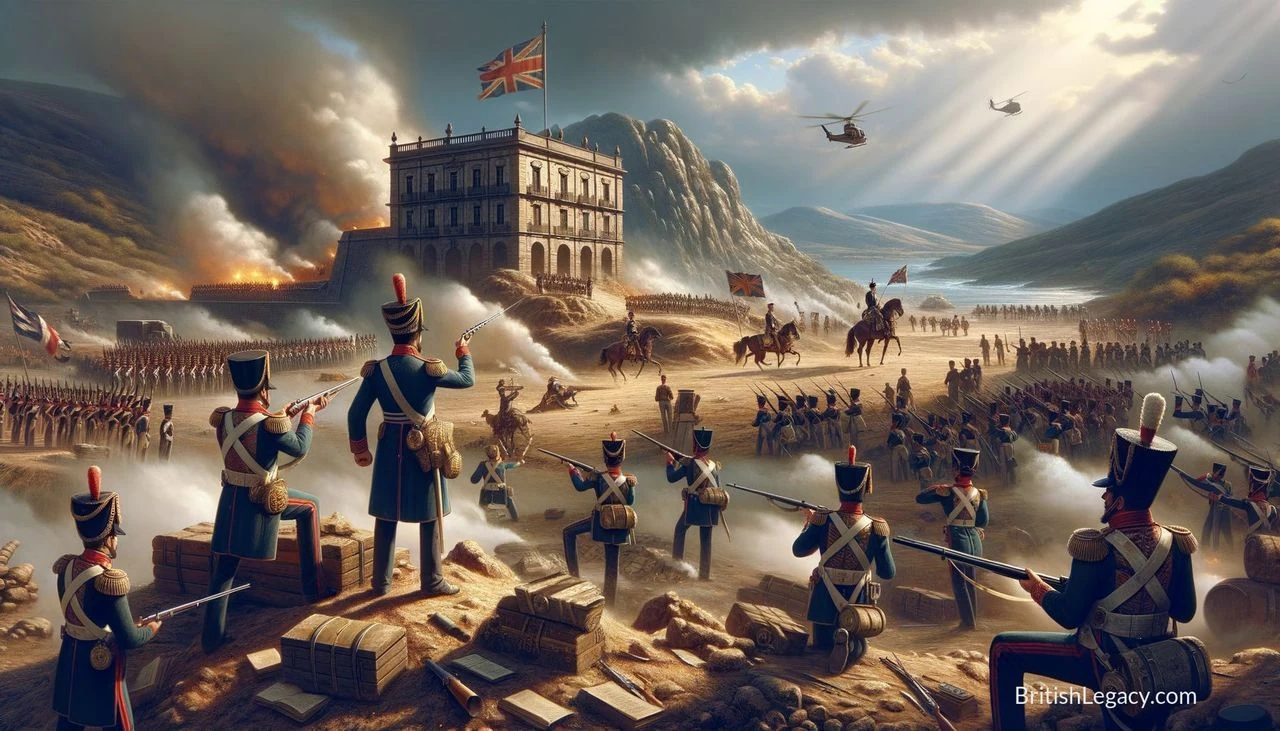
The Battle of Bussaco: A Cornerstone of the British Legacy in the Peninsular War
In the annals of British military history, the Peninsular War (1807-1814) stands as a beacon of resilience, cunning, and strategic brilliance. Among its numerous battles, the Battle of Bussaco, fought on 27 September 1810, in Portugal, emerges as a pivotal moment. This engagement, where Arthur Wellesley, the future Duke of Wellington, led the Anglo-Portuguese forces to a resounding victory against the French, played a crucial role in shaping not just the outcome of the Peninsular War, but also the very legacies of Britain and its allies.
The Context: Napoleonic Ambitions and the Iberian Theatre
By 1810, Europe was embroiled in the throes of the Napoleonic Wars, with the astute and indomitable Napoleon Bonaparte seeking to dominate the continent. The Iberian Peninsula, particularly Portugal and Spain, became critical theatres of war, where the French faced fierce resistance both from local guerilla fighters and the combined forces of Britain and Portugal.
Portugal's strategic significance lay in its coastline, providing the Royal Navy with crucial ports. Thus, ensuring its defence was paramount for Britain's broader strategy to stymie French expansion. Enter Arthur Wellesley, a military commander of exceptional prowess, whose previous victories had already begun to dent the seemingly invincible facade of Napoleon's armies.
The Prelude to Battle
As 1810 dawned, Marshal Masséna, one of Napoléon's most capable marshals, was tasked with invading Portugal and driving the British into the sea. With a formidable force of around 65,000 men, Masséna advanced into Portugal, confident of a swift victory. Wellesley, however, had meticulously prepared for such an incursion. He strategically chose the ridge of Bussaco, a steep, rugged line of hills running north-south about 20 miles from Coimbra, as the site where he would confront the French.
The Battle Unfolds
On the morning of 27 September, Masséna launched a series of direct assaults against the Anglo-Portuguese positions on the Bussaco ridge. The French, although valiant and persistent, faced the daunting challenge of scaling the steep slopes under relentless musket and artillery fire. Wellesley's choice of terrain proved decisive; the natural fortifications of the ridge severely hampered the French assaults.
The 3rd Division, commanded by General Thomas Picton, and other units held firm against wave after wave of French attacks. The Portuguese troops, often underestimated, displayed remarkable tenacity and competence, reflecting Wellesley’s successful efforts in training and integrating the allied forces. By the afternoon, it was clear that the French efforts had decisively faltered. Unable to make any substantial gains and suffering considerable losses, Masséna called off the attack.
Significance and Legacy
The Battle of Bussaco was not merely a tactical victory; it was a masterstroke of defensive warfare. It underscored Wellington’s unparalleled ability to utilise terrain to his advantage and his meticulous preparation in fortifying positions. The victory at Bussaco had several far-reaching implications:
-
Boosting Anglo-Portuguese Morale: The victory invigorated both British and Portuguese forces, solidifying their confidence against a mighty French adversary.
-
Blunting French Momentum: This defensive triumph halted Masséna's advance and disrupted French plans, forcing a prolonged campaign rather than a swift conquest.
-
Symbol of Allied Cooperation: The seamless coordination between British and Portuguese troops at Bussaco became a defining example of effective international military collaboration.
-
Strategic Mastery: Wellington’s tactics at Bussaco exemplified a broader strategic approach that characterised his campaigns, blending defensive caution with offensive opportunism.
A Lasting Impact
The Battle of Bussaco adds a rich chapter to the tapestry of British military heritage. It showcases the essence of British tenacity, ingenuity, and commitment to international alliances. More so, it demonstrates how strategic foresight and collaborative strength can overcome even the most formidable of foes.
As we reflect on the great British legacy, the Battle of Bussaco epitomises an era where Britain, alongside her allies, stood resolute against the tides of tyranny. It remains a testament to the enduring principles of courage, cooperation, and strategic brilliance that have continually shaped the nation’s storied history and left an indelible mark on the world stage.