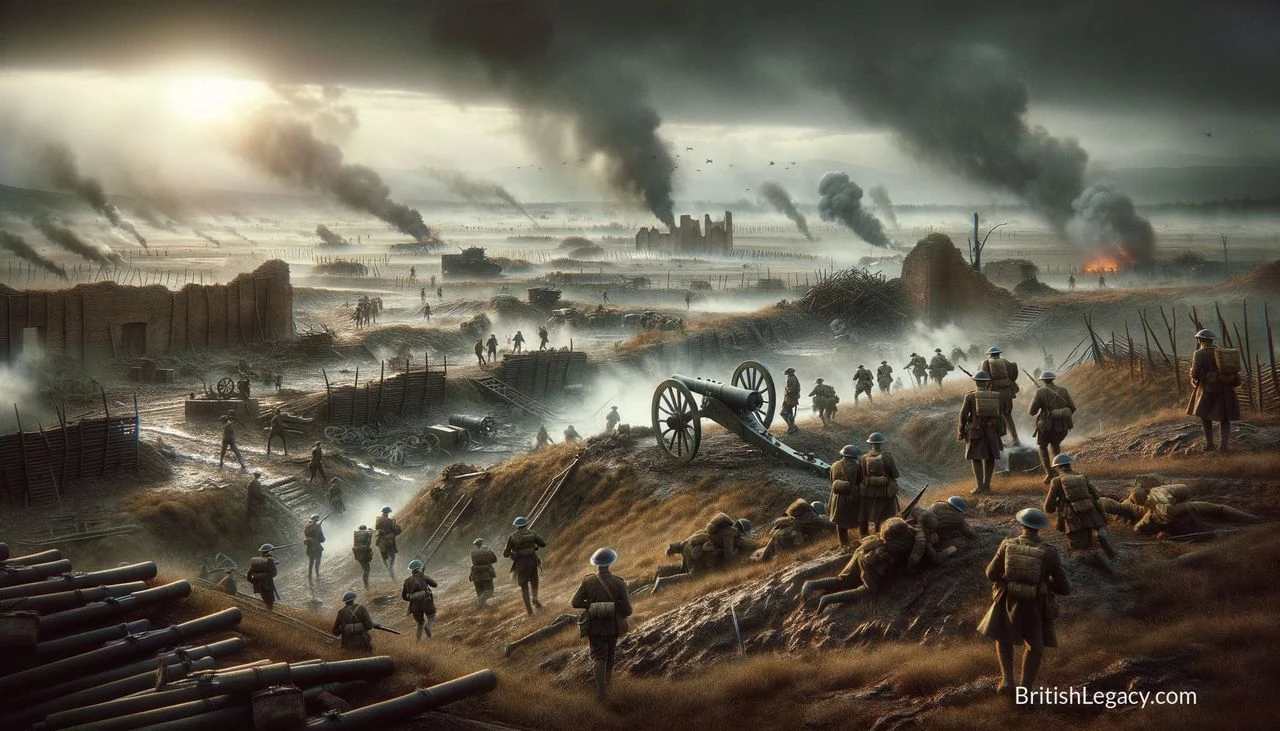
Caporetto was a major Italian defeat, followed by an Allied effort to steady the front. On 24 October 1917, German and Austro-Hungarian forces attacked Italian positions near Caporetto, now Kobarid in Slovenia. The breakthrough brought a rapid retreat; British and French forces were then sent to Italy to support their ally. The sequence matters: British troops did not lead the assault that broke the Italian lines, but formed part of the response to the crisis that followed.
The breakthrough on the Isonzo
In 1917, Italian forces were stretched along the Isonzo River after numerous battles. German and Austro-Hungarian forces saw an opportunity to strike. The offensive began on 24 October, with German Alpenkorps troops spearheading an attack that used infiltration tactics against Italian lines near Caporetto.
The assault forced a substantial Italian retreat. The Central Powers advanced more than 20 miles within days, and the Italian position appeared gravely threatened. The speed of the advance turned the setback into an urgent concern for the Allies. Caporetto was not a single encounter detached from the wider front: the breakthrough and retreat created the circumstances for the subsequent Allied reinforcement.
British and French forces arrive
Britain and France dispatched forces to the Italian front in response. The British divisions were sent under the command of General Herbert Plumer; the account of their deployment also identifies the XIV Corps among the British troops involved. They served alongside Italian and French units as the Allies sought to reinforce the front and check the enemy advance.
The British presence added support at a moment of acute pressure and, according to the account, helped stabilise the Italian position and rally its defenders. This should not obscure the scale of the Italian reverse: the retreat had already begun, and the British deployment was part of a broader Allied effort rather than a British victory at Caporetto.
Retreat and Allied recovery
The retreat brought substantial Italian losses. The subsequent effort to regain stability gave the Allies an opportunity to regroup and refocus on the wider demands of the war. The battle’s immediate significance lay in the contrast between the rapid penetration of the Italian lines and the multinational response that followed. British and French reinforcements supported the Italian forces as the Allies sought to contain the consequences of the breakthrough.
Why the Battle of Caporetto deserves a place in British Legacy
Caporetto belongs in British Legacy as an account of British military participation in support of an ally, not as a British triumph. The battle began with German and Austro-Hungarian forces breaking through Italian positions and driving a rapid retreat. British divisions, alongside French forces, were subsequently sent to reinforce the Italian front. Keeping that order clear recognises the British contribution without shifting the battle’s predominantly Italian character or diminishing the scale of Italy’s losses.
The episode also gives specific meaning to Allied cooperation: British troops served with Italian and French forces during an effort to steady a front under severe pressure. Their deployment extended Britain’s wartime role beyond its own front and demonstrated the practical demands of supporting an ally after a military crisis. Remembering Caporetto in this way preserves both parts of the story: the Italian defeat that defined the battle, and the British involvement that formed part of the response.