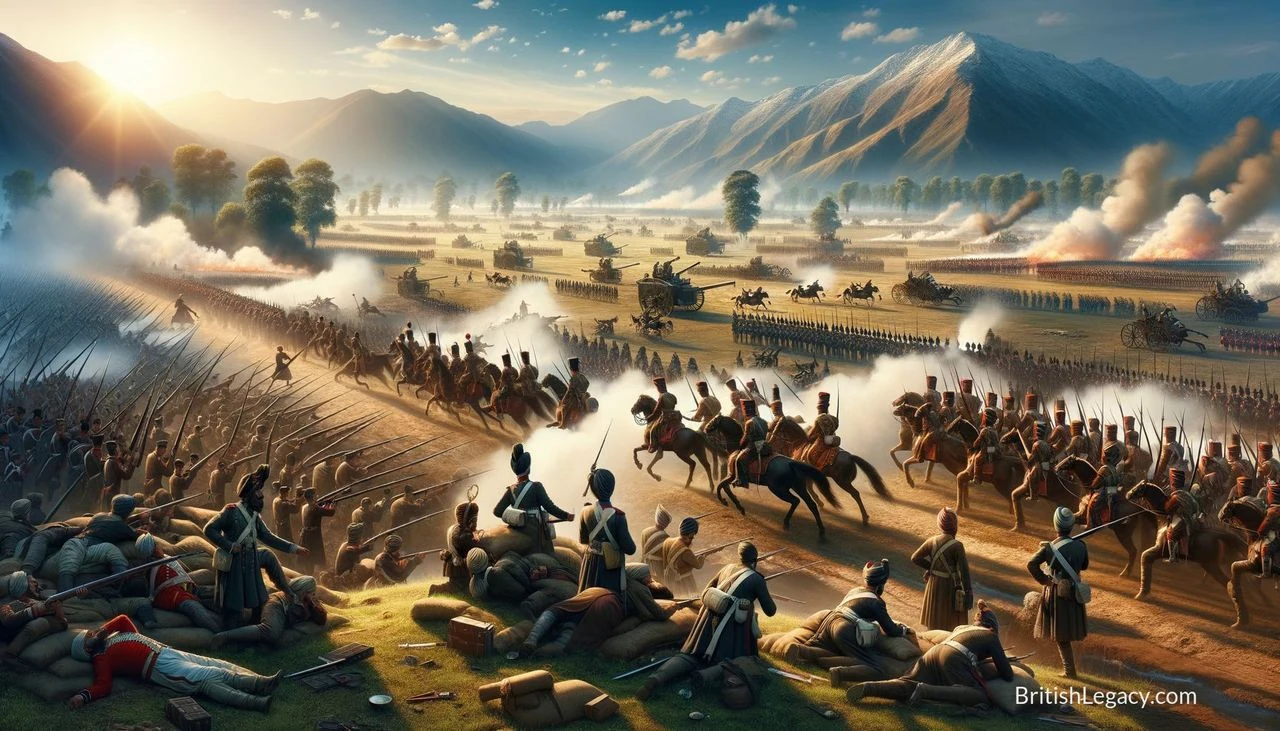
The Battle of Chillianwala: A Pivotal Moment in British Colonial History
In the annals of British Imperial history, the Battle of Chillianwala stands out as a critical and fiercely contested event during the Second Anglo-Sikh War. Fought on 13 January 1849, this battle was not only a testimony to the formidable strength and resilience of the Sikh Empire but also an episode that profoundly influenced the British legacy in India.
Historical Context: The Second Anglo-Sikh War
The Second Anglo-Sikh War (1848–1849) unfolded against a backdrop of simmering tensions and unresolved issues from the First Anglo-Sikh War. The defeat of the Sikh Empire in 1846 had led to the Treaty of Lahore and a significant reduction in its territories. However, dissatisfaction and unrest brewing within Punjab soon reignited conflict with the British East India Company, culminating in the Second Anglo-Sikh War.
The Battlefield and the Forces
Chillianwala, a village in the present-day Gujrat District of Pakistan, became the stage for this brutal confrontation. On one side stood the British East India Company’s forces under the command of General Sir Hugh Gough. On the other side, the valiant Sikh forces were led by Sher Singh Attariwala. Each side was resolute, equipped with steadfast infantry, cavalry, and substantial artillery.
The Battle Unfolds
As dawn broke on 13 January 1849, General Gough initiated an aggressive advance through the dense jungle terrain, which proved perilous. The British forces encountered fiercely entrenched Sikh positions. What followed was a chaotic and bloody clash characterized by close-quarter combat and a relentless exchange of artillery fire.
The Sikhs mounted a vigorous defence, inflicting significant casualties on the British. Despite numerical and technological superiority, the British met with unexpectedly staunch resistance, resulting in a high number of casualties. The intensity of the battle was such that it is viewed as a rare and nearly catastrophic encounter for the British Army in India.
Casualties and Outcomes
Both sides sustained heavy losses: the British suffered around 2,338 casualties, while Sikh losses were significant though less documented. British attempts to claim a decisive victory were thwarted, marking Chillianwala as one of the most fiercely fought battles of the British-Sikh confrontations.
Despite the inconclusive nature of the battle, the strategic resilience displayed by the Sikhs at Chillianwala had wider implications. It served as a sobering reminder to the British of the formidable opposition they faced in their efforts to consolidate power in India.
Legacy and Impact
The Battle of Chillianwala had profound consequences on both military strategies and political dynamics. For the British, it resulted in a critical reassessment of their military approaches and necessitated reinforcements that eventually led to the decisive Battle of Gujrat, where the British secured a final victory, leading to the annexation of Punjab into the British Empire.
For the Sikhs, the battle epitomised their valour and resolute spirit against colonial subjugation, embedding itself into the collective memory of resistance.
Contribution to the British Legacy
The Battle of Chillianwala is an essential chapter in the British colonial narrative, highlighting both the resilience of the British military in overcoming adversities and the formidable challenge posed by the Sikh Empire. It underscores the complexities of British expansionist policies and the unyielding spirit of the regions they sought to dominate.
In the broader scope of history, the battle exemplified the intricate dynamics of colonial conquests and the persistent spirit of local resistance that shaped much of British India's legacy. Today, it remains a powerful reminder of the tumultuous and often unpredictable path of the British Empire’s consolidation in India.
As we reflect on British heritage and the multifaceted nature of its global impact, the Battle of Chillianwala stands out as a testament to the fierce encounters and enduring lessons of resilience and adaptation that have indelibly shaped the British legacy worldwide.