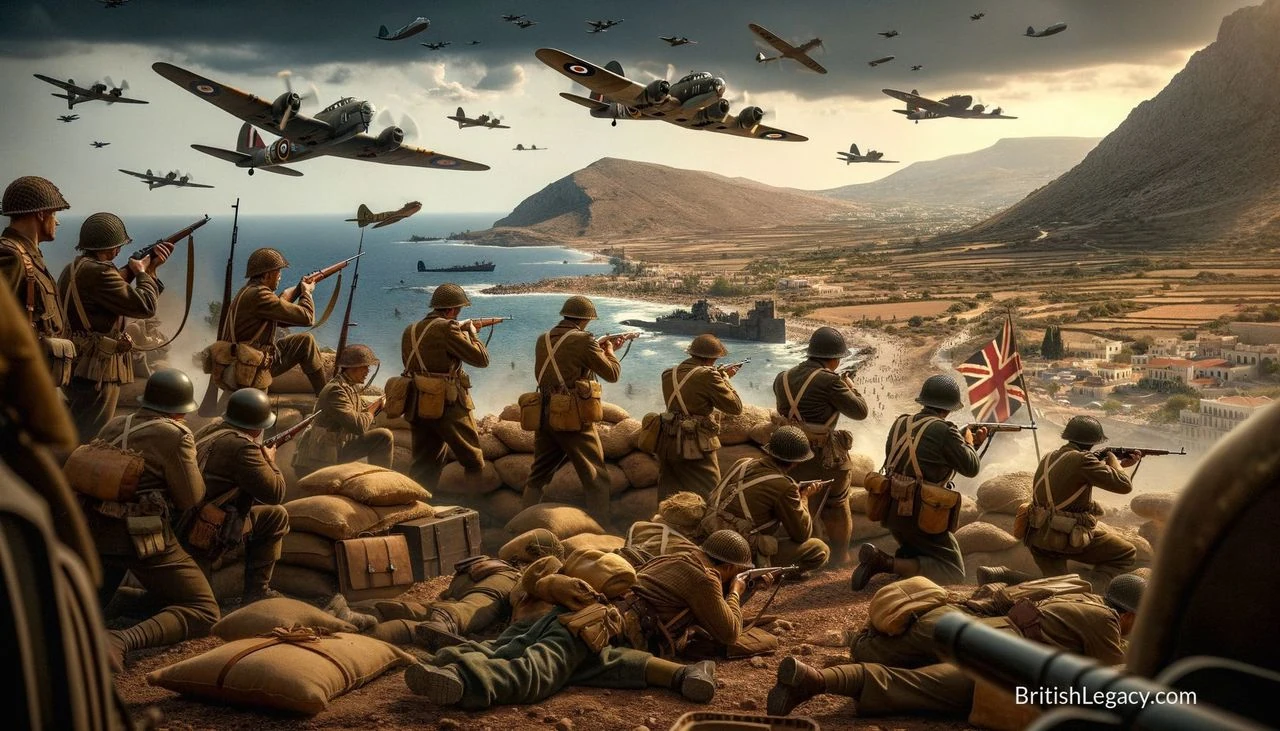
On 20 May 1941, German paratroopers began landing on Crete in an invasion codenamed Operation Mercury. British, Commonwealth and Greek defenders, joined by Cretan civilians, resisted across the island. The fighting centred on places including Maleme airfield, Heraklion and Rethymno. After ten days, the defenders were forced to retreat; by 1 June, Crete had fallen to German forces.
An island the Allies sought to hold
Crete’s position in the eastern Mediterranean gave it strategic importance. The existing account presents the island as a foothold for the Allies and links its defence to sea routes and supply lines serving the Middle East and North Africa. It was against this backdrop that German forces moved to capture the island in the spring of 1941, as their advance across Europe continued.
The defenders included troops from the United Kingdom, Australia and New Zealand, as well as Greek forces. Many had been evacuated from mainland Greece after the German advance there. Major General Bernard Freyberg, a New Zealander, commanded the defending force. This was a coalition assembled from military units and people already on the island, rather than a British force acting alone.
Operation Mercury and the fighting
Germany’s invasion began on 20 May under the name Operation Mercury, using Fallschirmjäger, or paratroopers, to attack Crete from the air. The landings met resistance from Allied troops and local Cretans. The paratroopers were vulnerable as they landed, and the defenders improvised ways to oppose them. The account describes the Allies as outnumbered and under-equipped, but records that they resisted from the opening of the invasion.
Fighting took place at Maleme airfield, Heraklion and Rethymno. The defenders initially repelled German attacks in some locations, but the balance shifted as German forces gained reinforcements. The fighting lasted ten days. The Allies were ultimately compelled to retreat, and Crete fell to Germany by 1 June 1941.
Cretan civilians also took up arms alongside the Allied forces. The account describes them using weapons they could obtain, including hunting rifles and farming tools. Their participation made the island’s resistance a combined effort by local people and military forces from several countries. It also meant that the battle’s story is not solely one of soldiers defending a position: civilians on Crete joined the armed opposition to the invasion.
Defeat, losses and the battle’s significance
The battle brought substantial casualties on both sides, with significant losses among the Allies. German forces also suffered heavy losses among their paratroopers. The existing account argues that the battle exposed vulnerabilities in airborne operations and demonstrated the difficulty of overcoming determined resistance. Those consequences should be distinguished from the outcome on the island itself: despite the resistance and the cost of the campaign, the Allies withdrew and Germany took control of Crete.
The invasion and defence brought together British, Commonwealth and Greek forces, alongside Cretan civilians. That coalition is central to understanding the battle. It places the British part of the story within a wider allied effort, and the local resistance within the experience of the people whose island was invaded. The fighting ended in defeat for the defenders, but it imposed substantial losses on the German forces as well.
Why the Battle of Crete deserves a place in British Legacy
The Battle of Crete belongs in British Legacy because British troops fought there as part of a multinational defence involving Commonwealth forces, the Greek military and Cretan civilians. The British connection is specific: United Kingdom troops were among those who had been evacuated from mainland Greece and then faced the German invasion on Crete. Remembering their role accurately means placing it alongside the contributions of Australians, New Zealanders, Greeks and local Cretans, rather than presenting the defence as an exclusively British achievement.
The battle also offers a clear account of the difference between resistance and victory. The defenders fought across the island for ten days, and German forces paid heavily in casualties, but the Allies were forced to retreat and Crete fell. Keeping both parts of that history in view makes the event more than a simple story of triumph or defeat. Its place in British memory rests on the service and losses of British and Commonwealth troops, and on the cooperation of the forces and civilians who resisted the invasion together.