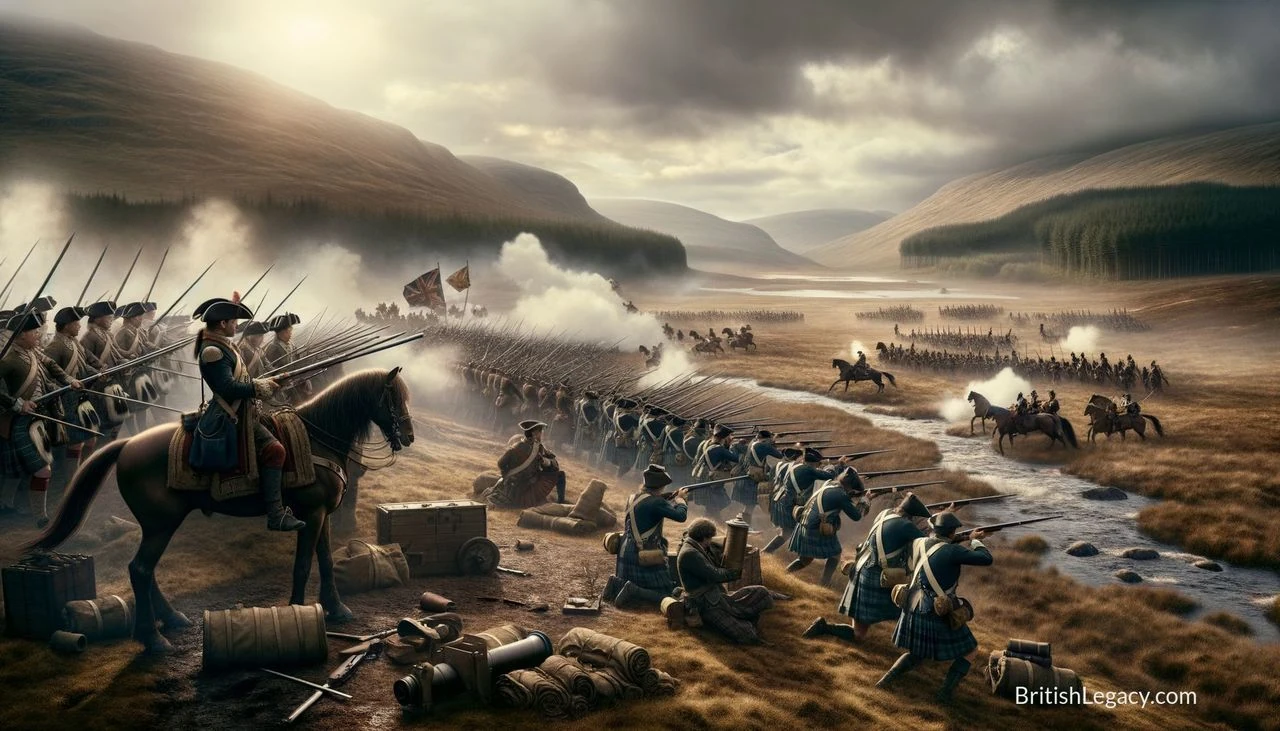
The Battle of Culloden, fought near Inverness on 16 April 1746, was the decisive defeat of the Jacobite rising of 1745. The government army, commanded by the Duke of Cumberland, overcame the forces of Charles Edward Stuart on open ground. The battle ended the rising’s campaign and was followed by harsh reprisals against its supporters. Culloden became a lasting point of reference in the history of Scotland and the British state, but its significance lies not in an inevitable march towards unity: it marks a military victory, the suppression of a political cause and a profound upheaval in Highland life.
A Stuart claim and a campaign into England
The Jacobite movement sought to restore the Stuart dynasty to the throne. In 1745, Charles Edward Stuart led a renewed attempt to challenge the Hanoverian king, George II. The rising drew support from Highland clans, and the Jacobite army advanced south into England, capturing Carlisle and reaching Derby. It did not secure widespread English support, however, and the campaign’s difficulties and the strain of continuing the advance contributed to the decision to retreat to Scotland.
The retreat brought the Jacobites towards a final confrontation with government forces. Their defeat at Culloden ended this campaign to restore the Stuarts. Charles escaped the battlefield, but the cause he had led was left without the military victory needed to establish his claim.
The battle on Culloden Moor
Culloden was fought on a flat stretch of moorland. The choice of ground was controversial because it did not offer the advantages associated with Highland tactics in earlier clashes. The government army had the advantages of numbers, equipment and training, under Cumberland, the son of George II.
On the morning of 16 April, the armies met in difficult, exposed conditions. Government musket and artillery fire broke the Jacobite advance. The fighting was brief and the Jacobites were decisively defeated. Charles fled, leaving the surviving forces unable to continue the campaign. The battle settled the immediate military contest between the Jacobites and the government; it did not, by itself, resolve the longer history of political identity and allegiance in Scotland.
Reprisals and changes in the Highlands
The defeat was followed by severe government reprisals against Jacobite supporters and communities in the Highlands. Cumberland became known as “Butcher Cumberland” because of the harshness associated with this response. Measures including the Disarming Act and restrictions on Highland dress were directed at weakening the structures and practices thought to sustain resistance. The original account also names bagpipes among the things banned; without further detail, the precise scope of that claim is uncertain, so it is not presented here as a settled description of the legislation.
The consequences extended beyond the battle itself. The defeat ended large-scale armed resistance to the Hanoverian dynasty and was followed by political and social change in the Highlands. The loss of power and pressure on clan structures altered the region’s social landscape. These developments should not be reduced to a simple story of a unified state taking shape: they also involved coercion and the dismantling of established ways of life.
Memory of Culloden
Culloden has endured in cultural memory as a symbol of a failed rebellion and of resistance to government power. The battlefield is preserved as a place of remembrance, where visitors can encounter the ground associated with the final Jacobite defeat. Its significance reaches beyond the result of one day’s fighting: the site holds together the campaign for a Stuart restoration, the government victory and the reprisals that followed.
Accounts of the battle can also shape how the relationship between Scotland and the wider British state is described. Rather than treating Culloden as a straightforward step towards a settled national unity, it is more useful to recognise the conflict’s competing loyalties and its consequences for Highland communities. The end of the rising’s military campaign did not make those consequences less contested or less important to later remembrance.
Why the Battle of Culloden deserves a place in British Legacy
Culloden deserves a place in British Legacy because it was a decisive event in the struggle over who would rule the British kingdoms. The victory of government forces ended the Jacobite rising’s final military campaign and secured the Hanoverian position against this attempt to restore the Stuarts. Its significance is not simply that one army defeated another. The outcome was followed by punitive measures intended to suppress further resistance, and those measures affected Highland society and its traditions.
Remembering the battle responsibly means holding both sides of that history in view: the Jacobite advance from Scotland into England and retreat, the brief and decisive defeat on the moor, and the reprisals and changes that followed. Culloden offers a way to examine how political power was enforced and how the consequences of conflict reached beyond combatants. Its British connection is grounded in the competing claims to the throne and in the impact of the government’s victory across Scotland. That combination of constitutional struggle, military defeat and contested memory makes Culloden an essential episode in Britain’s history.