The Battle of Flers-Courcelette: An Innovation in the Theatre of War
In the annals of British history, certain moments stand as defining chapters of courage, innovation, and sacrifice. One such momentous event is the Battle of Flers-Courcelette, a crucial operation within the broader Somme Offensive during the First World War. Fought between 15 and 22 September 1916, this battle holds a special place in history for its pioneering use of tanks in combat, marking a revolutionary shift in the dynamics of warfare and cementing its legacy in the chronicles of British military ingenuity.
To fully grasp the significance of Flers-Courcelette, one must first understand it within the context of the titanic struggle on the Western Front. By 1916, the First World War had devolved into a brutal stalemate, with trench warfare yielding little strategic advantage despite staggering numbers of casualties. The Somme Offensive, launched on 1 July 1916, was Britain's attempt to break through the formidable German defences and achieve a decisive victory.
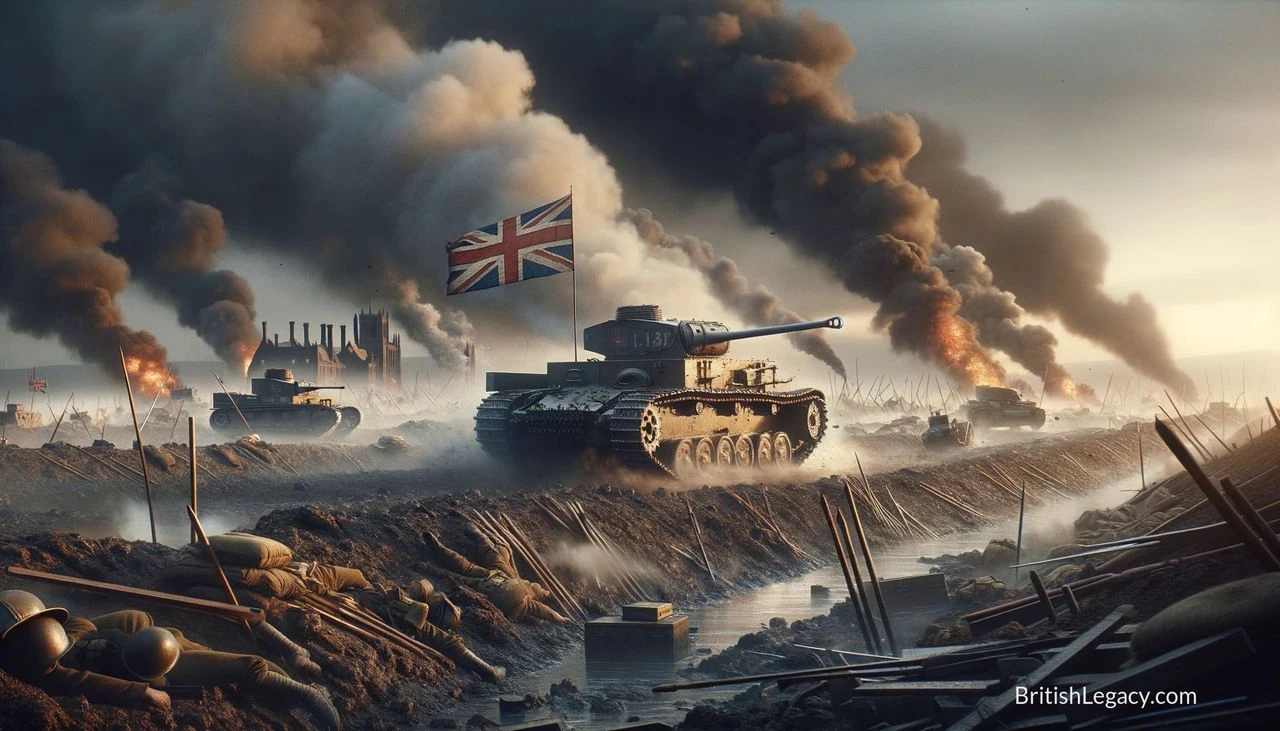
Enter the scene of Flers-Courcelette, a carefully planned and meticulously executed phase of the larger Somme campaign. The British Army, under the astute command of General Sir Douglas Haig, sought to pounce upon a weakened German line. This was to be no ordinary confrontation. On 15 September 1916, the battlefield saw the debut of an unprecedented technological marvel: the Mark I tank.
These armoured beasts, designed to traverse the treacherous grounds of No Man's Land and crush barbed wire defences, represented the apex of British engineering prowess. Although mechanically rudimentary by today’s standards, with a top speed of only 3.7 mph and vulnerable to mechanical failures, the psychological impact of these tanks was profound. Their lumbering advance over the battlefield of Flers-Courcelette heralded the dawn of mechanised warfare—a profound shift that would shape military strategies for generations to come.
The battle itself was fiercely contested. On the day of the attack, British forces, supported by 49 tanks, moved forward. The village of Flers, a key strategic objective, fell into British hands within hours. Sergeant Gordon Highlander famously exclaimed, "A tank is walking up the High Street of Flers with the British Army cheering behind." Despite facing fierce German machine gun and artillery fire, the tanks’ presence contributed to advancing the front lines and capturing German positions, although not without considerable losses.
The impact of the Battle of Flers-Courcelette transcends its immediate tactical outcomes. Although the tanks did not wholly transform the nature of the war overnight—many succumbed to mechanical breakdowns or enemy fire—the seeds of a new type of warfare had been sown. The psychological effect on both Allied and German troops was undeniable, and the potential of armoured warfare became a tangible reality.
For Britain, the deployment of tanks at Flers-Courcelette was not just a demonstration of military innovation but also a testament to the nation's ability to adapt and overcome amidst the unimaginable horrors of war. It represented a strategic shift towards integrated, technology-driven combat tactics that would come to define modern warfare. The battle underscored the ingenuity and resilience of British forces and their commitment to pioneering breakthroughs in the face of adversity.
The legacy of the Battle of Flers-Courcelette endures not just in military history but as a symbol of British heritage. It highlights a pivotal moment where British innovation and bravery combined to alter the course of warfare, with reverberations felt worldwide. As we reflect on this profound legacy, we are reminded of the indomitable spirit of those who fought and the technological advancements that continue to shape our world today.
In commemorating the Battle of Flers-Courcelette, we honour not only a remarkable military achievement but also the enduring contributions of Britain to the global legacy of innovation, courage, and progress.