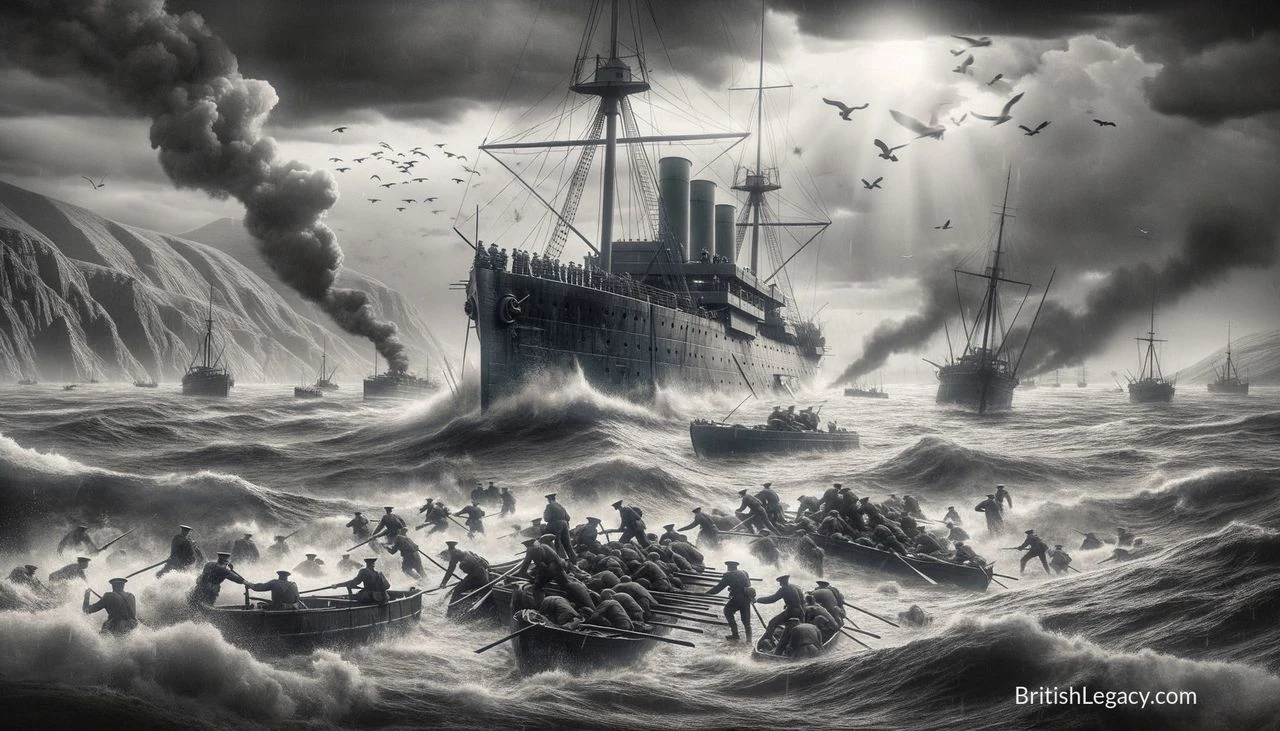
In 1915, the Allies tried to force a route through the Dardanelles, the narrow passage linking the Mediterranean with the Black Sea. The aim was to open maritime access to Russia and strengthen the Allied position against the Central Powers. The campaign began with a naval assault and developed into a land operation on the Gallipoli Peninsula. Mines, Ottoman defences and difficult terrain thwarted the offensive, which ended in Allied withdrawal in January 1916.
A route to Russia
The campaign’s strategic purpose was to secure a sea route through the Dardanelles so supplies could reach Russia. The plan also sought to weaken the Ottoman Empire, an ally of the Central Powers. Winston Churchill, then First Lord of the Admiralty, championed the initiative, which was predominantly British in conception. Its ambitions depended on overcoming Ottoman control of a narrow, heavily defended passage.
The first major attempt came by sea in February 1915. Mines and Ottoman defences stopped the naval assault. The Allies then turned to a combined naval and land operation. On 25 April, British, French and Australian and New Zealand Army Corps (ANZAC) forces landed on the peninsula. Ottoman troops resisted, including forces under Mustafa Kemal, later known as Atatürk, founder of modern Turkey.
Landings, resistance and cost
The peninsula’s rugged slopes and cliffs made movement difficult. Heat and scarce fresh water added to the demands on the troops. The landings met determined opposition, and the campaign settled into a prolonged struggle of trenches and repeated attempts to break the Ottoman lines. Reinforcements did not bring a decisive breakthrough. The Allied plan to force the straits and open the route to Russia failed.
The campaign came at a severe human cost. The existing account estimates that more than 100,000 men on both sides died, with many more wounded or lost to disease, and puts Allied casualties at approximately 250,000. These figures convey the scale of the losses but are not independently verified here. For Britain, the failure brought political repercussions as well as military consequences, including Churchill’s resignation from the Admiralty.
ANZAC memory and the campaign’s legacy
Gallipoli became central to the public memory of Australian and New Zealand service. The courage and endurance associated with the ANZAC troops came to symbolise national identity and pride in both countries, and Anzac Day is observed annually on 25 April, the date of the landings. The campaign’s shared history also formed part of the ties between the nations of the British Empire.
The peninsula’s battlefields became sites of remembrance, visited by descendants and historians. Gallipoli is recalled both for the endurance of those who served and for the suffering produced by the campaign. Its failure is also used to underline the risks of strategic miscalculation and inadequate planning. These lessons should not obscure the people at the centre of the history: soldiers on both sides who endured fighting, disease and harsh conditions.
Why the Gallipoli Campaign deserves a place in British Legacy
Gallipoli deserves a place in British Legacy because it reveals the consequences of a British-backed strategic ambition that failed to achieve its central purpose. The campaign sought to open a supply route to Russia and put pressure on the Ottoman Empire. Instead, the naval effort was checked by mines and defences, and the landings developed into a costly stalemate. Its course connects high-level decisions with the conditions faced by troops on the peninsula: difficult terrain, heat, limited water and determined resistance.
The campaign’s legacy also reaches beyond Britain. Australian and New Zealand remembrance of the ANZACs made Gallipoli an important part of national identity in both countries, while the shared campaign remains part of their historical relationship with Britain. Remembering the battle means recognising that connection without reducing the event to a story of valour alone. It also means acknowledging the failure, the human cost and the political consequences, including Churchill’s resignation from the Admiralty. That combination of international ties, military ambition and enduring remembrance makes Gallipoli a significant episode in Britain’s wartime history.