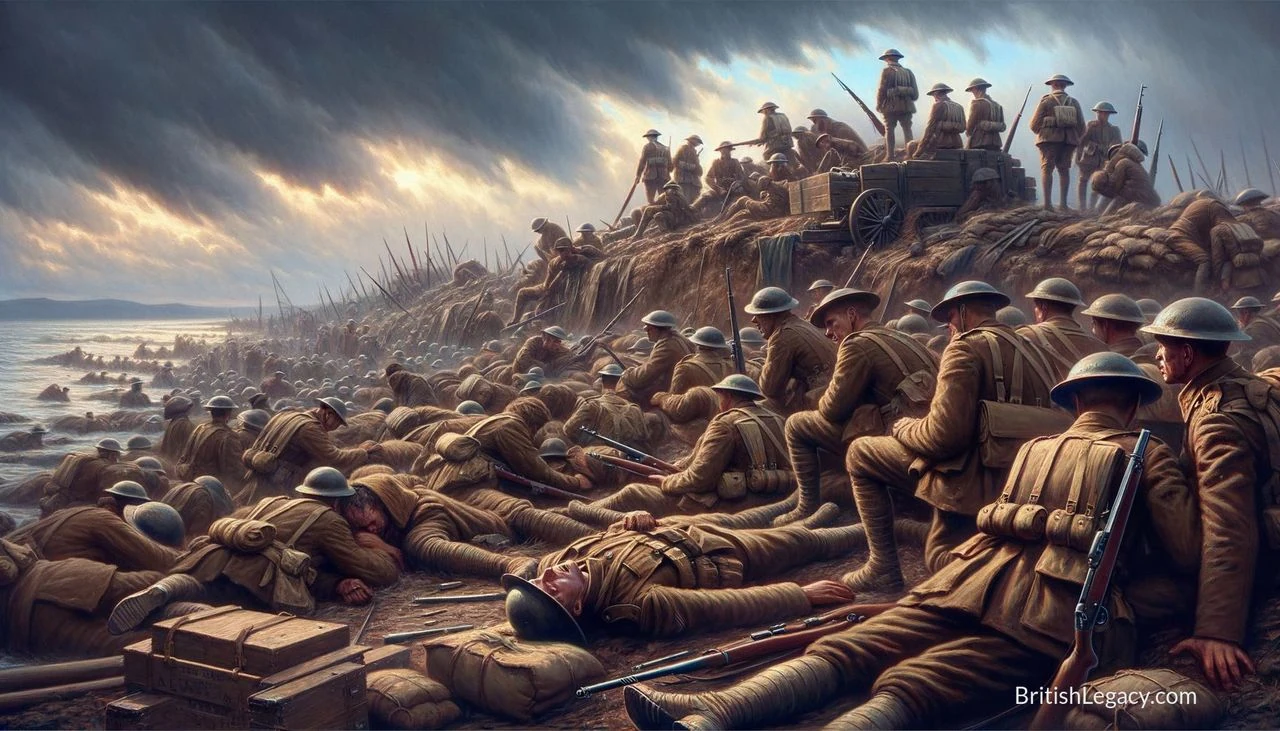
Once upon a time in the turbulence of the First World War, a tale of courage and determination unfolds on the rugged shores of Gallipoli. It is a name etched in the annals of history, synonymous with valiant effort and relentless endurance. The Battle of Gallipoli, fought between 1915 and 1916, was a dramatic and harrowing campaign that, despite its ultimate failure, showcased the indomitable spirit of British and Commonwealth soldiers and forever left its mark on the great British legacy.
A Grand Ambition
Instigated with high hopes and strategic fervour, the Gallipoli Campaign, also known as the Dardanelles Campaign, aimed to secure a crucial victory for the Allies. The plan was ambitious: to seize control of the Dardanelles Strait - a critical maritime route connecting the Black Sea to the Mediterranean - thereby opening a vital supply line to Russia and putting pressure on the Ottoman Empire, an ally of the Central Powers.
Winston Churchill, then First Lord of the Admiralty, was one of the campaign’s most ardent advocates. His vision was grand and audacious: a swift naval attack followed by a decisive land invasion. The stakes were high, but so too was the resolve of the British and their Commonwealth comrades.
The Theatre of Gallipoli
The operation commenced on 19 February 1915 with a massive naval bombardment intended to clear the Ottoman fortifications along the Dardanelles. However, the sheer scale of fortifications and underwater mines proved to be significant obstacles. The initial bombardments failed to achieve their aims, and it was decided that a land assault was necessary.
On 25 April 1915, British, Australian, New Zealand, and French forces commenced one of the most arduous and tragic amphibious landings in military history. The beaches of Gallipoli - notably at Anzac Cove and Cape Helles - turned crimson as Allied soldiers stormed the hostile terrain under heavy Ottoman fire.
Valor and Endurance
Though the campaign faltered, the heroism and tenacity exhibited by the forces were extraordinary. For eight months, soldiers endured appalling conditions; they faced ferocious combat, disease, and severe shortages of supplies. The trenches of Gallipoli bore witness to unprecedented acts of bravery and camaraderie.
The involvement of the Australian and New Zealand Army Corps (ANZAC) was especially significant, as it forged a new sense of identity and national pride for those nations. The innumerable feats of heroism that arose from this campaign have become a cornerstone of the ANZAC legend, commemorated annually on ANZAC Day.
Similarly, British, Irish, Indian, Newfoundland, and French troops showed remarkable gallantry amidst unrelenting adversity. Stories of sacrifice and resilience from Gallipoli are integral to the military heritage of these countries, demonstrating the profound common bond shared by Commonwealth nations.
The Aftermath and Legacy
Despite the valorous efforts, the campaign ultimately ended in withdrawal and failure. Between December 1915 and January 1916, the Allied soldiers were evacuated, having suffered significant casualties, with over 100,000 lives lost and many more wounded.
Yet, it is in failure that the spirit of Gallipoli transcends mere military outcome. The campaign left an indelible imprint on British and Commonwealth society, fostering unity and respect among those nations. Additionally, it catalysed profound reflections on military strategy, contributing to future tactical evolutions.
The Gallipoli Memory
The Battle of Gallipoli, a poignant chapter in British history, serves as a testament to human endurance and the pursuit of shared aspirations. Its legacy is commemorated globally through memorials and ceremonies, ensuring that the bravery and sacrifices of those who fought are never forgotten.
Gallipoli stands as a powerful narrative within the British legacy, reminding us of the resilience and fortitude that have helped shape the modern world. It is a story of gallant effort against insurmountable odds, a symbol of enduring courage, and an everlasting heritage of the Commonwealth's united spirit. Through the Battle of Gallipoli, we witness the profound impact of shared history, forging bonds that extend across continents and through generations.