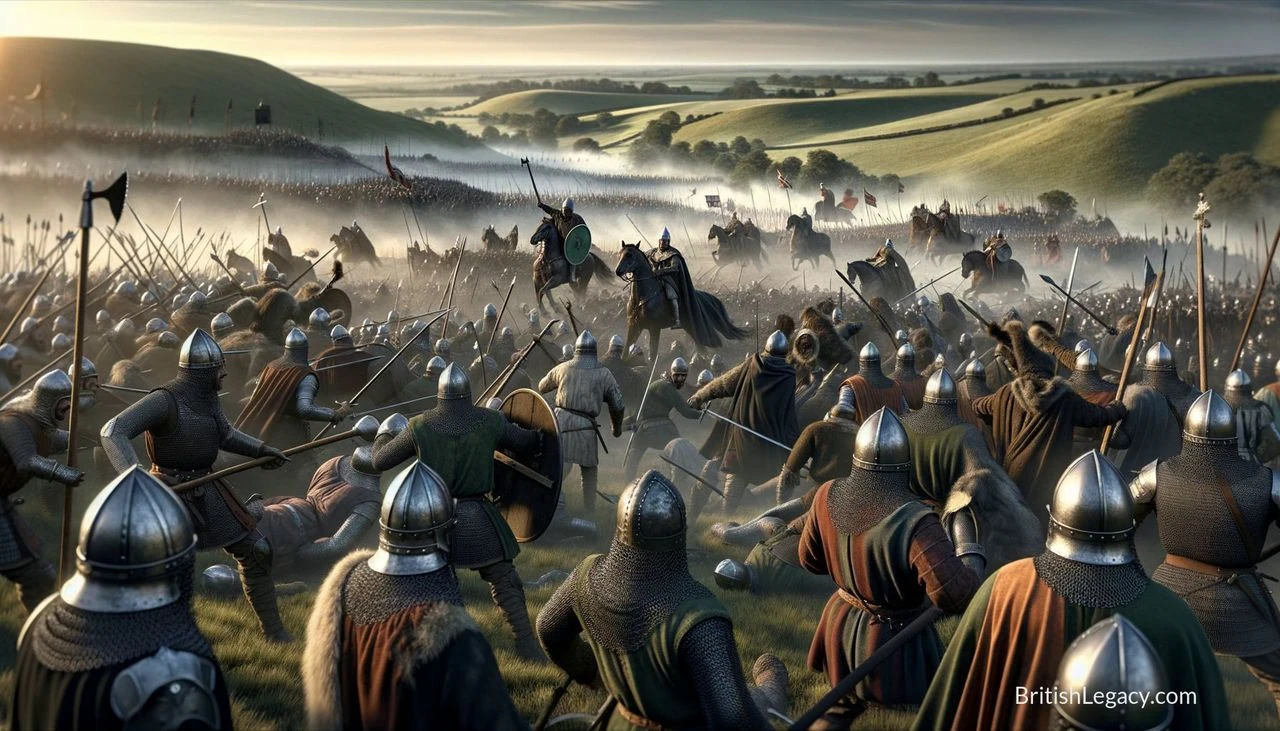
The Battle of Hastings: Catalyst of the Norman Conquest, 1066
In the grand tapestry of British history, certain threads stand out for their profound influence and enduring legacy. One such thread is the fateful Battle of Hastings in 1066, an event that not only dramatically altered the course of English history but also set the stage for the shaping of modern Britain. Although it marked a loss for the Anglo-Saxons, it signified the dawn of Norman rule under William the Conqueror, forever changing the island’s cultural, social, and political landscape.
Prelude to a Battle that Changed Everything
The story of the Battle of Hastings begins with the death of King Edward the Confessor in January 1066. His passing left a significant void, leading to a fierce contest for the English throne. Harada, the more familiar contender in the public's eye, was crowned King Harold II. However, his ascendance was immediately contested by another claimant – none other than William, Duke of Normandy.
Believing he had been promised the throne by Edward and supported by papal endorsement, William amassed an army and set sail across the English Channel. What ensued was a clash of titans on the battlefield of Hastings, a momentous encounter that would decide the fate of England.
The Battle Unfolds: 14th October 1066
On the 14th of October, William’s Norman forces faced King Harold’s Anglo-Saxon army on Senlac Hill, near Hastings. From dawn until dusk, these two formidable armies clashed in what has been described as one of the most decisively and fiercely fought battles of the medieval era.
The battle tactics employed by William proved superior. His use of feigned retreats to break the shield wall of the English army blazed a trail in military strategy. By the end of the day, King Harold II lay dead, allegedly felled by an arrow to the eye, and his forces were broken. William emerged victorious and earned the moniker William the Conqueror.
The Consequences: Dawn of Norman Rule
The victory at Hastings initiated profound changes across England, marking the beginning of Norman rule. William’s coronation on Christmas Day in 1066 at Westminster Abbey symbolised the start of a new era. The Normans brought with them distinct cultural influences, administrative practices, and architectural advancements which would leave an indelible imprint on the English landscape.
Transforming the Social and Political Fabric
The Norman Conquest effectively ended the existing Anglo-Saxon aristocracy, as estates and titles were redistributed among Norman barons. The feudal system ushered in under William reorganised English society, economy, and governance.
One of the most emblematic legacies of this period was the Domesday Book, commissioned by William in 1085. This extensive survey of England’s lands and resources stands as a remarkable historical record, shedding invaluable light on the country’s medieval past.
Architectural Marvels: Castles and Cathedrals
The Normans were also prolific builders, their architectural prowess forever altering England's skyline. They erected numerous castles, fortresses, and grand cathedrals, many of which remain iconic landmarks today. Towering structures like the Tower of London and Durham Cathedral are enduring testaments to Norman engineering and artistry, showcasing a blend of military utility and ecclesiastical grandeur.
Enduring Legacy
The Battle of Hastings and the ensuing Norman Conquest left a legacy that resonated through the centuries. The linguistic shift that integrated Norman French with Anglo-Saxon tongues laid the foundation for the rich and diverse English language we use today. The legal and governmental reforms established during William’s rule were crucial in shaping the future English state.
The clash on that October day in 1066 stands as a pivotal moment in British history, representing the enduring narrative of resilience and transformation. It underscores how a single event can irrevocably alter the trajectory of a nation, contributing richly to the British legacy and its global impact.
In conclusion, the Battle of Hastings, while a tragic defeat for the Anglo-Saxons, marked the dawn of a new era under Norman rule. It was a watershed moment that not only redefined England but also sowed the seeds for the modern British state. This profound transformation continues to be felt today, embodying a pivotal chapter in the storied saga of Great Britain.