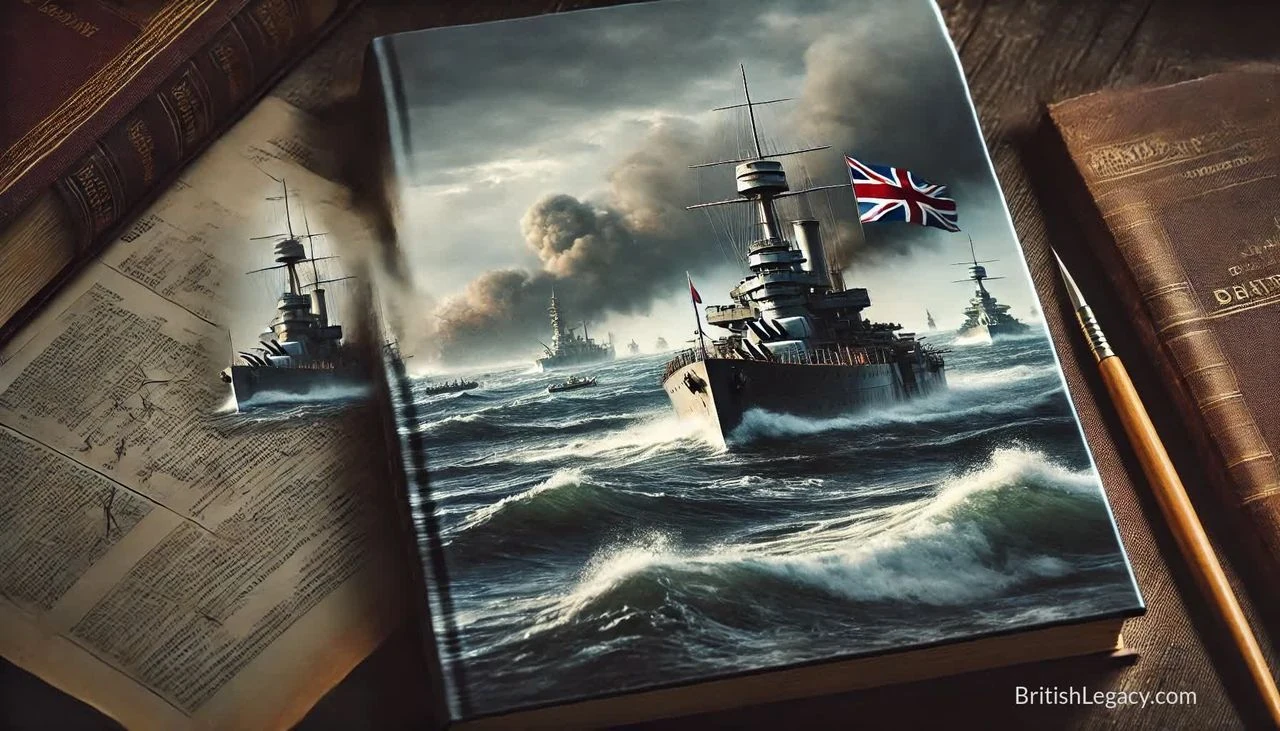
On 28 August 1914, British forces attacked German patrols in the North Sea near Heligoland Bight. The encounter, fought in the opening weeks of the First World War, became the conflict’s first major naval battle. British ships struck patrol vessels operating close to the German naval base; by the end of the action, three German cruisers and a destroyer had been sunk. The engagement brought the Royal Navy an early victory, but it also exposed the dangers and uncertainties of fighting in waters close to an enemy’s base.
An attack near the German base
The British operation involved Admiral Sir David Beatty, Captain Reginald Tyrwhitt and Commodore Roger Keyes. Its target was German destroyers patrolling the approaches to their naval base. The British plan aimed to surprise these vessels and weaken German defences early in the war. As the German patrols encountered British forces, the operation developed into a larger clash in the Bight.
The original account describes the Germans as taken by surprise, but offers no detailed account of the battle’s sequence or the intelligence behind the plan. What it does establish is the operation’s central purpose: to strike patrols near the base rather than engage the German fleet in a general action. The fighting showed how an attack on routine patrols could escalate, bringing heavier ships into an encounter in confined and dangerous waters.
Losses and an early result
The German losses were substantial. Three cruisers were sunk, three more were badly damaged, and one destroyer was destroyed. The account also records significant casualties, without giving a figure. British vessels sustained damage described as minor. Those losses made the battle a clear British operational success, though victory did not make the risks of naval combat any less apparent.
The result had both practical and psychological significance. The British had demonstrated that German patrols near their base could be attacked, while the scale of German losses gave the Royal Navy an early advantage in the war at sea. The original account presents the outcome as a blow to German morale and a boost to the Allies. These broader effects are harder to measure than the ships lost, but they formed part of the battle’s reputation as an important opening encounter.
War at sea beyond the Bight
Heligoland Bight was also remembered as an indication that naval warfare would continue to change. The account links the battle to Germany’s resolve to develop its U-boat campaign, which would become a major element of the wider conflict. It does not establish a direct causal link between the battle and that development. More securely, the engagement showed both sides that maritime strategy would require adaptation as the war progressed.
The battle’s immediate significance lay in its combination of a successful British strike and heavy German losses. It did not settle the larger struggle at sea, but it made clear that naval forces operating near a base could be vulnerable to attack. For Britain, whose wartime position depended in part on its navy, the result offered an early demonstration of the value—and the danger—of operations in the North Sea.
Why the Battle of Heligoland Bight deserves a place in British Legacy
The Battle of Heligoland Bight belongs in British Legacy as an early, concrete episode in the Royal Navy’s First World War history. On 28 August 1914, British forces attacked German patrols near their base and inflicted serious losses: three cruisers and a destroyer were sunk, with three further cruisers badly damaged. The British ships were not untouched, but their damage was described as minor. This balance of outcome helps explain why the engagement was remembered as a victory while still illustrating the hazards of naval warfare.
Its significance is more specific than a general story of British naval superiority. The operation targeted patrols close to the German base, and the ensuing clash demonstrated that such forces could be vulnerable to a sudden attack. The battle also belongs to the wider history of how both sides adapted their maritime strategies during the war, including the growing importance of the U-boat campaign. Remembering Heligoland Bight therefore preserves both the British success and the changing conditions of the conflict at sea, without treating one early victory as proof that the larger war had been decided.