Title: The Battle of Jutland: The Pinnacle of British Naval Prowess in World War I
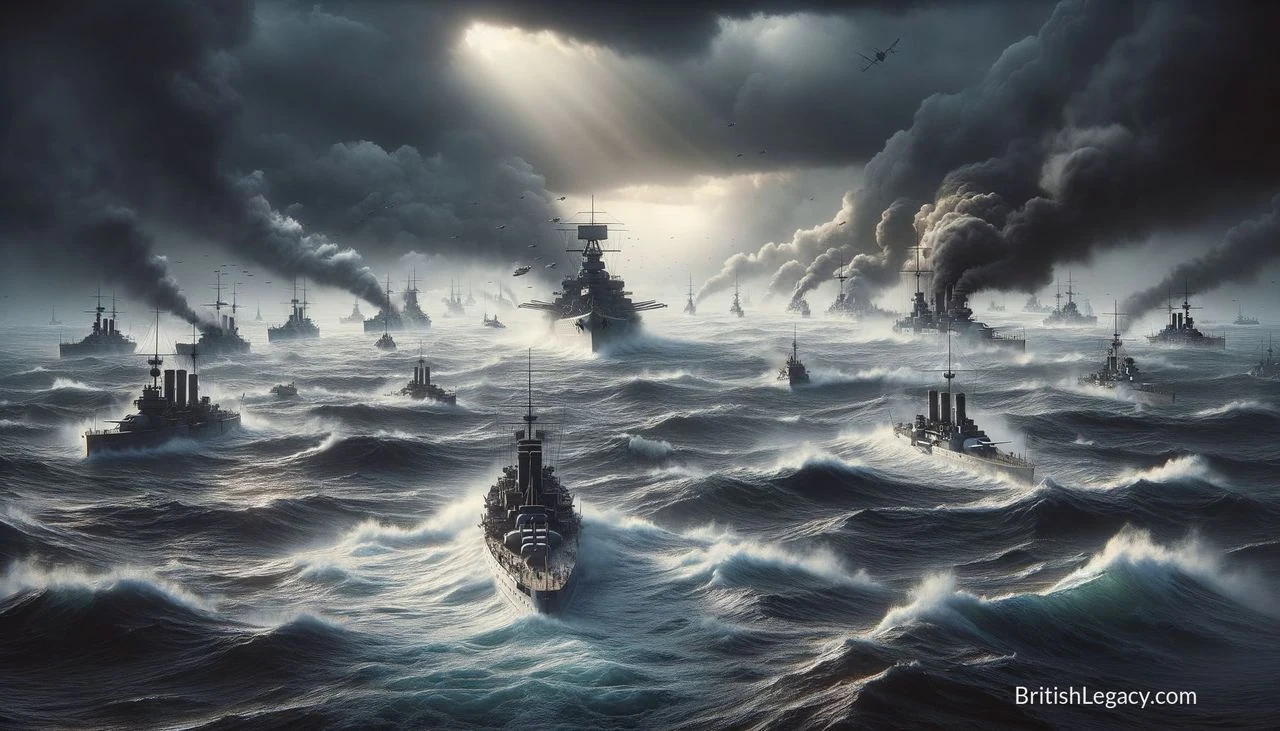
On the turbulent waters of the North Sea, from May 31 to June 1, 1916, unfolded what would become the largest naval engagement of the First World War – the Battle of Jutland. This landmark confrontation between the British Royal Navy's Grand Fleet and the German High Seas Fleet remains a testament to British naval dominance and the strategic prowess that helped shape the modern history of maritime warfare.
Setting the Stage: A Clash of Titans
In the early 20th century, the seas around Europe were battlegrounds where the balance of power was rigorously contested. Britain’s Royal Navy, a symbol of unparalleled maritime superiority, remained a bulwark against the advancement of the German Empire’s ambitious High Seas Fleet. As the war waged on, control of these vital waters became imperative for both sides, leading to an inevitable and spectacular showdown.
Orchestrating the Encounter
Admiral Sir John Jellicoe, commanding the Grand Fleet, and Vice-Admiral Reinhard Scheer, at the helm of the High Seas Fleet, embodied the strategic genius expected of their dominions. Both commanders sought to deliver a crippling blow to the other's fleet: Britain aimed to maintain its maritime supremacy, while Germany sought to break the British blockade that was strangling its resources.
The encounter began with a series of complex manoeuvres and engagements known as the "Run to the South." Initially, Rear-Admiral Sir David Beatty’s Battlecruiser Fleet engaged the advance scouting forces of the Germans. Missteps and underestimations by both sides led Beatty into the full might of the High Seas Fleet, triggering a retreat that lured the Germans into Jellicoe's more powerful Grand Fleet.
The Ferocity of Battle
As twilight descended on the North Sea, the epic confrontation intensified. Salvos of artillery lit up the night, with thunderous volleys exchanged in a lethal ballet of naval might. British warships, renowned for their ferocity, faced German vessels, famed for their engineering and tenacity. The battle’s confusion and the intense fog of war made targeting imprecise, leading to a brutal close-quarters melee.
Losses were severe on both sides. The British lost 14 ships and about 6,000 men, while the Germans suffered the destruction of 11 ships and approximately 2,500 men. Among the British losses were the battlecruisers HMS Queen Mary and HMS Indefatigable, notable symbols of naval prowess whose destruction sent ripples through the nation.
Tactical Outcomes and Strategic Victory
The battle concluded without a decisive victor, with both sides claiming success. Tactically, the Germans scored a pyrrhic victory by inflicting heavier immediate losses on the British Fleet. However, strategically, it was the British who emerged strengthened. The Royal Navy maintained its dominance and capability to blockade German ports, continuing its chokehold on essential supplies, which ultimately contributed to the exhaustion and capitulation of the German war effort.
Legacy and Impact
The Battle of Jutland is more than just an episode in naval history; it is a critical inflection point in the narrative of British legacy. It underscored the resilience and adaptability of the Royal Navy, reflected the strategic importance of maritime control, and illustrated the sobering realities of modern naval warfare.
This mighty clash was emblematic of Britain's unwavering commitment to protecting its freedoms and those of its allies. While not a clear-cut victory, Jutland was a reaffirmation of British naval resolve, ensuring the continued efficacy of British maritime operations throughout World War I.
Celebrating Courage and Innovation
Today, the Battle of Jutland serves as a poignant reminder of those who fought and perished, etched into national memory at memorials and in museums. It represents a critical chapter in the rich tapestry of British heritage, a keystone in the enduring legacy of a nation whose naval influence has emboldened it to steer the tides of world history.
In summary, Jutland's story is one of heroism, strategy, and the indomitable spirit of Britain's naval tradition. It exemplifies the profound impact of British maritime strength on global affairs, a legacy that continues to inspire reverence and respect across the world.