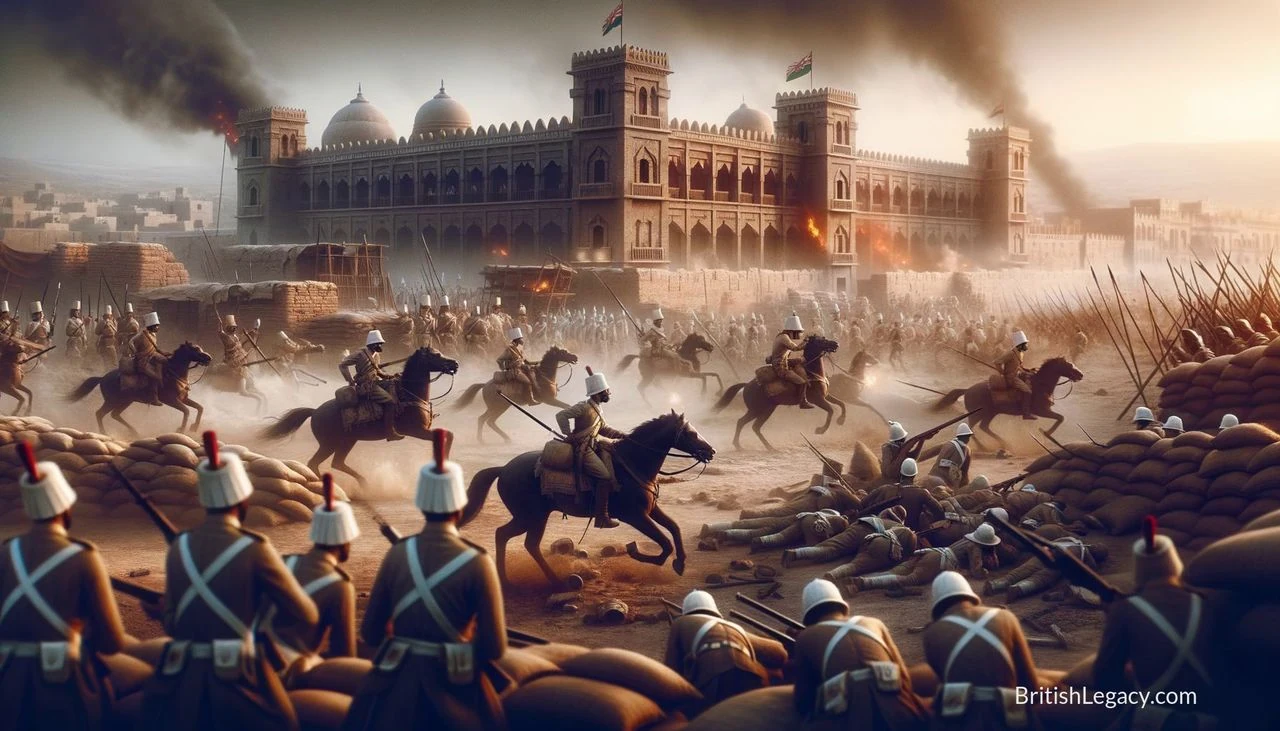
The Fateful Scene Set: Khartoum 1885
Nestled on the banks of the confluence where the Blue and White Nile meet, Khartoum stood as an evocative linchpin in Britain's imperial ambitions in Africa. The year was 1885, and the city found itself amidst the roiling tides of the Mahdist War. At its heart was a figure whose name would become enshrined in British lore: General Charles George Gordon. His valiant defence and the catastrophic fall of Khartoum were not only a critical moment in British colonial history but also a seminal chapter that showcased the intricate interplay between heroism, imperial policy, and the relentless march of history.
The Setting and Context of Conflict
The Mahdist War, instigated by Muhammad Ahmad, the self-proclaimed Mahdi or "Guided One", had swept through the Sudanese landscape, galvanising tribes with a fervent blend of religious zeal and anti-colonial sentiment. The Mahdi envisioned establishing a theocratic state, free from foreign intervention. By 1884, his forces had besieged Khartoum, a thriving city symbolising British power and its civilising mission.
General Charles Gordon, a seasoned soldier known affectionately as "Chinese Gordon" for his exploits in China, was deployed by the British Government to oversee the evacuation of Egyptian troops and civilians. What was expected to be a straightforward task soon evolved into an epic drama of defiance and destiny.
The Heroic Stand of General Gordon
General Gordon's initial mandate was clear: evacuate and concede Khartoum to avoid further imperial quagmire. However, his innate sense of duty, combined with a profound empathy for the indigenous population and a deep-seated Christian faith, propelled him to defy orders. Gordon resolved to defend Khartoum against the Mahdist forces, transforming the city into a bastion of resistance.
For ten harrowing months, Gordon orchestrated a valiant defence amidst a dwindling supply of provisions and ammunition. His fortifications, innovative trench works, and the morale he inspired among his troops were a testament to his unmatched military acumen. Yet, despite his unwavering resolve, the situation grew increasingly dire as the Mahdi's forces intensified their siege.
The Fall of Khartoum: A Nation’s Mourning
The climactic moment arrived on 26 January 1885, when the Mahdist forces breached Khartoum’s defences in a pre-dawn assault. The city was engulfed in brutal hand-to-hand combat, and amidst the chaos, General Gordon met his end at the Governor's Palace, reportedly with his Bible in hand. His death marked the fall of Khartoum, a moment that reverberated through the corridors of power in Britain and far beyond its shores.
The Aftermath and Legacy
The immediate aftermath of Khartoum’s fall was a complex blend of public outrage, governmental introspection, and profound mourning. The British public, deeply moved by General Gordon's sacrifice, hailed him as a martyr and hero. His death became emblematic of Britain's imperial zeal and the supposed honour inherent in its civilising mission.
Politically, the fall of Khartoum exposed the perilous vagaries of colonial policy and the ramifications of distant bureaucratic decisions. It catalysed a reevaluation of Britain's engagement in Sudan and, more broadly, its imperial strategy in Africa. Gordon's stand became a rallying cry that shaped public opinion and policy discourse, underscoring the indelible impact of individual acts of valour on the grand canvas of history.
Global Resonance and British Legacy
The events at Khartoum not only fortified British resolve within its borders but also reverberated across the empire. Gordon's narrative of sacrifice and heroism resonated in colonies from India to Australia, fostering a potent sense of imperial identity and cohesion. His legacy became a touchstone for understanding the complexities, aspirations, and moral dilemmas inherent in Britain's imperial endeavour.
In a broader cultural context, the tale of Khartoum and General Gordon inspired literary works, artistic representations, and even cinematic portrayals, embedding itself in the collective consciousness. It painted a vivid tableau of the era's ethos, where the dualities of heroism and hubris, civilisation and conquest, were in perpetual interplay.
Wrap-Up
The Battle of Khartoum and General Gordon's noble defence remain etched in the annals of British colonial history as a moment fraught with courage, tragedy, and profound significance. It epitomises the intricate tapestry of Britain's imperial narrative, where the actions of a single individual could influence an empire's destiny. The legacy of Khartoum endures as a powerful reminder of the complexities and enduring impact of Britain's colonial heritage, shaping perspectives and forging connections that span the globe.