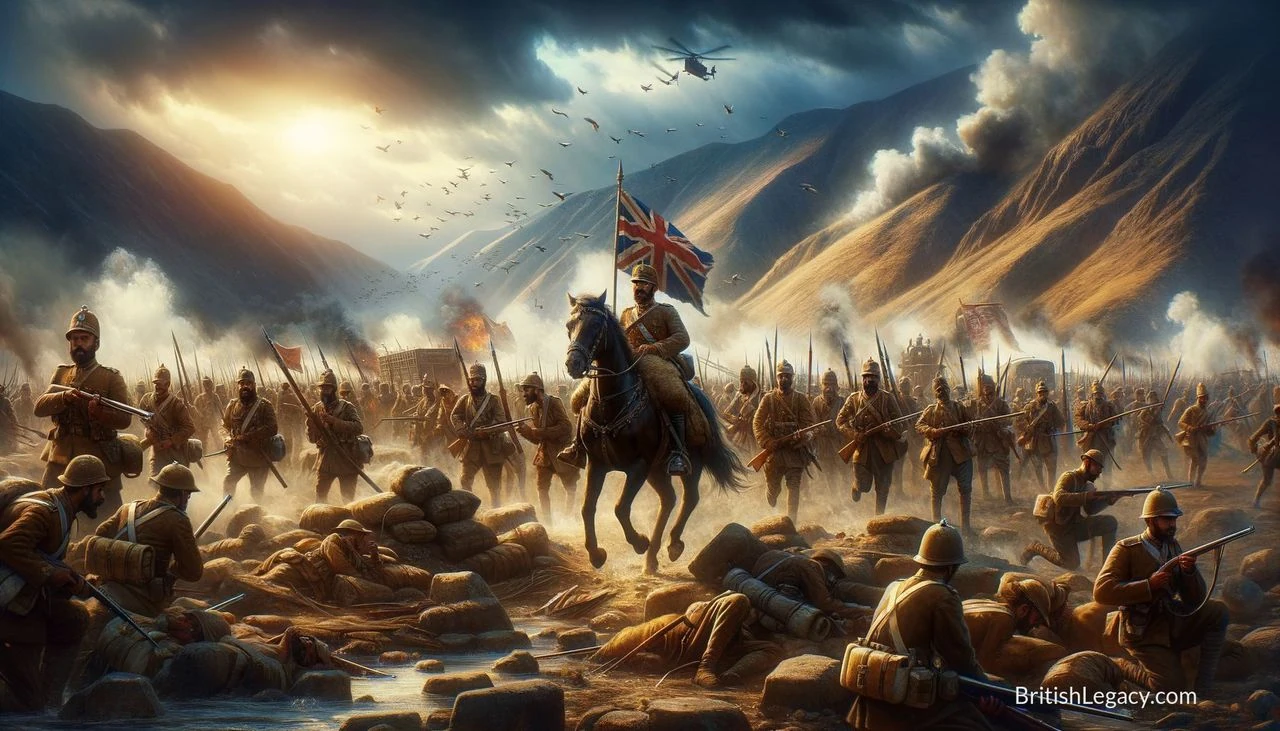
The Battle of Maiwand: Turning Point of the Second Anglo-Afghan War
In the annals of British military history, the Battle of Maiwand stands prominently as a rare but poignant episode that exemplifies the complexities and challenges of the British Empire’s expansion. Occurring on 27th July 1880, it was a critical engagement during the Second Anglo-Afghan War that laid bare the vulnerabilities of British forces and significantly influenced military strategies going forward.
A Rare British Defeat
The Battle of Maiwand took place on the harsh sands of Afghanistan, not far from Kandahar. Here, Brigadier General George Burrows led a mixed force of British and Indian troops against Ayub Khan's Afghan forces. The British contingent, numbering around 2,500 men, faced an overwhelming force of 25,000 Afghan warriors.
What transpired was one of the most devastating defeats in British military history. The disciplined columns of British and Indian soldiers were met with fierce resistance and zealous bravery from the Afghan side. Despite the valiant efforts of their artillery and infantry units, the British lines were broken. The chaos that ensued led to a desperate retreat, with over 900 British and Indian soldiers killed and many more wounded.
Turning Point and Tactical Lessons
While the grim outcome at Maiwand was a stark moment of defeat, it became a crucial turning point that opened the eyes of British military authorities to their shortcomings. The battle highlighted several tactical and strategic deficiencies, including underestimation of the enemy, over-reliance on conventional warfare in unfamiliar terrain, and the logistical challenges posed by the vast and rugged Afghan landscape.
The engagement underscored the need for better reconnaissance, improved supply lines, and a deeper understanding of local cultures and warfare tactics. These lessons went on to become invaluable in subsequent British military campaigns, shaping a more adaptive and versatile approach in colonial warfare.
Resilience and Final Victory
The loss at Maiwand, however, did not mark the end of British aspirations in Afghanistan. It served as a galvanising rally point, leading to a renewed and more strategically sound effort in the conflict. Under the command of General Frederick Roberts, a relief force was dispatched to Kandahar, culminating in the decisive and victorious Battle of Kandahar in September 1880. This victory restored British dominance and concluded the Second Anglo-Afghan War on terms favourable to the British Empire.
Legacy and Cultural Impact
Despite being a defeat, the Battle of Maiwand has etched itself into British cultural memory. It stands as a testament to the resilience of British soldiers and the broader strategic adaptability of the British military. The battle's impact resonates in various forms, from the poignant memorials in the United Kingdom that pay homage to the fallen, to its influence on literature and public consciousness.
Most famously, it found a place in popular culture through the character of Dr. John Watson in Arthur Conan Doyle’s "Sherlock Holmes" series, wherein Watson is depicted as a veteran of the battle. This association has immortalised Maiwand in the British narrative, embedding it as an indelible chapter in the saga of the British Empire.
Wrap-Up
The Battle of Maiwand, though a rare defeat, stands out as a significant event that shaped the military and cultural landscape of Britain. Its lessons led to profound changes in British military tactics and reaffirmed the resilience and strategic depth of British forces. Moreover, its legacy, immortalised through memorials and literature, continues to be a poignant reminder of the trials and tribulations of the British Empire. In the grand tapestry of British heritage, Maiwand remains a pivotal thread that underscores the complexity and enduring impact of Britain's military history.