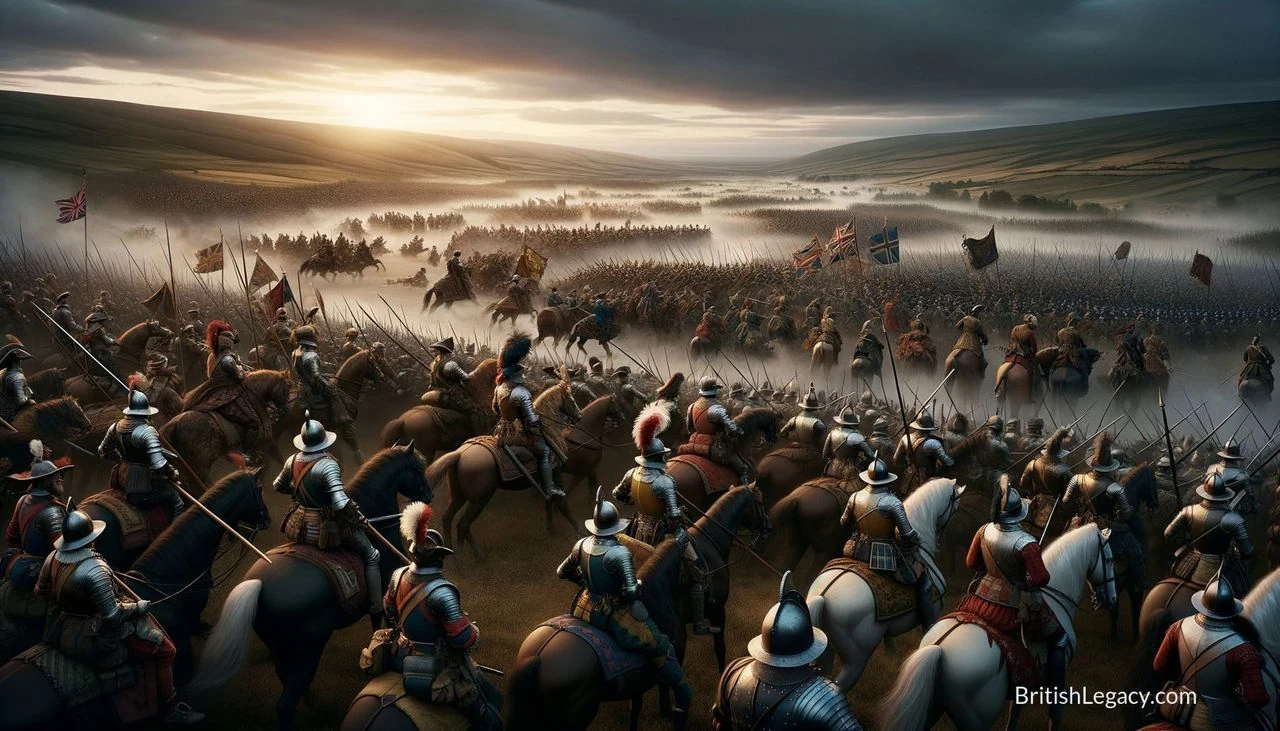
The Battle of Marston Moor: A Defining Moment in the English Civil War
In the annals of British history, few events are as transformative and defining as the Battle of Marston Moor, which took place on 2nd July 1644. This pivotal confrontation during the English Civil War not only marked a decisive victory for the Parliamentarians over the Royalists but also shifted the fortunes of a nation on the cusp of monumental change. The legacy of this battle resonates through the corridors of British heritage, leaving an indelible mark on the narrative of a country that would go on to influence the world.
The English Civil War: Setting the Stage
The English Civil War, which erupted in 1642, was a culmination of mounting tensions between King Charles I and Parliament. The conflict was underpinned by fundamental disagreements over governance, religion, and the rule of law. On one side stood the Royalists, loyal to the monarch, while the Parliamentarians, advocating for parliamentary supremacy, comprised the opposing faction. As the war dragged on, it became evident that the future of England hinged on the outcomes of its key battles.
Prelude to Marston Moor
By mid-1644, the conflict had seen numerous engagements, with neither side able to secure a decisive edge. The Royalist forces, commanded by Prince Rupert of the Rhine, had enjoyed several victories, bolstering their confidence. The tide, however, began to turn as the Parliamentarians, led by the resolute and resourceful Oliver Cromwell, forged a strategic alliance with the Scottish Covenanters. This union culminated in a formidable force poised to challenge Royalist control in the north of England.
The Battle Unfolds
On a summer's day near the village of Long Marston, just west of York, the fates of the warring factions converged on Marston Moor. The Parliamentarian and Covenanting forces, numbering around 27,000 strong, took on the Royalist army of approximately 18,000. The battle commenced in the late afternoon, its fury unfolding amidst the vast, undulating English countryside.
Historians recount the strategic brilliance of Oliver Cromwell, whose disciplined cavalry played a critical role in the engagement's outcome. Facing initial setbacks, the Parliamentarian forces rallied under Cromwell's command. In a decisive cavalry charge, they shattered the Royalist right wing, leading to a comprehensive rout of their opponents. As the sun set on the blood-soaked moor, the scale of the Parliamentarian victory became painfully clear.
Turning Point of the Civil War
The Battle of Marston Moor was more than just a military triumph; it was a strategic masterstroke that altered the dynamics of the entire war. The defeat significantly weakened Royalist power in the north, effectively eroding their stronghold and morale. It also elevated Cromwell's reputation as a military leader, setting the stage for his future ascendancy within the Parliamentarian ranks and, ultimately, the governance of England.
Legacy and Impact
The resounding victory at Marston Moor had far-reaching implications for Britain and beyond. It demonstrated the effectiveness of Parliamentarian forces and the power of allied cooperation, elements that would become cornerstones of British military strategy in future conflicts. Moreover, the outcome underscored the decline of absolute royal authority, paving the way for a political evolution that would eventually lead to the constitutional monarchy we recognise today.
Cultural reflections of Marston Moor can be found in literature, art, and public memory, symbolising the enduring struggle for democratic principles and governance. The battlefield itself, now an evocative historical site, attracts visitors and scholars eager to connect with a defining chapter of British heritage.
Wrap-Up
The Battle of Marston Moor stands as a testament to the resilience, strategic acumen, and unyielding spirit of the Parliamentarians in their quest for a balanced and fair governance system. Its success fortified the eventual triumph of parliamentary forces in the English Civil War, thereby securing its place in the chronicles of British legacy. Through this victory, the principles of constitutional governance were emboldened, laying the groundwork for modern democracy and influencing political institutions worldwide.
Marston Moor, thus, remains a significant landmark in the great British legacy, symbolising a turning point that helped shape the nation’s future. Its story continues to inspire and educate, embodying the enduring spirit of a nation forever striving for justice, equality, and democratic ideals.