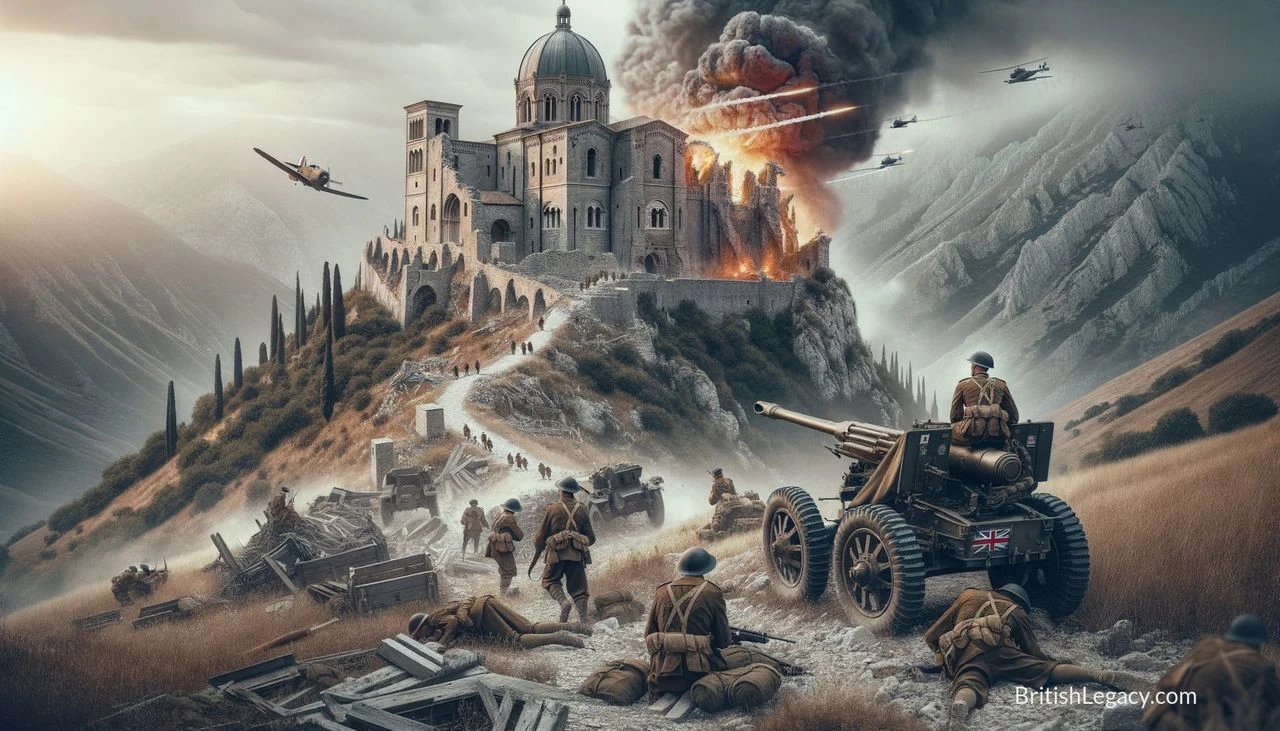
The Battle of Monte Cassino: A Pivotal Chapter in British Military History
In the grand tapestry of British legacy, few events underscore the valor and sacrifice of British Commonwealth forces like the Battle of Monte Cassino. Staged against the backdrop of the Second World War in 1944, this series of fierce engagements in Italy stands not only as a testament to the resilience and strategic cunning of British forces but also as a crucial episode in the Allies' efforts to liberate Europe from the clutches of tyranny.
A Fortress in the Mountains
Monte Cassino, a majestic mountain crowned by a historic Benedictine abbey, became an unyielding fortress held by German forces. As part of the formidable Gustav Line, it presented a seemingly insurmountable barrier to the advancing Allied forces. The Allies sought to break through this line to penetrate deeper into Italy and pave the way for the liberation of Rome.
The United Front of Commonwealth Forces
The series of battles that ensued at Monte Cassino witnessed substantial contributions from British Commonwealth forces, including not just soldiers from the United Kingdom, but also valiant fighters from India, Canada, New Zealand, Poland, and South Africa. This diverse coalition underscored the global scope of the British Empire and its unified stand against the Axis powers.
The Assault Unfolds
The Battle of Monte Cassino was marked by four distinct assaults, commencing in January 1944 and concluding in May of the same year. Each phase of the battle brought with it new challenges and heightened ferocity. The winter of 1944 saw the first attempts to breach the German defences, but the entrenched enemy and harsh weather conditions thwarted initial efforts.
As the months progressed, the Allies employed a combination of heavy bombardment, artillery assaults, and infantry attacks. The ancient abbey, which had withstood the march of centuries, was reduced to ruins during the second assault in February, a controversial decision aimed at eliminating a potential observation post. The ruins, however, became a formidable labyrinth for the German paratroopers who subsequently fortified themselves amidst the rubble.
The Decisive Breakthrough
Victory at Monte Cassino was hard-won and came at a significant cost. The final assault in May 1944 involved a well-coordinated attack by Polish troops, which succeeded in capturing the ruins and opening the pathway to Rome. The fall of Monte Cassino signalled a turning point in the Italian campaign, contributing significantly to the eventual surrender of German forces in Italy.
The Legacy Etched in History
The Battle of Monte Cassino represents more than a military triumph; it encapsulates the indomitable spirit and joint sacrifices made by British Commonwealth forces. This epochal battle showcased the strategic acumen and relentless perseverance of British-led troops, who fought under dire conditions to secure a pivotal victory.
The narrative of Monte Cassino enriches British heritage with tales of heroism, camaraderie, and shared purpose. It reminds us of the strength derived from unity and the profound impact of collective endeavour in shaping the course of history. The legacy of Monte Cassino continues to be a proud chapter of British and Commonwealth military history, illustrating the extraordinary contributions of these forces to the Allied victory in the Second World War.
In commemorating this episode, we honour not only the strategic milestones achieved but also the enduring human spirit that defines the great British legacy. The echoes of Monte Cassino resonate as a testament to the bravery, sacrifices, and collaborative strength that have indelibly marked the pages of history.