The Battle of Mysore and the Anglo-Mysore Wars: 1799
The turn of the 19th century marked a pivotal chapter in British history, one that significantly shaped the British legacy and altered the history of the Indian subcontinent. The year 1799 witnessed the conclusive Battle of Mysore, culminating in the defeat of the formidable Tipu Sultan by the British forces under General George Harris and Arthur Wellesley, the future Duke of Wellington. This decisive battle brought an end to the Anglo-Mysore Wars and established British dominion over Southern India, etching a crucial episode in the annals of British heritage.
The Context of Conflict: The Anglo-Mysore Wars
The Anglo-Mysore Wars were a series of four protracted and intense conflicts between the British East India Company and the Kingdom of Mysore. The Kingdom of Mysore, under the enlightened and valiant rulers Hyder Ali and later his son, Tipu Sultan, resisted British expansion with fierce determination. These wars were not merely about territorial gain but were also contests for economic dominance, strategic control, and political supremacy in the Indian subcontinent.
The Fourth Anglo-Mysore War: Prelude to the Battle
By the late 18th century, the British East India Company had expanded its influence significantly across India. Meanwhile, Tipu Sultan, an adept military strategist and a fervent opponent of British hegemony, endeavoured to forge alliances with France and other regional powers to counteract British advances. This culminated in the Fourth Anglo-Mysore War, with both sides gearing up for a final showdown.
The Siege and Battle of Seringapatam: The Decisive Clash
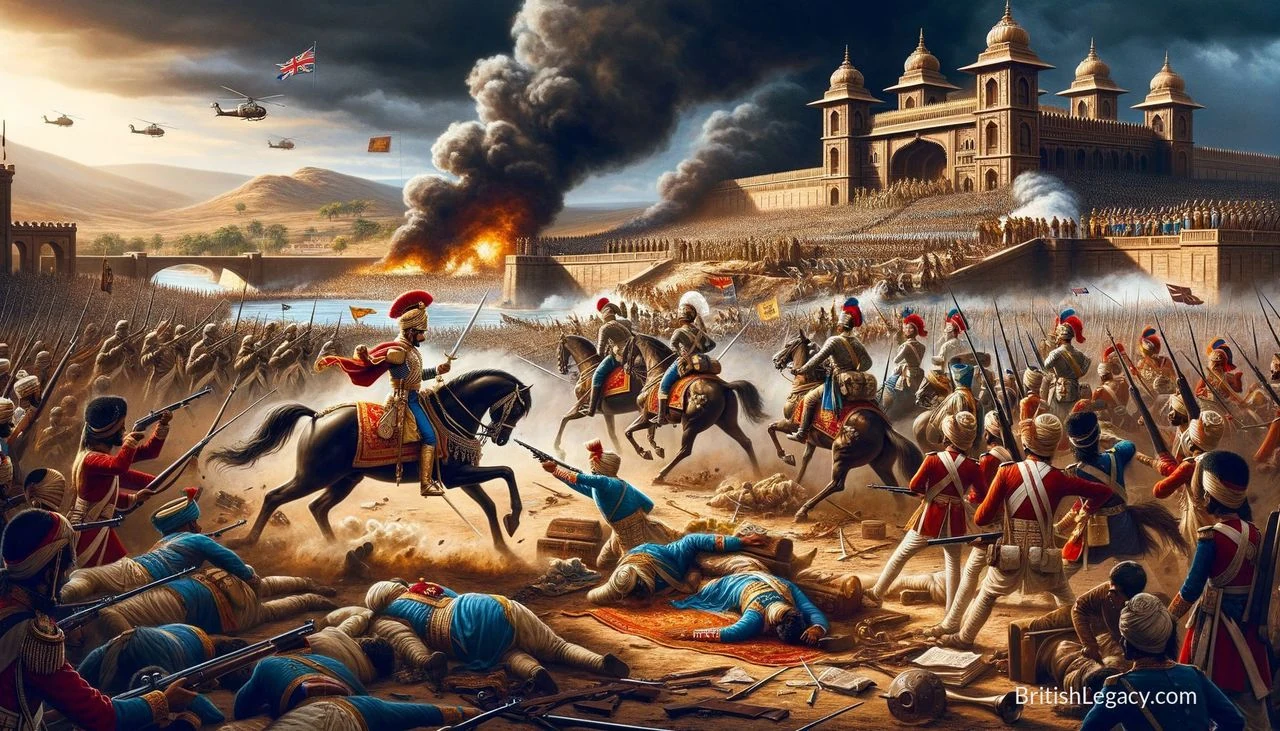
In March 1799, General George Harris, accompanied by Arthur Wellesley, marched towards Tipu Sultan's fortified stronghold of Seringapatam (now known as Srirangapatna). The siege of Seringapatam commenced in April, with the British forces employing cannons and siege tactics to weaken the fort’s defences. On 4th May 1799, the British forces launched a decisive assault, breaching the walls of Seringapatam and engaging in fierce combat with Tipu Sultan's troops.
The Fall of Tipu Sultan
Tipu Sultan, renowned as the "Tiger of Mysore" for his valour and tenacity, fought till his last breath. Despite the gallant defence, the British forces, aided by superior military strategy and artillery, overwhelmed Tipu Sultan's army. Tipu Sultan was killed in action, and his death symbolised the end of Mysore's resolute resistance against British colonisation.
The Aftermath: Consolidation of British Control
The fall of Seringapatam marked a watershed moment in British colonial history. The British East India Company consolidated its control over Southern India, annexing significant territories and ensuring the establishment of a client state in Mysore under a British-friendly ruler.
Legacy and Impact
The Battle of Mysore and the subsequent consolidation of British control had multifaceted implications:
-
Strengthening British Hegemony: The defeat of Tipu Sultan removed one of the most formidable native resistances to British expansion, thereby facilitating easier annexation of other regions.
-
The Rise of Arthur Wellesley: The success at Mysore was a feather in the cap for Arthur Wellesley, who would later become the Duke of Wellington and earn everlasting renown by defeating Napoleon at the Battle of Waterloo.
-
Economic Impact: The annexation of Mysore enabled the British to tap into Mysore's rich resources, augmenting the economic prowess of the British East India Company.
-
Cultural Exchanges: The integration of Mysore into the British Empire contributed to a blend of British and Indian cultures, influencing arts, architecture, and administrative systems.
Wrap-Up
The Battle of Mysore of 1799 stands as a landmark in the British colonial legacy, epitomising the tenacity and strategic acumen that underscored British imperial expansion. It was a victory that would shape the fate of the Indian subcontinent and stamp the British East India Company's dominance over Southern India. This historical episode not only reflects on the military and political ingenuity of British leadership but also delineates the broader narratives of resistance, conquest, and cultural amalgamation that define the extensive tapestry of British history.