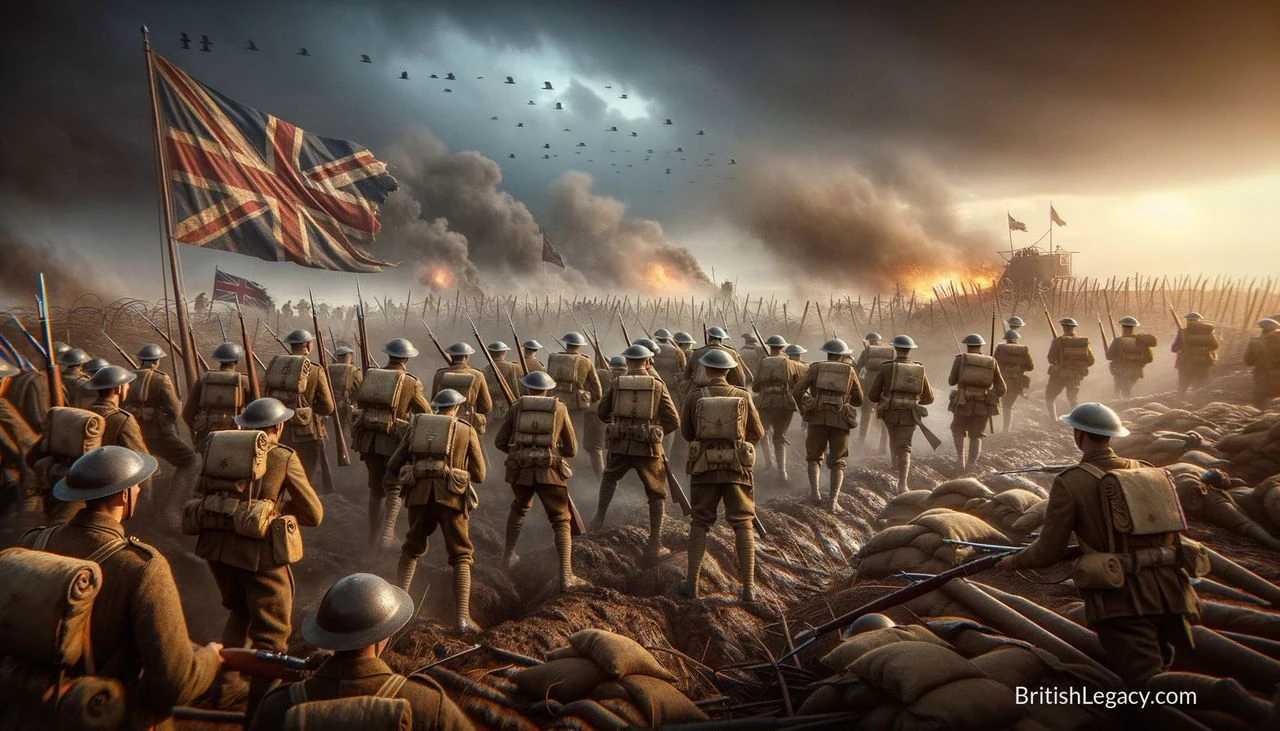
In November 1916, British forces attacked German positions around the Ancre, in northern France. The assault was the last large British offensive of the Battle of the Somme, a campaign that had begun in July and continued into autumn. Its aims were to capture ground held by the Germans and put further pressure on their defences. The fighting brought together infantry, artillery and tanks, but the advance took place in conditions that made movement difficult and came at grave cost.
The Ancre in the Somme campaign
By autumn, the Somme fighting had taken a heavy toll on men and equipment. The Ancre, a river in the battle-scarred landscape, became the focus of another effort to take German positions. Machine guns and trenches made an exposed advance dangerous; winter cold and mud added further obstacles for soldiers and material.
The operation was part of a continuing attempt to break through defended ground. Its purpose was not simply to move troops forward, but to seize positions that had resisted earlier attacks and weaken the German line. The Ancre offensive therefore belongs to the wider course of the Somme, rather than standing apart as a decisive end to the campaign.
Artillery, infantry and tanks
The assault used artillery barrages alongside the infantry advance. In a creeping barrage, gunfire moves forward in stages while troops follow behind it, seeking protection and a chance to approach enemy positions. That method depended on coordination between the artillery and the soldiers advancing on the ground. Its application was still difficult, and the attack faced setbacks.
Tanks were also part of the assault. Their presence alongside infantry and artillery reflects efforts to overcome the obstacles of trench warfare, but it does not, on the evidence available here, establish that the Ancre marked the first concerted use of tanks. The more defensible point is that the operation combined these elements during a demanding phase of the Somme campaign.
Ground gained and the cost of the attack
British forces captured German trenches, but this gain came at grave cost. The fighting took place in cold and mud, against entrenched positions, and the methods used did not remove the dangers of the battlefield. The result was an advance against ground that had been held, not a bloodless breakthrough or an end to the wider conflict.
The battle’s account includes both tactical adaptation and practical limits. Artillery barrages and tanks formed part of the effort to move through defended territory; neither detail makes the operation a simple story of technological success. The captured trenches, the difficulties encountered and the human cost belong together in any measured description of the Ancre.
Why the Battle of the Ancre deserves a place in British Legacy
The Battle of the Ancre deserves a place in British Legacy because it brings into focus a central challenge of the Somme: how to attack entrenched positions in conditions that made movement hazardous. British forces sought to capture German-held trenches and used artillery barrages alongside infantry, with tanks also present. These details show an effort to adapt military methods to the realities of machine guns, trench defences and difficult ground, without overstating what the operation achieved.
Its significance also lies in the need to hold military outcomes beside their human cost. British troops captured trenches, but the assault was costly and did not resolve the wider struggle. Remembering the Ancre in this way keeps its place in the Somme campaign clear: it was a substantial British attack in the campaign’s closing phase, marked by attempts to combine different forms of force under severe conditions. That account honours neither easy triumph nor empty national mythology; it preserves the tension between ground gained, tactical experimentation and the lives affected by the fighting.