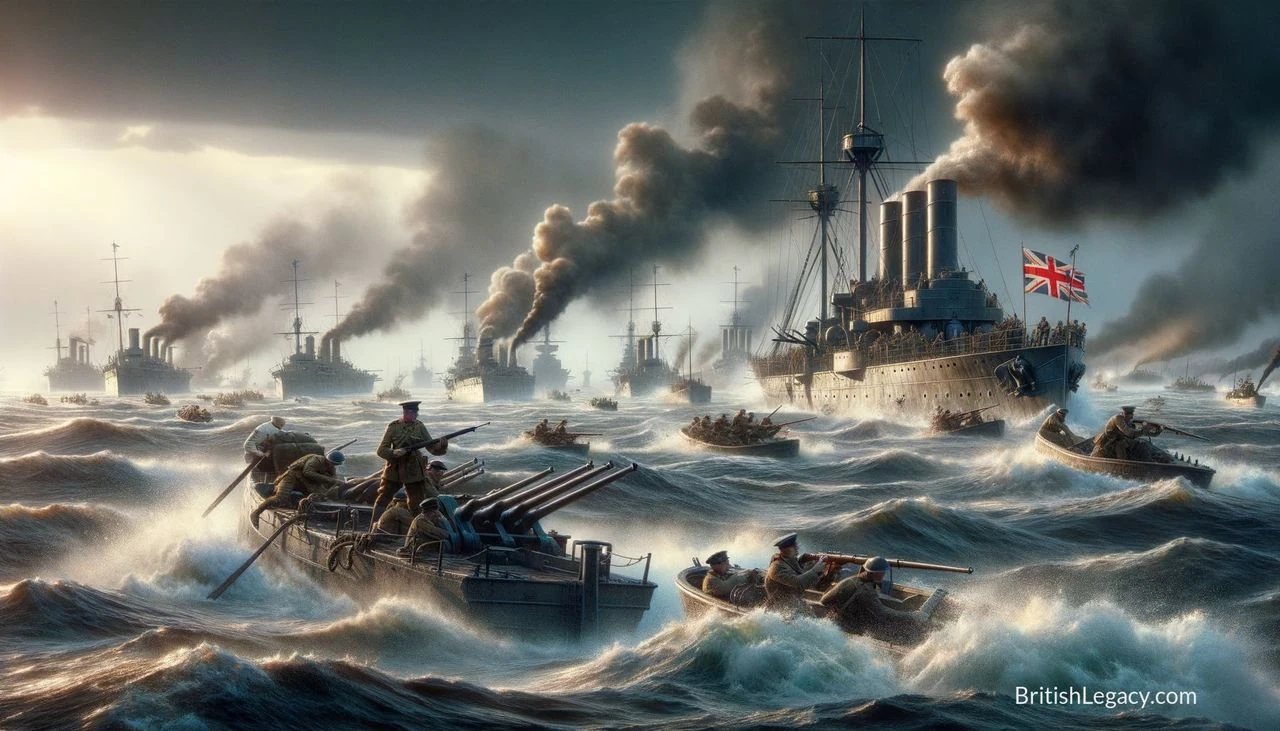
The Battle of the Falkland Islands: A Beacon of British Naval Prowess in the First World War
The Battle of the Falkland Islands, fought on the 8th of December 1914, stands as a sterling example of British naval supremacy and strategic acumen during the First World War. This pivotal event saw the Royal Navy decisively defeat the German East Asia Squadron, ensuring Britain's control over the South Atlantic and reasserting its dominance on the high seas. Intricately woven with courage, strategy, and innovation, the battle is a significant chapter in the illustrious annals of British maritime history and its comprehensive legacy.
A Prelude to Conflict: The Brooding Tensions of 1914
The backdrop to this dramatic encounter lay in the simmering cauldron of global maritime strategies as the First World War began. Earlier in the conflict, the German East Asia Squadron, under the command of Vice Admiral Maximilian von Spee, had scored a significant victory against the British at the Battle of Coronel off the coast of Chile. This triumph emboldened Spee and marked a rare moment of British naval vulnerability. The loss of two British cruisers, HMS Good Hope and HMS Monmouth, instigated a resolute response from the Admiralty in London.
Mobilising the Fleet: Britain's Naval Response
Determined to avenge the defeat and neutralise the German threat, the Royal Navy dispatched a formidable force to the South Atlantic. Vice Admiral Sir Doveton Sturdee was tasked with the mission to intercept and engage von Spee’s squadron. Sturdee's fleet comprised the battlecruisers HMS Invincible and HMS Inflexible, alongside several cruisers and support ships, all of which were faster and more heavily armed than their German counterparts.
The Battle Unfolds: A Triumph of Strategy and Execution
On the morning of the 8th of December 1914, Spee’s squadron approached the Falkland Islands, intending to raid the British supply station at Port Stanley. As they closed in, they were confronted by the imposing silhouettes of Sturdee’s battlecruisers. Realising the superior firepower and speed of the British ships, Spee attempted to retreat. What followed was a masterclass in naval strategy and gunnery.
Sturdee ordered his faster vessels to pursue and engage the fleeing Germans. After a fierce and relentless pursuit, the two battlecruisers opened fire, demonstrating the formidable reach and power of British naval artillery. In a series of brutal exchanges, the British fleet systematically overwhelmed and destroyed the German squadron. Notable warships like SMS Scharnhorst and SMS Gneisenau were sent to the ocean's depths, along with the light cruisers SMS Nürnberg and SMS Leipzig. Von Spee, along with two of his sons, perished with his flagship, Scharnhorst.
Legacy and Impact: Cementing British Naval Dominance
The Battle of the Falkland Islands had far-reaching implications for the course of the First World War and for British naval legacy. It effectively nullified the threat posed by the German East Asia Squadron, securing the South Atlantic and protecting crucial maritime trade routes. This victory re-established British naval supremacy at a time when it was sorely needed and showcased the Royal Navy's enduring capacity for rapid mobilisation, strategic planning, and execution under pressure.
Echoes Through Time: A Lasting Heritage
The repercussions of this victory resonated far beyond the immediate tactical gains. The battle exemplified the effective use of intelligence, communication, and modern naval assets in warfare, presaging the evolving nature of naval engagements in the 20th century. It also reinvigorated British public morale after the sombre news from Coronel, reinforcing the confidence in British maritime prowess.
Moreover, the victory at the Falklands had an inspirational and educational value for naval forces worldwide. It underscored the importance of adaptability and innovation, traits that have become hallmarks of the Royal Navy's enduring legacy. The engagement at the Falklands also serves as a poignant reminder of the sacrifices made and the relentless pursuit of duty, honour, and country—values that are integral to the British naval tradition.
Wrap-Up: An Enduring Symbol of Maritime Excellence
In the grand tapestry of British history, the Battle of the Falkland Islands occupies a hallowed place. It is a testament to the bravery, skill, and strategic brilliance that have characterised the Royal Navy through the ages. By securing a decisive victory against formidable odds, the battle not only safeguarded vital maritime routes but also contributed immensely to the collective British legacy of naval excellence, inspiring future generations and solidifying Britain's reputation as a leading maritime power.
In essence, the Battle of the Falkland Islands is more than just a historical event; it is a beacon illuminating the enduring spirit of British naval heritage and its impactful legacy on the global stage.