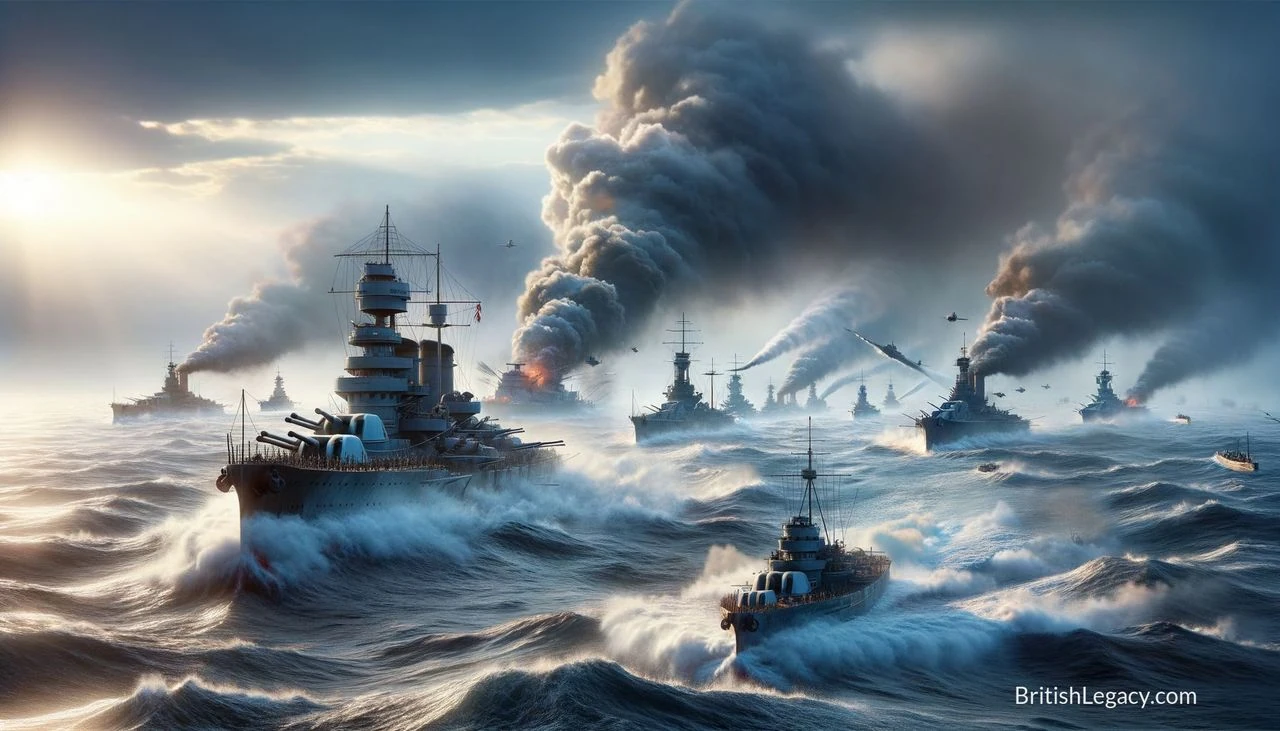
The Battle of the Java Sea: A Chapter in British Naval Courage during the Second World War
In the annals of the Second World War, certain battles stand as stark reminders of both the sacrifices made and the resilience shown by those who fought. One such momentous yet often overlooked battle is the Battle of the Java Sea, fought on the 27th of February 1942. This naval clash, while ultimately a defeat for the Allied forces which included British naval power, remains a critical component of the legacy of British wartime bravery and determination.
The Prelude to Battle
The Battle of the Java Sea occurred within the broader context of the Japanese campaign to dominate Southeast Asia. Following the devastating attack on Pearl Harbor in December 1941, Japanese forces rapidly expanded their reach across the Pacific. By early 1942, they had set their sights on the rich oil fields of the Dutch East Indies, modern-day Indonesia. The Allied forces, comprised of British, Dutch, American, and Australian naval units, formed a striking force, known as the ABDA (American-British-Dutch-Australian) Command, to counter this formidable threat.
The British Contribution
The British Royal Navy's presence in this Allied coalition was notably represented by the cruiser HMS Exeter and the destroyers HMS Electra, Encounter, and Jupiter. These vessels and their crews were already battle-hardened from previous engagements and underscored Britain's unwavering commitment to challenging Japanese naval expansion. Their mission was perilous: to intercept and disrupt the Japanese invasion fleet en route to Java, thus preventing a full-scale occupation.
Clash of Giants
On the fateful day of 27th February 1942, the Allied fleet, under the command of Dutch Admiral Karel Doorman, encountered the Japanese 5th Destroyer Flotilla and 3rd Cruiser Squadron in the waters of the Java Sea. The confrontation began in the late afternoon and raged into the night, marked by relentless gunfire and torpedo attacks. The Japanese forces, bolstered by superior numbers and more advanced tactics, soon gained the upper hand.
HMS Exeter, already damaged in previous battles, was hit early on and forced to withdraw. The gallant destroyers HMS Electra and HMS Jupiter fought valiantly but were eventually overwhelmed and sunk by relentless Japanese firepower. The courage and tenacity displayed by their crews encapsulate the spirit of the Royal Navy, steadfast even in the face of insurmountable odds.
Aftermath and Reflection
The Battle of the Java Sea ended in a decisive defeat for the Allied forces, with significant losses including the sinking of several key vessels. For the British naval contingent, this battle was a sobering reminder of the formidable challenge posed by Japanese naval dominance at the time. Despite the defeat, the bravery exhibited by British sailors and their Allies did not go unnoticed. Their sacrifice bought precious time for other defensive preparations in the region and showcased the indomitable spirit of Allied resistance.
The ripple effects of the Battle of the Java Sea would be felt throughout the subsequent naval engagements in the Pacific Theatre. Every engagement, every display of courage and sacrifice, added to the collective resolve that would eventually lead to the Allied victory.
Legacy and Honour
Today, the Battle of the Java Sea stands as a testament to the steadfastness and courage of British and Allied forces during one of the darkest periods of naval warfare. It is a reminder of the global scope of the Second World War and the intricate tapestry of alliances and shared sacrifices that characterised the conflict. This battle holds a cherished place in the annals of British maritime history, commemorating those who fought and fell far from home.
The legacy of the Battle of the Java Sea is intertwined with the broader narrative of British resilience and the eventual triumph over tyranny. It serves as an enduring symbol of the cost of freedom and the valour of those who stand in its defence, contributing richly to the great British heritage and its storied impact on the world stage.