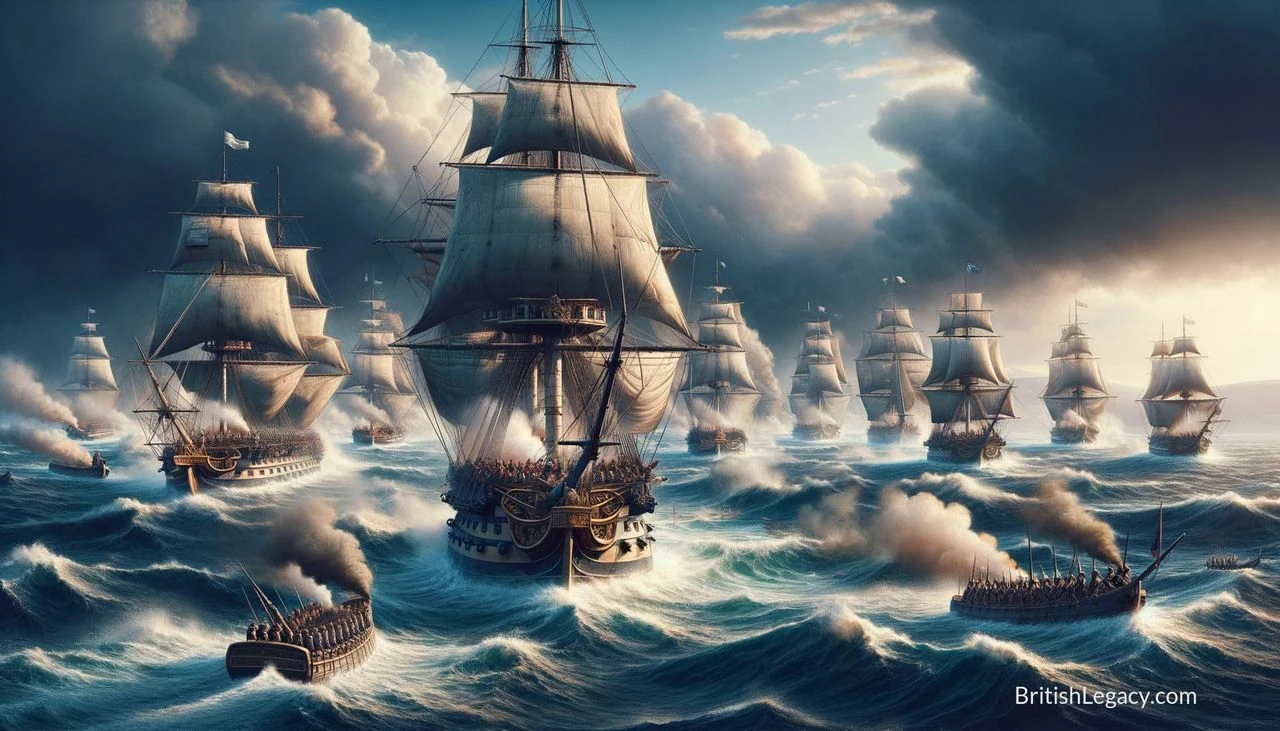
On the night of 1 August 1798, the British fleet under Horatio Nelson found the French ships anchored in Aboukir Bay, near the Nile Delta. The ensuing battle destroyed much of the French fleet and left Napoleon’s army in Egypt cut off from support by sea. The victory did not end the French campaign at once, but it altered the balance of power in the Mediterranean and made Nelson a national hero.
Egypt and the struggle for influence
France’s invasion of Egypt formed part of the wider conflict that followed the French Revolution. Napoleon sought to extend French influence beyond Europe. Egypt mattered to Britain because of its position on routes connecting the Mediterranean with British interests in India; a French presence there threatened British trade and influence.
Napoleon’s army captured Alexandria, but the French position depended in part on maintaining links with France. Nelson’s fleet was searching for the French ships when it reached Aboukir Bay. The French, commanded by Vice-Admiral François-Paul Brueys d’Aigalliers, lay at anchor in a defensive line. Their position appeared secure, but Nelson chose to attack rather than wait for conditions to change.
The night battle at Aboukir Bay
Nelson’s ships attacked on the evening of 1 August. The British manoeuvred between the shore and the French line, striking from a direction the French had not expected. The fighting continued through the night. By dawn, the French fleet had suffered a major defeat, and its ability to support Napoleon’s expedition by sea had been severely weakened.
The French flagship, L’Orient, exploded during the engagement. Its destruction became the most striking episode of the battle, but the wider result mattered more than one ship: the French fleet could no longer provide the protection and communications Napoleon’s forces needed. British success at Aboukir Bay was therefore both a naval victory and a serious setback for the French campaign in Egypt.
Consequences of the victory
With the French fleet defeated, Napoleon’s army was isolated from France and faced growing difficulties obtaining supplies. The battle constrained his ambitions in the East, although it did not bring the Egyptian campaign to an immediate conclusion. The distinction matters: Aboukir Bay changed the conditions under which the French army operated, rather than ending its presence in Egypt overnight.
The victory also strengthened British influence in the Mediterranean and helped protect maritime routes important to British interests. During the protracted wars against France, command of the sea was a strategic advantage: it could restrict an opponent’s movement and make distant campaigns harder to sustain. The battle demonstrated that advantage in a conflict centred far from Britain itself.
For Nelson, Aboukir Bay was a defining success. His decision to attack the anchored fleet and the British manoeuvre around the French line became central to accounts of the engagement. The victory raised his public standing and established his reputation as a leading naval commander. It also made the battle a lasting part of Britain’s naval history, remembered not simply for the destruction of the French fleet but for the consequences of that defeat.
Why the Battle of the Nile deserves a place in British Legacy
The Battle of the Nile deserves a place in British Legacy because it shows how a naval engagement could shape a campaign far beyond the battlefield. Nelson’s fleet did not capture Egypt, but its victory deprived Napoleon’s forces of a secure French naval presence and left them isolated from support by sea. That consequence makes the battle more than a celebrated episode in Nelson’s career: it illustrates the role of naval power in determining whether an army could sustain operations far from home.
Its British significance lies in the connection between the defence of maritime routes, influence in the Mediterranean and the wider struggle with France. The victory strengthened Britain’s position at a strategically important point between Europe and interests in India. Remembering the battle also allows a fuller account than unqualified celebration: the French fleet was defeated, but Napoleon’s campaign did not end immediately. The event belongs in British history both for Nelson’s decisive action and for the way sea power altered the practical limits of France’s ambitions in Egypt.