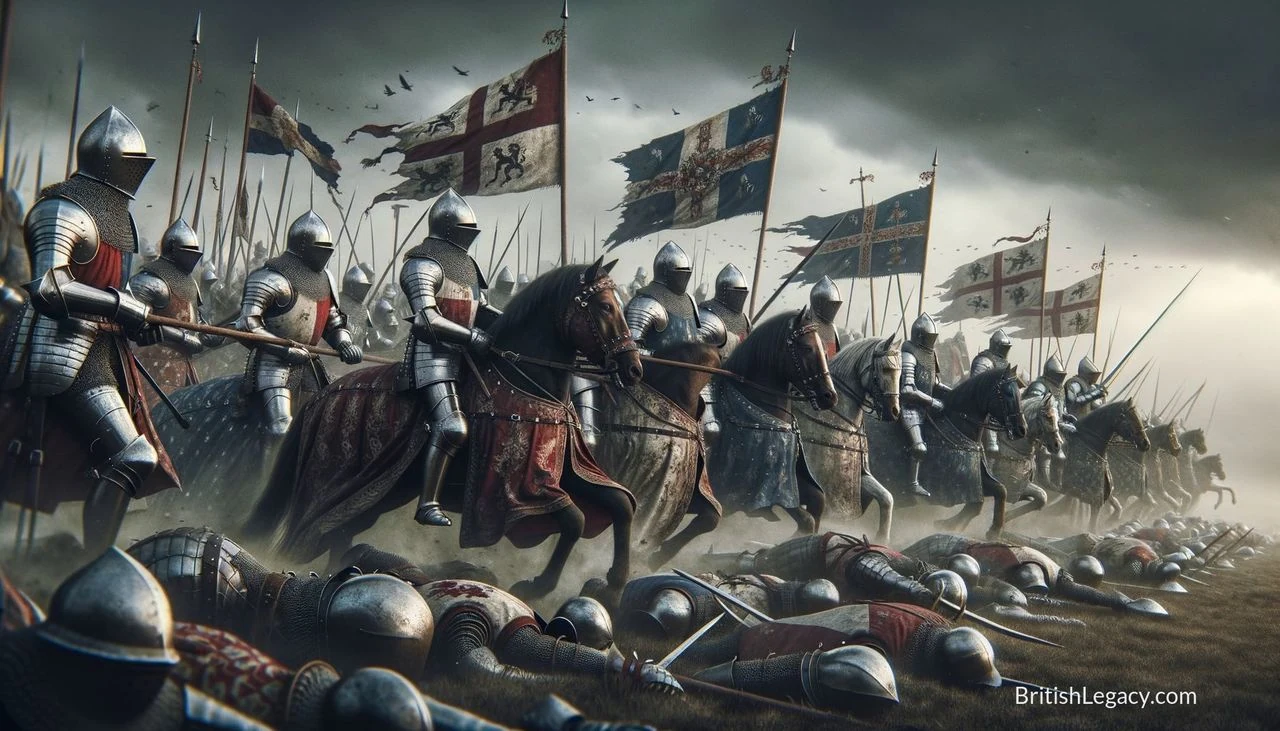
On Palm Sunday, 29 March 1461, the struggle for the English crown reached a bloody climax near Towton in Yorkshire. The Battle of Towton, fought between the houses of York and Lancaster during the Wars of the Roses, ended in a Yorkist victory and strengthened Edward IV’s claim to the throne. Accounts of the battle describe snow, wind, arrows and a long day of fighting; estimates of the forces and losses convey the scale of the slaughter, but remain estimates rather than a precise tally.
A crown contested
The Wars of the Roses were a series of dynastic conflicts between the houses of Lancaster and York, each claiming the English crown. The familiar red and white roses became associated with the rival houses, but the contest also involved changing allegiances and struggles for political power. Towton was one episode in that wider conflict, not an isolated clash.
By early 1461, the Yorkist cause had gained ground. Edward, Earl of March, later Edward IV, had won at Mortimer’s Cross and was pursuing the crown. The Lancastrian forces supported Henry VI and sought to maintain his position. Their armies met at Towton as winter gave way to spring, amid the upheaval of a country divided by dynastic war.
Snow, wind and a day of fighting
The battle is remembered for harsh weather and exceptionally heavy casualties. Estimates in the existing account suggest that as many as 50,000 men took part. Snow flurries made conditions difficult, while wind was said to have favoured the Yorkist archers: their arrows were carried towards the Lancastrian line, with snow blowing into the faces of their opponents. This reported advantage formed part of a larger, prolonged struggle; it did not make victory immediate.
The fighting is described as beginning early and continuing through the day. Later accounts spoke of the River Cock beck running red with blood, an image that conveys Towton’s enduring reputation for carnage. The reported number of dead—about 28,000—is an estimate, not a certain count. The figures underline the scale attributed to the battle, while caution is needed in treating either the number of participants or the losses as exact.
By dusk, the Yorkists had won. The Lancastrian forces were routed, and many fled or were captured. The result substantially strengthened Edward’s claim to the crown. The account places his coronation days later and describes a period of relative stability under Yorkist rule, although Towton did not end the dynastic conflict permanently.
Aftermath and the memory of Towton
Towton was a turning point in the Wars of the Roses, but its outcome should not be mistaken for a final settlement. The fighting between the rival houses continued beyond the battle. Edward IV’s accession nevertheless shaped the subsequent course of English rule and forms part of the political history that preceded the Tudor dynasty.
The battle also endures as a reminder of civil war’s human cost. Its reputation rests on accounts of the weather, the prolonged fighting and the extraordinary loss of life, as well as on the result for the crown. The original account links Towton with the wider development of England’s military and social structures, but offers no specific examples to support that broader claim. More securely, the battle’s place in the history and memory of Yorkshire is tied to the scale of the conflict and its consequences for the English throne.
Why the Battle of Towton deserves a place in British Legacy
Towton deserves a place in British Legacy because it brings together two defining aspects of the country’s past: a struggle over political authority and the consequences borne by those who fought in it. The Yorkist victory strengthened Edward IV’s claim to the English throne, while the battle’s estimated participation and losses point to the devastating scale attributed to this encounter. Its story connects the local landscape of Yorkshire with a dynastic conflict that shaped the succession and politics of England.
Remembering Towton also requires care. The reported figures are estimates, and vivid descriptions of weather and slaughter should not be mistaken for a precise record of every detail. That tension between the battle’s lasting place in historical memory and the limits of the surviving account is part of its significance. Towton is not a story of uncomplicated triumph: it is a record of a decisive victory achieved amid civil conflict, mass casualties and a continuing contest for the crown. Its British connection lies in that specific English history and in the Yorkshire setting where its consequences were fought out.