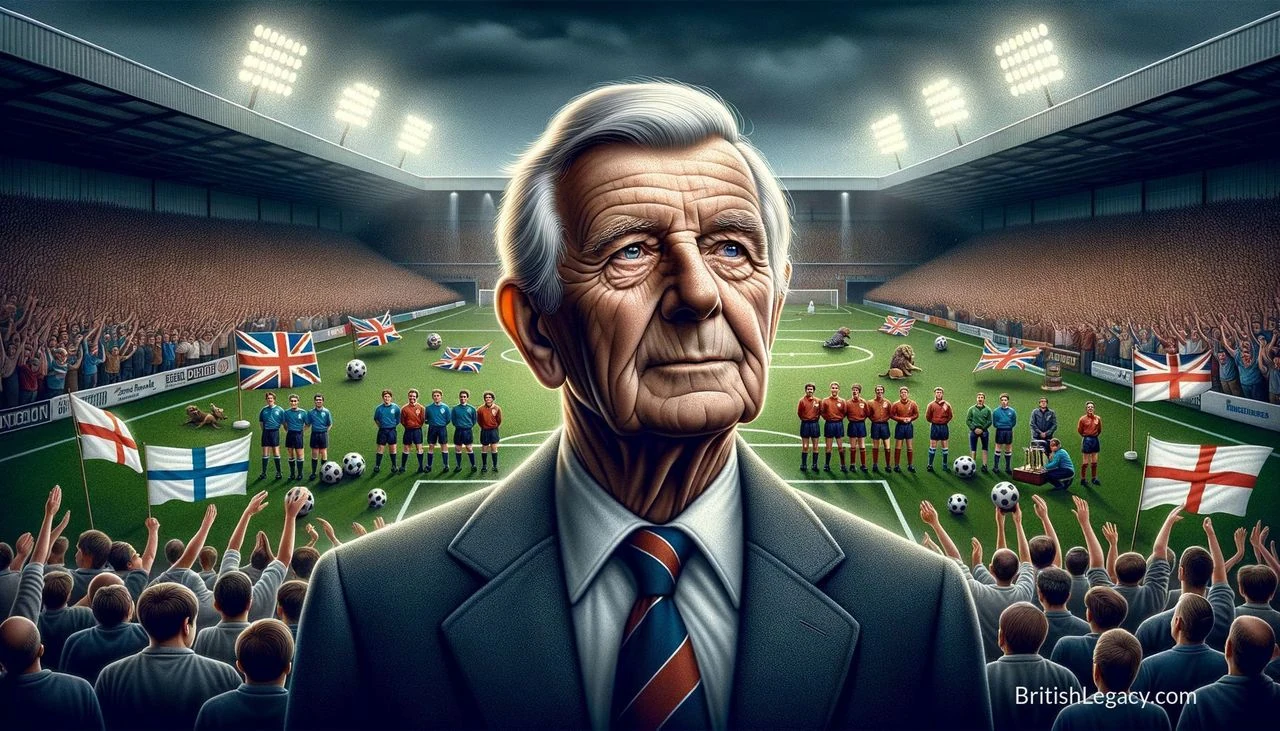
When Bobby Robson took Ipswich Town to the UEFA Cup in 1981, he capped a 13-year spell in which the club grew into a regular contender at home and in Europe. It was a landmark in an unusually wide-ranging career: Robson later led England to the 1990 World Cup semi-finals, won league titles in the Netherlands and Portugal, and collected three trophies with Barcelona. His path from County Durham to the dugouts of Europe was marked not only by results, but by a sustained ability to build teams and bring the best out of players.
From County Durham to professional football
Robert William Robson was born in Sacriston, County Durham, on 18 February 1933. His family moved to Langley Park when he was a few months old. He attended Langley Park Primary School and Waterhouses secondary modern school, then left school at 15 to become an electrician’s apprentice with the National Coal Board. Football occupied his spare time: he played for Langley Park Juniors and, in May 1950, signed for Fulham after the club’s manager, Bill Dodgin, visited his family home.
Robson made his Fulham first-team debut in 1950. He moved to West Bromwich Albion in 1956, where he played 257 matches in all competitions and captained the side in the 1960–61 and 1961–62 seasons. He returned to Fulham in 1962, later accepting an offer to become player-manager of Vancouver Royals. That move did not run as planned. When Fulham offered him its managerial post in January 1968, he returned to England and began a new career in the dugout.
His international playing career brought 20 England appearances and four goals. He was selected for the 1958 World Cup and the 1962 finals, although an ankle injury curtailed his role in Chile. The playing years gave him a close understanding of the demands of professional football; the managerial years would take him much further.
Ipswich Town and England
Robson joined Ipswich Town in 1969. With the backing of chairman John Cobbold and, later, Patrick Cobbold, he built a side that challenged near the top of the First Division and competed regularly in Europe. Ipswich won the Texaco Cup in 1972–73 and the FA Cup in 1977–78, beating Arsenal 1–0 in the final. The club then won the UEFA Cup in 1980–81, defeating AZ 67 Alkmaar 5–4 on aggregate.
Robson’s Ipswich teams depended in large part on players developed at the club, including Terry Butcher, George Burley, John Wark and Mick Mills. He also brought in Dutch internationals Frans Thijssen and Arnold Mühren. Ipswich finished lower than sixth in the First Division only once in the nine seasons after 1972–73, and twice finished as league runners-up. The combination of home-grown talent, carefully chosen signings and consistent competition gave the club a lasting place in the story of his career.
In July 1982, Robson took charge of England, two days after the team’s elimination from that year’s World Cup. England failed to qualify for the 1984 European Championship, and were knocked out in the group stage at Euro 1988. Robson remained in the job and led the side to the 1990 World Cup in Italy. England reached the semi-final, where they drew 1–1 with West Germany before losing on penalties. It was England’s first World Cup semi-final on foreign soil and its best finish in the tournament since winning it in 1966.
The run did not erase the disappointments that came before it, but it came to define Robson’s England years. His team had to adapt during the tournament, including changing its formation, and made its way through tight knockout matches against Belgium and Cameroon before meeting West Germany. Robson left the England post after the tournament, having managed the national side for eight years.
Building a career across Europe
Robson moved to PSV Eindhoven in 1990 and won the Eredivisie in both 1990–91 and 1991–92. He then took charge of Sporting CP before joining Porto in 1994. With Porto, he won consecutive league titles in 1994–95 and 1995–96, as well as the Taça de Portugal and the Portuguese Supertaça. These successes followed a different route from his work at Ipswich, but again he arrived at a club in need of renewed momentum and helped it return to winning ways.
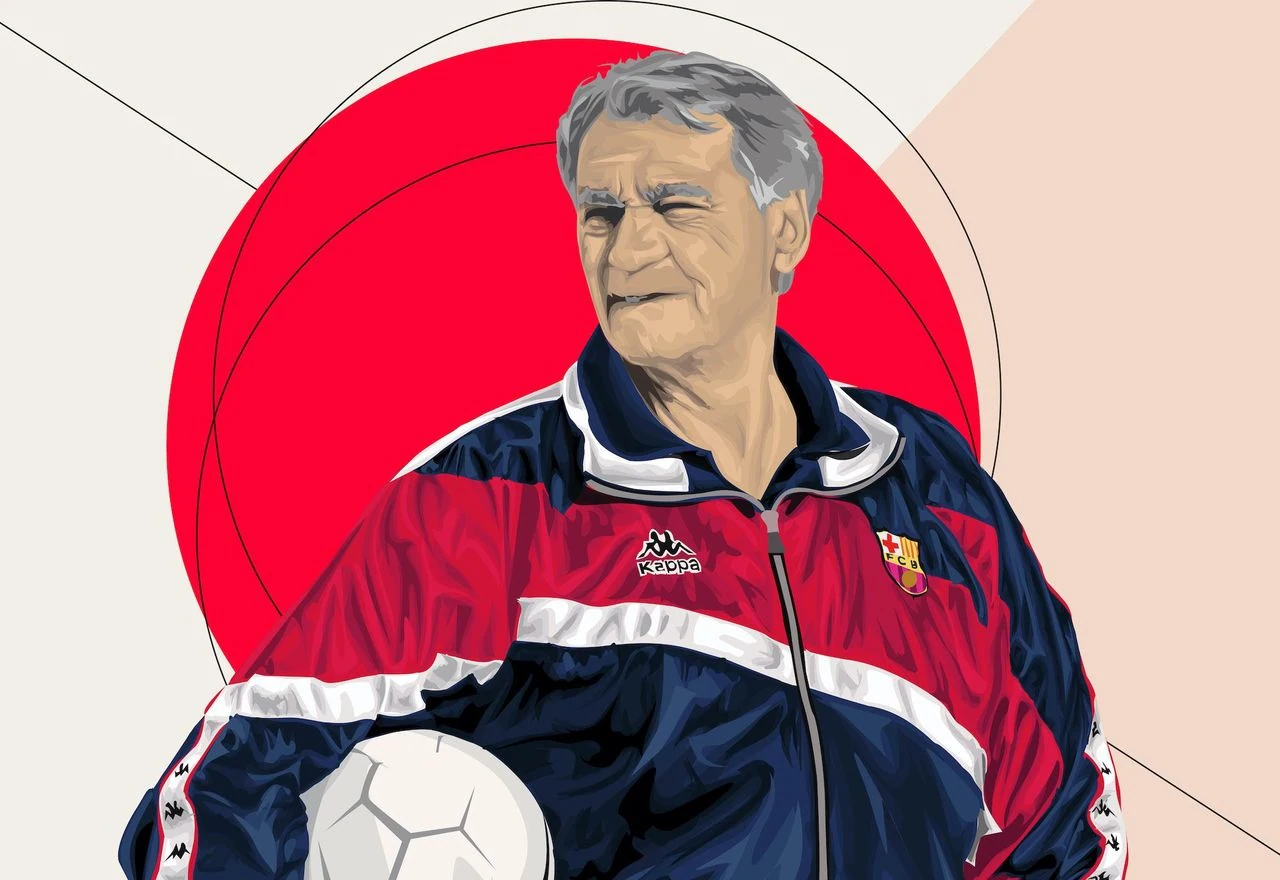
At Barcelona in 1996–97, Robson reunited with his assistant, José Mourinho. The team won the Copa del Rey, the Supercopa de España and the UEFA Cup Winners’ Cup. One of Robson’s major signings was the Brazilian forward Ronaldo, whose performances helped Barcelona through the season. Robson was named European Manager of the Year for 1996–97. He moved into a general-manager role the following season, then returned briefly to PSV in 1998–99, winning the Johan Cruyff Shield.
His work abroad took him beyond the best-known posts at PSV, Porto and Barcelona: Sporting CP was part of the same European journey. Robson’s final club role came back in England, at Newcastle United. Appointed in September 1999, he lifted the club from the bottom of the Premier League to fourth place in 2001–02 and third in 2002–03. Newcastle finished fifth in 2003–04 and reached the UEFA Cup semi-finals. Robson left the club in August 2004.
Coaching, illness and public service
Robson’s management was often described through his relationships with players: demanding, loyal and energetic. His teams included players who later became managers, among them Mourinho, who worked as his interpreter and assistant, and André Villas-Boas, whom he encouraged at Porto. Robson’s influence lay not only in where his sides finished, but also in his attention to players’ development and in the working relationships he formed over a long career.
From 1991 onwards, Robson faced recurrent cancer diagnoses and underwent several operations. After a further diagnosis in 2007, he devoted time and effort to cancer research. He launched the Sir Bobby Robson Foundation on 25 March 2008. The charity funded equipment for the Sir Bobby Robson Cancer Trials Research Centre at the Freeman Hospital in Newcastle upon Tyne and supported other cancer projects in the North East. By March 2018, it had raised more than £12 million.
Robson died of lung cancer at his home in Beamish, County Durham, on 31 July 2009, aged 76. His honours included a CBE in 1991 and a knighthood in 2002, both for services to football. He was inducted into the English Football Hall of Fame in 2003, received the BBC Sports Personality of the Year Lifetime Achievement Award in 2007 and was awarded the FIFA Fair Play Award posthumously in 2009.
Why Bobby Robson deserves a place in British Legacy
Robson’s place in British sporting history rests on achievements that were substantial in more than one setting. At Ipswich Town, he turned a long managerial tenure into a period of sustained competition, winning the FA Cup and the UEFA Cup while making use of players developed through the club’s youth programme. With England, he led the national side to the 1990 World Cup semi-final, a milestone reached abroad and a defining moment in the team’s modern history. His later league titles in the Netherlands and Portugal, and Barcelona’s three trophies in 1996–97, show how far his work travelled beyond the English game.
That record also had a human and regional legacy. Robson’s support for players and his encouragement of future coaches helped carry his influence into later generations of football. After repeated cancer diagnoses, he put his name and effort behind a foundation that funded research facilities and projects in the North East, connecting a national sporting career to practical benefit in the region where he was born and died. The foundation’s fundraising, which had passed £12 million by March 2018, gives that work a measurable reach. Robson’s story belongs in British Legacy not simply because he won trophies, but because his leadership helped clubs and a national team compete at the highest level, while his later charitable work supported cancer research at home.
Sources
Bobby Robson — Wikipedia, revision 1378183045 · Bobby Robson — Wikipedia
Adapted in part from Bobby Robson by Wikipedia contributors, under CC BY-SA 4.0. Text has been edited and combined with the existing article; this adapted text is shared under the same licence. Contributor history.