
Bobby Zamora’s career was built around goals that changed the direction of a season. He scored as West Ham United won promotion through the 2005 play-offs, helped Fulham reach the 2010 UEFA Europa League final, and struck Queens Park Rangers’ winner in another play-off final in 2014. His rise took him from east London youth football through Bristol Rovers and Brighton & Hove Albion to the Premier League and the England team.
From east London to Brighton
Robert Lester Zamora was born in Barking on 16 January 1981. He attended Essex Junior School, Little Ilford School and Barking Abbey Secondary School. As a boy he played for Senrab, an east London youth team, alongside future professionals including John Terry, Ledley King and Paul Konchesky. A West Ham supporter, he began as an apprentice in the club’s academy, but was released. He then joined Norwich City’s youth set-up and was released again at 16.
Zamora joined Bristol Rovers as a trainee in August 1999. After making substitute appearances for the club, he went on loan to Bath City in early 2000, scoring 11 goals in eight appearances according to the career narrative. A loan spell at Brighton followed in February. He scored six times in six appearances, and Brighton made the move permanent that August for a reported £100,000.
At Brighton, Zamora became one of the division’s leading scorers. He scored 83 goals in 136 appearances for the club across his first spell, as the side won successive championships and climbed from the Third Division into what became the Championship. He was named PFA Fans’ Player of the Year and included in the PFA Team of the Year in both 2000–01 and 2001–02; he was also the leading scorer in each division. Brighton supporters adopted a chant in his honour, a measure of the connection he built there.
A return to West Ham, and a difficult FA Cup final
Tottenham Hotspur signed Zamora for a reported £1.5 million in July 2003. First-team opportunities were limited: he made 18 league and cup appearances and scored once. That goal came against West Ham in a League Cup tie. In January 2004, he moved back to the east London club in a deal that sent Jermain Defoe to Tottenham. Zamora scored on his West Ham debut and again in his first home match.
His defining contribution came in the 2004–05 Championship play-offs. Zamora scored once in the semi-final first leg against Ipswich Town and twice in the second leg. In the final at Cardiff’s Millennium Stadium, he scored the only goal of the match against Preston North End, securing West Ham’s return to the Premier League. It was a promotion won not by a season-long accumulation alone, but by a forward who delivered repeatedly in the decisive matches.
West Ham reached the FA Cup final the following season, losing to Liverpool on penalties after a 3–3 draw. Zamora missed his attempt in the shoot-out. In 2006–07 he scored 11 league goals, including the winner against Arsenal at the Emirates Stadium, as West Ham escaped relegation. A tendon injury restricted his appearances in his final season at the club. By the end of 2007–08, he had made 152 appearances in all competitions and scored 40 goals for West Ham.
Fulham’s European run
Fulham signed Zamora and West Ham team-mate John Paintsil in July 2008, with Zamora accounting for a reported £4.8 million of the combined fee. His first season brought two league goals. After Fulham agreed a potential transfer with Hull City the following summer, Zamora turned down the move and stayed at Craven Cottage.
His form changed markedly in 2009–10. In the Europa League, he scored and set up two goals against FK Vėtra in a qualifying tie, then scored twice in a crucial away win over Basel that took Fulham through the group stage. In the knockout rounds, he scored against Shakhtar Donetsk and Juventus, and in both legs of the quarter-final against Wolfsburg. Fulham went on to reach the final, where they lost 2–1 to Atlético Madrid. Zamora’s fitness was in doubt for the final, but his goals had been central to the route there.
In the Premier League that season he scored eight goals, and his performances helped bring an England call-up. A shoulder dislocation in January 2010 interrupted his campaign; in September, after signing a new four-year contract, he broke his leg in a match against Wolverhampton Wanderers. He returned as a substitute in February 2011 and scored a penalty on his Premier League return the following month. His Fulham record across all competitions was 37 goals in 134 appearances.
One more play-off winner
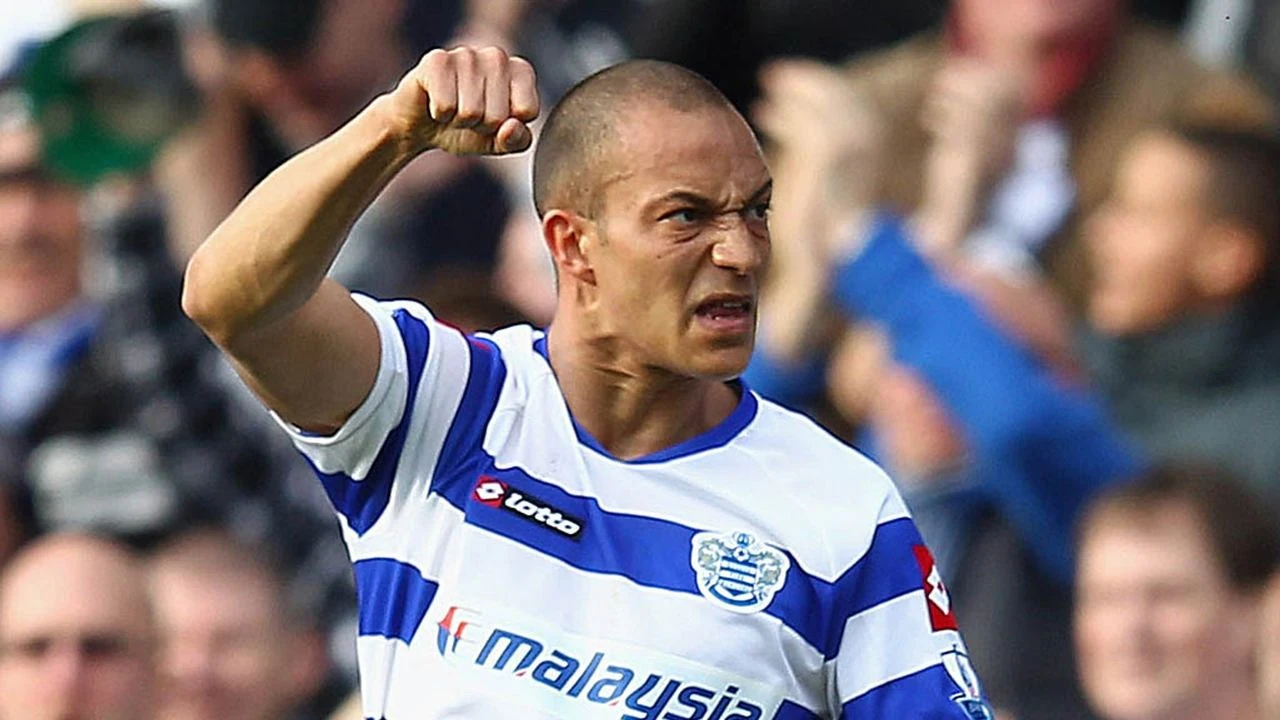
Zamora joined Queens Park Rangers in January 2012. Injuries, including a hip problem that required surgery, limited his availability. Yet in the 2014 Championship play-off final against Derby County, he again produced the decisive moment: his goal in the 90th minute gave QPR a 1–0 win and promotion to the Premier League.
He returned to Brighton in August 2015 on a one-year contract. In October, he scored an 89th-minute winner against Leeds United, his first goal for the club since May 2003. Brighton released him when the contract ended, and he retired in December 2016, having last played in March while managing a hip injury.
England and life after playing
Zamora represented England at under-21 level six times. Although he received Trinidadian passports and was expected to be available for the national team’s 2010 World Cup qualifying campaign, an injury prevented him from making an appearance. Instead, following his strong 2009–10 season, he was selected for England. He earned his first cap as a substitute against Hungary in August 2010 and made his first start in a friendly against Sweden in November 2011. He finished with two senior caps and no international goals.
In October 2024, Zamora returned to Brighton as a member of manager Fabian Hürzeler’s coaching team, with responsibility for coaching strikers. The return connected his later work to the club where his senior career first took off. Outside football, he has three daughters and has been involved in a social-housing scheme with Rio Ferdinand and Mark Noble. In 2022, he appeared with Ali Hamidi in the four-part television series The Grand Fishing Adventure.
Why Bobby Zamora deserves a place in British Legacy
Zamora’s place in British football is grounded in a record of consequential goals across different levels of the English game. At Brighton, he scored freely as the club won back-to-back championships and climbed the divisions. At West Ham, he scored in the play-off semi-final and the final that restored the club to the Premier League. A decade later, he supplied another last-minute play-off final winner for QPR. These are not merely impressive totals: each goal helped turn a campaign into promotion, giving supporters and clubs a tangible result to remember.
His Fulham years add a different dimension. Zamora helped a London club reach a major European final, scoring against opposition including Juventus and Wolfsburg on the way. His career also reached the England team, after years spent working through youth football, releases, loans, injuries and changes of club. Brighton’s later appointment of him as a striker coach brought that experience back into the club’s footballing work. Taken together, his achievements show how a forward can shape club histories through both sustained scoring and timely intervention. That concrete contribution—to promotion campaigns, a memorable European run and the development of strikers—makes Zamora a fitting subject for a record of British sporting achievement.
Sources
Bobby Zamora — revision 1373581128 · Bobby Zamora
Adapted in part from Bobby Zamora by Wikipedia contributors, under CC BY-SA 4.0. Text has been edited and combined with the existing article; this adapted text is shared under the same licence. Contributor history.

.JPG)