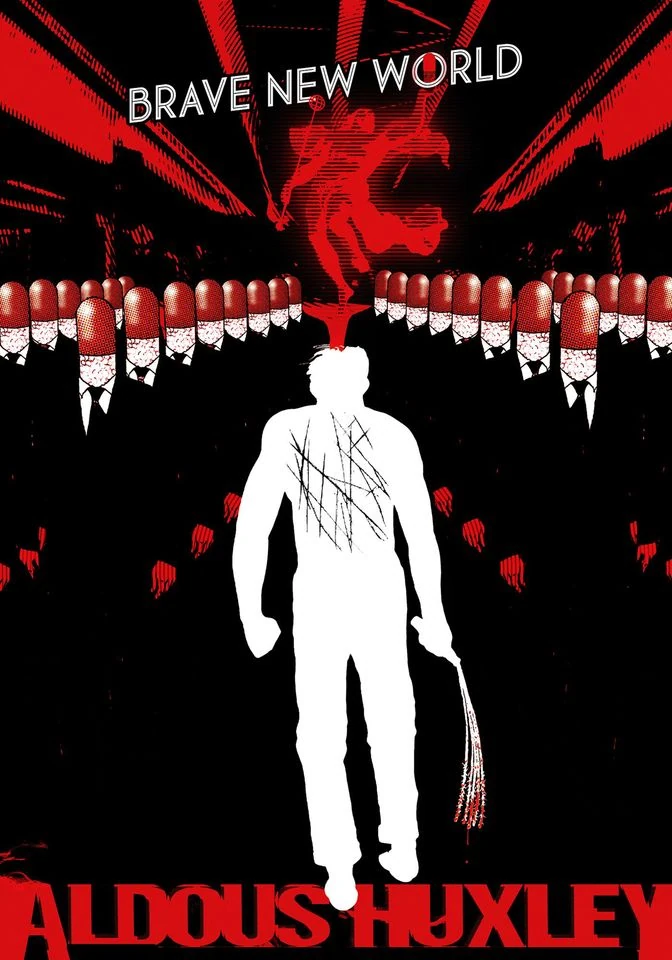
Brave New World by Aldous Huxley: A Pillar of British Literary Legacy
"Brave New World," penned by the eloquent Aldous Huxley in 1932, stands as a seminal work within the rich tapestry of British literature. This dystopian novel provides a fervent critique of a future society dominated by technological advancements, where the pursuit of a pain-free, controlled existence starkly illuminates the inherent costs of such progress.
Synopsis
Set in the distant future, "Brave New World" unfolds in a meticulously controlled world state, where conventional values and societal norms have been supplanted by a rigid system of genetic engineering, mind conditioning, and an unwavering emphasis on consumerism. Citizens are stratified into castes from birth and are conditioned to accept their predestined roles unquestioningly. Emotional suffering and discontent are rendered obsolete through the omnipresent use of a drug called soma, ensuring that everyone remains perpetually content—though, paradoxically, fundamentally unfulfilled.
The narrative pivots around Bernard Marx, an Alpha Plus with unorthodox views and dissatisfaction with the constraints of his existence. His journey alongside Lenina Crowne to a Savage Reservation offers a stark contrast to the sterile, artificial world they've known. Here, natural emotions and the raw realities of life force a confrontation between the conditioned State and the untamed human spirit.
Background and Creation
Aldous Huxley, a visionary writer and intellectual, conceived "Brave New World" as a response to the rapid technological advancements and the rise of totalitarian regimes in the early 20th century. Drawing upon his profound concerns regarding the loss of individuality, freedom, and genuine human experience, Huxley meticulously crafted a narrative that remains disturbingly relevant to this day. Influenced by the works of H.G. Wells and contemporary scientific progress, Huxley envisioned a world where humanity's quest for ostensibly utopian solutions inadvertently leads to dystopian realities.
Impact and Legacy
Upon its release, "Brave New World" received widespread attention for its provocative themes and unflinching scrutiny of society's path. Though initially controversial, Huxley's insights into the potential perils of unchecked technological expansion, and the sacrifice of individuality for collective stability, resonated deeply with readers and critics alike. The novel has since occupied a revered place in academic curricula and public discourse, prompting rigorous debates and reflections on ethical, philosophical, and sociopolitical levels.
Brave New World's enduring success is evidenced by its continuous presence in print and its adaptation into various media over the decades. Its profound contribution to British literary and cultural heritage lies not merely in its narrative brilliance but in its cautionary tale that echoes through the corridors of time, challenging successive generations to scrutinise the direction of their societal and technological advancements.
For those intrigued by this seminal work, a journey into Huxley's dystopian universe awaits. You can purchase your copy of Brave New World from Amazon direct link here.
In summation, "Brave New World" is not just a remarkable piece of British literature but a critical examination of the potential trajectory of human civilisation. Huxley's prophetic lens continues to influence and inspire, making it an indispensable component of the British literary legacy.