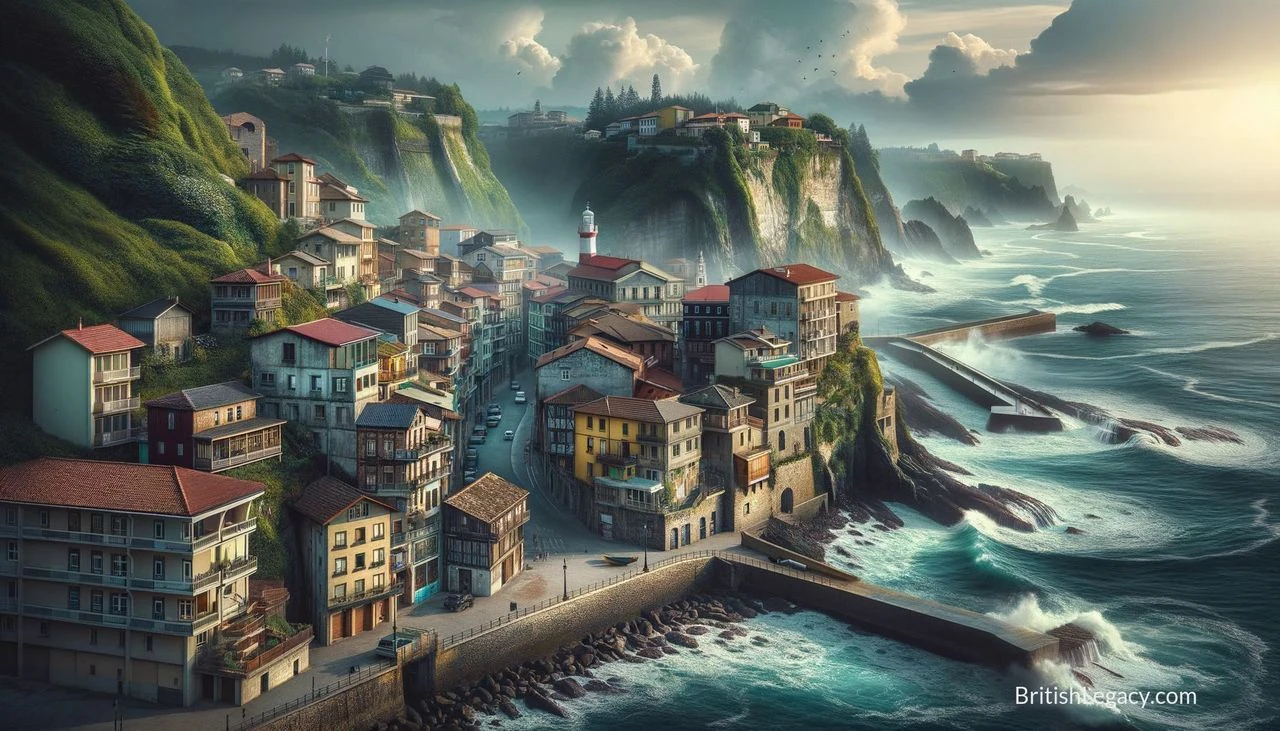
When 11-year-old Danny Latimer is found dead, the central question in Broadchurch is not simply who killed him. The crime unsettles a close-knit fictional town on the Dorset coast, drawing its residents into grief, suspicion and unwanted attention from the press. Created and written by Chris Chibnall, the ITV drama follows detectives Alec Hardy and Ellie Miller as they investigate, while giving the consequences of the case room to unfold across families and neighbours.
First broadcast in 2013, Broadchurch ran for three series and 24 episodes, ending in 2017. Its combination of an unfolding mystery, an ensemble cast and a landscape rooted in Dorset gave the crime story a recognisable British setting without making the coast a mere backdrop. The fictional town’s troubles, and the people left to live with them, are the substance of the drama.
A fictional town with a real coastal landscape
Chibnall conceived the series around the effect of a child’s murder on a small community and the suspicion and media attention that follow. Dorset and its Jurassic Coast helped shape the setting. Chibnall had lived in the county, and the landscape informed both the drama’s atmosphere and its sense of place. He named the fictional town by combining the Dorset hamlets of Broadoak and Whitchurch.
The production used locations across south-west England rather than a single real town standing in for Broadchurch. Much of the first series was filmed in Clevedon, North Somerset, with scenes also shot in Dorset, South Gloucestershire and Bristol. West Bay supplied the cliff and beach associated with the discovery of Danny’s body; Bridport was among the other Dorset locations. Later filming also took place in Devon, Berkshire and elsewhere in Dorset and North Somerset. The distinction matters: Broadchurch is fictional, but its visual world draws on actual coastal and town landscapes.
Chibnall had imagined the story as a trilogy. The first series was constructed to work as a complete drama, while leaving room for more. That plan allowed the later series to change the focus rather than simply repeat the original investigation. The second follows both the pursuit of justice for Danny’s killer and a case from Hardy’s past. The third and final series centres on the investigation of a sexual assault, alongside the Latimer family’s efforts to move forward after Danny’s death.
Hardy, Miller and the Latimers
David Tennant plays Detective Inspector Alec Hardy, and Olivia Colman plays Detective Sergeant Ellie Miller. Their partnership brings together different temperaments and professional histories, while the investigation continually affects their lives beyond the police station. The wider ensemble includes Jodie Whittaker and Andrew Buchan as Beth and Mark Latimer, Danny’s parents, and Charlotte Beaumont as his sister Chloe. Arthur Darvill plays the Reverend Paul Coates.
The series treats Danny’s death as a rupture with consequences for a whole community. The Latimers’ grief sits alongside the detectives’ work and the reactions of neighbours, friends and local institutions. Media scrutiny intensifies the pressure: residents must contend not only with their own suspicions but with outsiders seeking a story. Trust and betrayal are therefore part of the investigative plot, not themes added after it.
The cast and characters continue across the three series, even as the cases change. The second brings in actors including Marianne Jean-Baptiste, Charlotte Rampling and Phoebe Waller-Bridge. In the final series, Julie Hesmondhalgh plays Trish Winterman, whose assault brings a new investigation to the town. The shift in subject matter broadens the drama beyond the original murder mystery, while the Latimers’ continuing story connects the final series to what came before.
Making and scoring a tightly held mystery
Chibnall wrote all 24 episodes and served as an executive producer. The series was produced by Kudos in association with Imaginary Friends. For the first series, James Strong directed five episodes and Euros Lyn directed three. Much of the filming took place on location, reflecting the importance of the coast to the drama’s mood and visual identity.
The production guarded the identity of Danny’s killer. Scripts were released in stages, and cast and crew agreed not to reveal the secret. The final episodes were filmed together after the last scripts were distributed. These decisions served the mystery’s construction as well as publicity: the performances could not openly signal who was guilty before the reveal.
Icelandic composer Ólafur Arnalds wrote the score. Instead of relying on a large conventional orchestral sound, he combined string quartet and piano with electronic elements. The first series’ end theme, “So Close”, features Arnór Dan; Chibnall wrote its lyrics. The music gives the drama a spare, intimate sound, complementing the coastal images without turning the landscape into simple spectacle.
Reception, awards and adaptations
All three series received positive critical reviews, with particular praise for the writing, cinematography, performances and character development. The first series won BAFTA awards for Drama Series and Olivia Colman’s leading performance; David Bradley won for Supporting Actor, and Arnalds received a BAFTA Craft Award for original television music. The series also won a Peabody Award. The third series received the National Television Award for Crime Drama in 2018.
The programme attracted substantial UK audiences. The first series averaged 9.2 million viewers per episode once time-shifted viewing was included, according to the figures recorded for its broadcast. Its finale drew an average of 8.4 million viewers, with a reported peak of 9.3 million for the reveal. The second-series premiere also drew a large audience, although overnight viewing fell over the following episodes. These figures describe different measures of viewing, rather than a single uninterrupted rise in popularity.
Broadchurch also travelled beyond its original British setting through adaptations. The American version, Gracepoint, was created and written by Chibnall, directed by James Strong and starred Tennant; it was not renewed for a second series. France 2’s adaptation, Malaterra, was produced with Shine France. A Slovak adaptation, Vina, followed in 2025. The original’s reach is therefore visible not only in international broadcasts, but in versions reworking its premise for other audiences.
Why Broadchurch deserves a place in British Legacy
Broadchurch deserves a place in British Legacy for the way it joined a nationally produced crime drama to a particular English landscape and a carefully developed account of communal loss. Dorset was more than a name in the setting: the Jurassic Coast helped shape the series, while filming in West Bay, Bridport and other south-west locations gave the fictional town a tangible visual world. The show also kept its attention on what a murder does to the people who remain. Danny’s death sets the mystery in motion, but grief, distrust and intrusive publicity become central to the story rather than incidental complications.
Its legacy also rests on the work of a British television production that found an audience at home and generated adaptations abroad. Chibnall’s three-series structure allowed the drama to move from Danny’s murder to its aftermath and then to a different crime, without abandoning the characters whose lives had been changed. Tennant and Colman’s central performances, the ensemble around them, and Arnalds’s restrained score gave the series a distinctive identity. Awards, strong UK viewing figures and adaptations such as Gracepoint and Malaterra document its reach; its lasting value lies in how it used the crime genre to examine a community under pressure.
Sources
Adapted in part from Broadchurch by Wikipedia contributors, under CC BY-SA 4.0. Text has been edited and combined with the existing article; this adapted text is shared under the same licence. Contributor history.