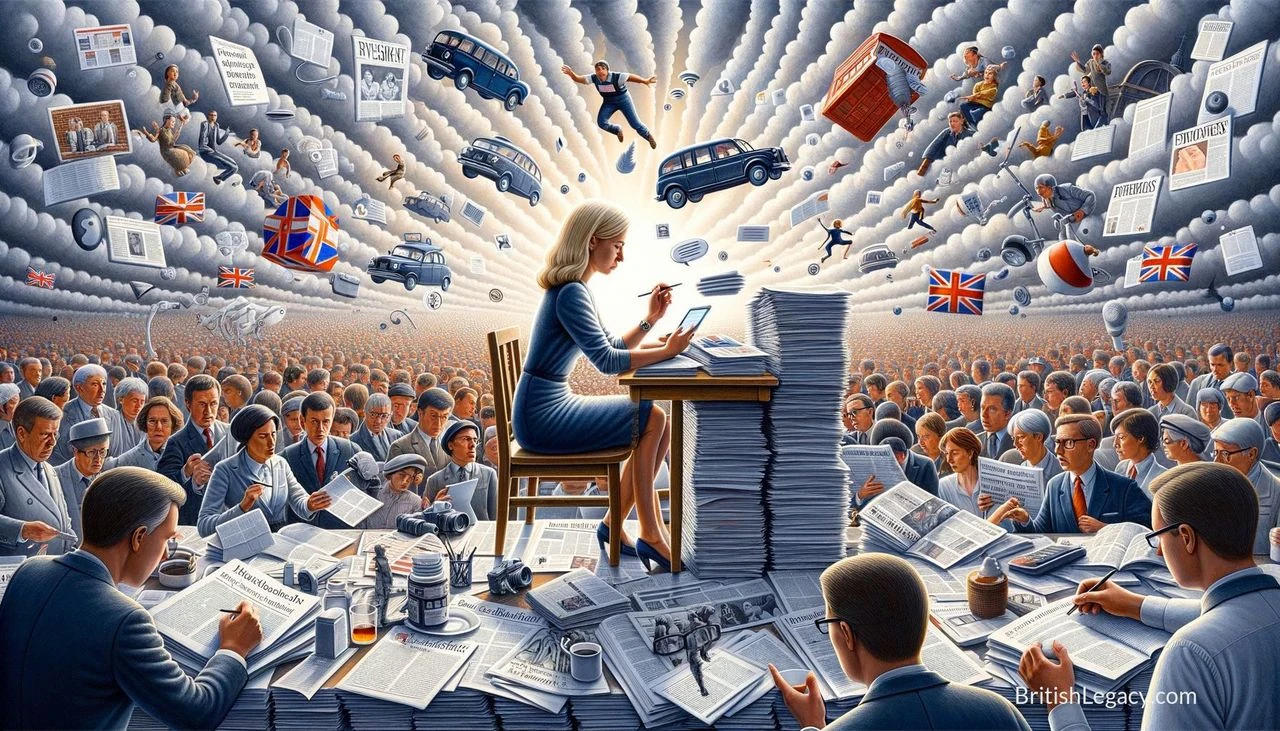
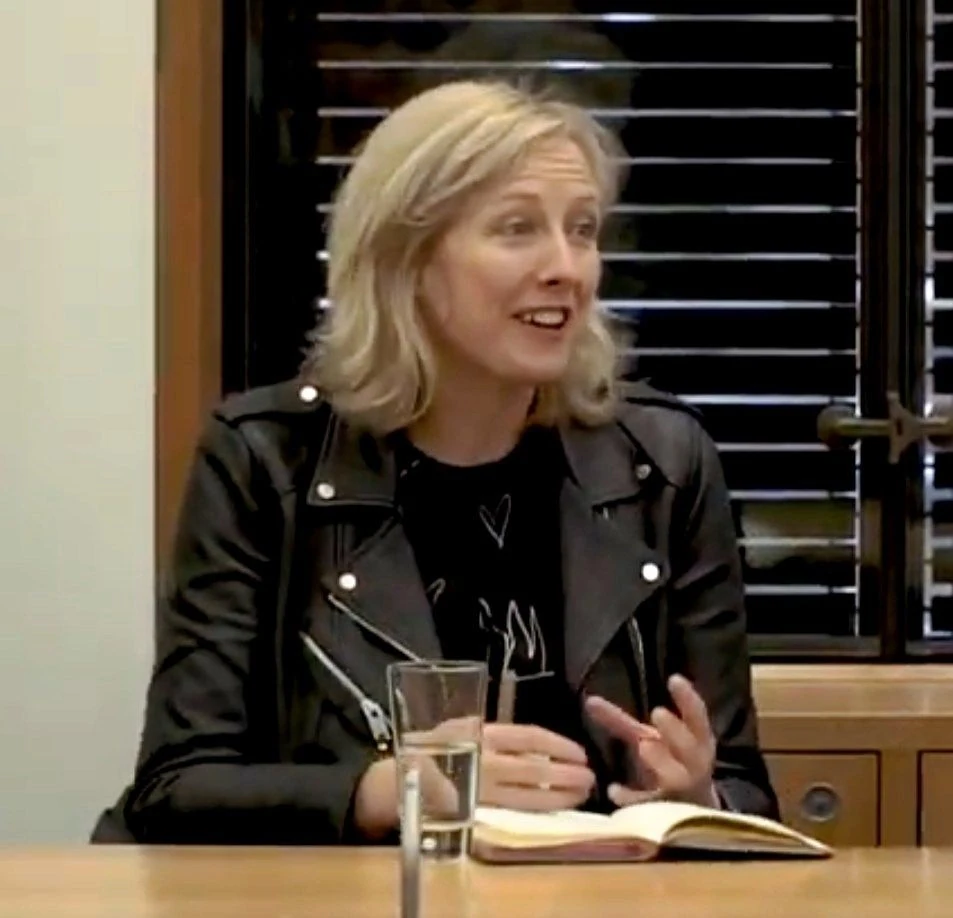
Carole Cadwalladr’s reporting brought questions about personal data and political campaigning into public view. Her coverage of Facebook and Cambridge Analytica helped make the data analytics firm’s role in the 2016 referendum and US presidential election a subject of international scrutiny. The story also exposed the risks faced by journalists who investigate powerful figures: a libel action brought by political donor Arron Banks ended in a mixed legal outcome, with consequences for Cadwalladr’s finances and for debate about press freedom.
From South Wales to journalism
Cadwalladr was born in Taunton, Somerset, in 1969 and grew up in South Wales. She attended Radyr Comprehensive School in Cardiff before going to Hertford College, Oxford, in 1988. During her second year, she took time away from her studies to teach English in Prague.
Her early work ranged across travel writing, features and fiction. In the 1990s she wrote travel guidebooks and contributed travel journalism to The Daily Telegraph. Her first novel, The Family Tree, appeared in 2005. It was shortlisted for several awards, including the Commonwealth Writers’ Prize and the Wales Book of the Year, and was dramatised as a five-part BBC Radio 4 serial. The book also reached readers beyond Britain, appearing in several translated editions.
Cadwalladr joined The Observer as a feature writer in 2005. She later became a founding editor of The Nerve, an online publication covering culture, politics and technology. Her career moved increasingly towards technology reporting during the 2010s, including interviews with figures such as Wikipedia founder Jimmy Wales.
Reporting on data and political campaigns
From late 2016, Cadwalladr published a series of articles about what she described as a right-wing fake-news ecosystem. Her reporting examined campaign activity around the Brexit referendum, including allegations of malpractice and questions about the funding of Vote Leave. She also reported on alleged links involving Nigel Farage, Donald Trump’s 2016 presidential campaign and Russian influence. Those subjects require careful distinctions: the claims and investigations were not equivalent to proof of every allegation.
Her work on Cambridge Analytica brought her wider attention in 2018. Working with Christopher Wylie, a former employee of the data firm, she reported on the use of Facebook users’ personal information and its possible role in political campaigning. The reporting raised questions about consent, online targeting and the capacity of technology companies to affect democratic debate. Cadwalladr’s work was not simply a story about a single company: it connected the handling of personal data to the wider systems through which political messages could be delivered and scrutinised.
The investigation and her related reporting received recognition from journalism organisations. Cadwalladr won the Orwell Prize for Political Journalism in 2018 for work on big data and the EU referendum and US election. Other awards included the 2018 Polk Award for National Reporting, shared with reporters from The New York Times, and the 2019 Gerald Loeb Award for Investigative Reporting. She was also a finalist for the 2019 Pulitzer Prize for National Reporting, alongside The New York Times reporters covering the Cambridge Analytica scandal. Her work was among the reporting that informed the documentary The Great Hack.
A public argument about technology
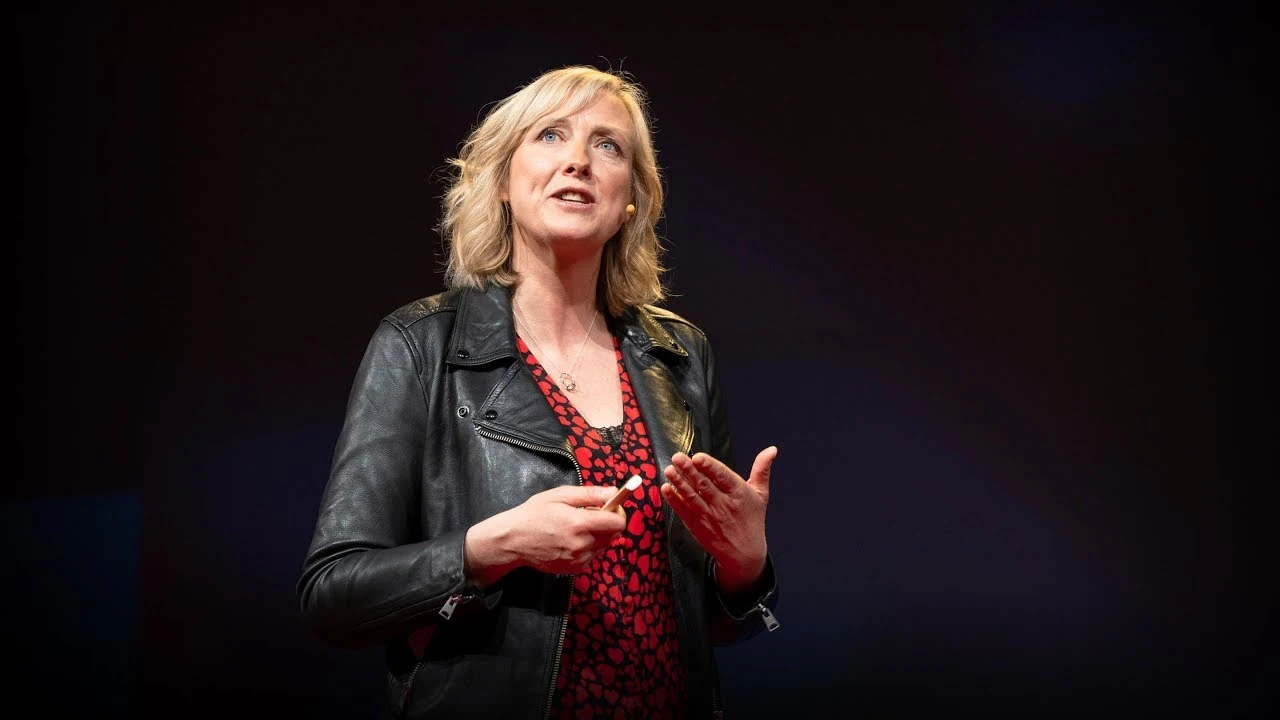
In April 2019, Cadwalladr delivered a TED talk on Facebook, Brexit and democracy. She challenged leaders of major technology companies over their influence and argued that the effects of online platforms on democratic processes demanded public attention. The talk became part of a wider debate about how technology firms should be held accountable, and about the difference between forceful public criticism and claims that can be established in court.
That distinction became central to the case brought by Arron Banks. Banks sued Cadwalladr over comments in her TED talk and a related social-media post concerning his relationship with the Russian government and foreign funding of electoral campaigns. In June 2022, the High Court dismissed his case, finding that Cadwalladr had a reasonable belief that the comments were in the public interest. The court also made clear that her public-interest defence had succeeded only in part; it did not decide that every disputed claim was true.
In February 2023, the Court of Appeal rejected two of Banks’s challenges but found that continued publication of the TED talk after an Electoral Commission report in April 2020 had caused serious harm to his reputation. That report had found no evidence that Banks broke the law in relation to campaign donations. The Court of Appeal ordered that damages be assessed for the harm during the period it identified. In April 2023, Cadwalladr was ordered to pay £35,000 in damages, as well as more than £1 million in costs. Her attempt to appeal the costs order to the Supreme Court was unsuccessful; in November that year, her lawyers announced that they would take the case to the European Court of Human Rights.
The case drew strong comment from press-freedom advocates and journalism organisations, which warned of the financial and professional risks of investigative reporting. The legal findings, however, should not be reduced to a simple victory for either side: the initial public-interest defence succeeded in part, and the appeal ruling found serious reputational harm from continued publication of the talk after the Electoral Commission’s report.
New work and a changing newsroom
Cadwalladr’s work has also included organising journalism and campaigning beyond newspaper columns. She founded The Citizens, a UK-based not-for-profit company bringing together people from journalism, filmmaking, data science, the arts and other fields. Its stated aim is to use storytelling to challenge the unchecked power of major technology companies and states.
Her long relationship with The Observer ended as the paper changed ownership. After the Scott Trust agreed in principle to sell the title to Tortoise Media in December 2024, Cadwalladr publicly criticised the deal and said her contributor contract was ending. Her final column appeared on 20 April 2025, shortly before the transfer. Later that year, she and four other former Observer journalists launched The Nerve, using their redundancy payments to start the online culture, politics and technology publication. In 2025 she also co-hosted the BBC Sounds investigative podcast Stalked with Hannah Mossman Moore.
Why Carole Cadwalladr deserves a place in British Legacy
Carole Cadwalladr deserves a place in British Legacy because her reporting made the handling of personal data a concrete public issue. By investigating Cambridge Analytica and political campaigning, she connected the apparently technical practices of data collection and online targeting with questions about consent, accountability and democratic life. Her work was recognised through major journalism awards and brought sustained attention to the responsibilities of technology companies. It also showed the value of reporting that follows a complicated story across platforms, political campaigns and corporate interests rather than treating each as an isolated subject.
Her British legacy is also evident in the contested conditions under which that work was produced. The Banks case resulted in a substantial costs order and a ruling that continuing publication of the TED talk caused serious harm, even as the High Court had found her public-interest defence successful in part. Those outcomes make her story more than a celebration of investigative journalism: they illustrate the practical legal and financial pressures that can accompany scrutiny of powerful people. Her later role in founding The Citizens and The Nerve extends that contribution from individual reporting to building organisations for public-interest journalism. Taken together, her work has helped shape debate in Britain about digital power, press freedom and how journalism can remain viable while challenging institutions with global reach.
Sources
Carole Cadwalladr — Wikipedia revision 1379221099
Adapted in part from Carole Cadwalladr by Wikipedia contributors, under CC BY-SA 4.0. Text has been edited and combined with the existing article; this adapted text is shared under the same licence. Contributor history.