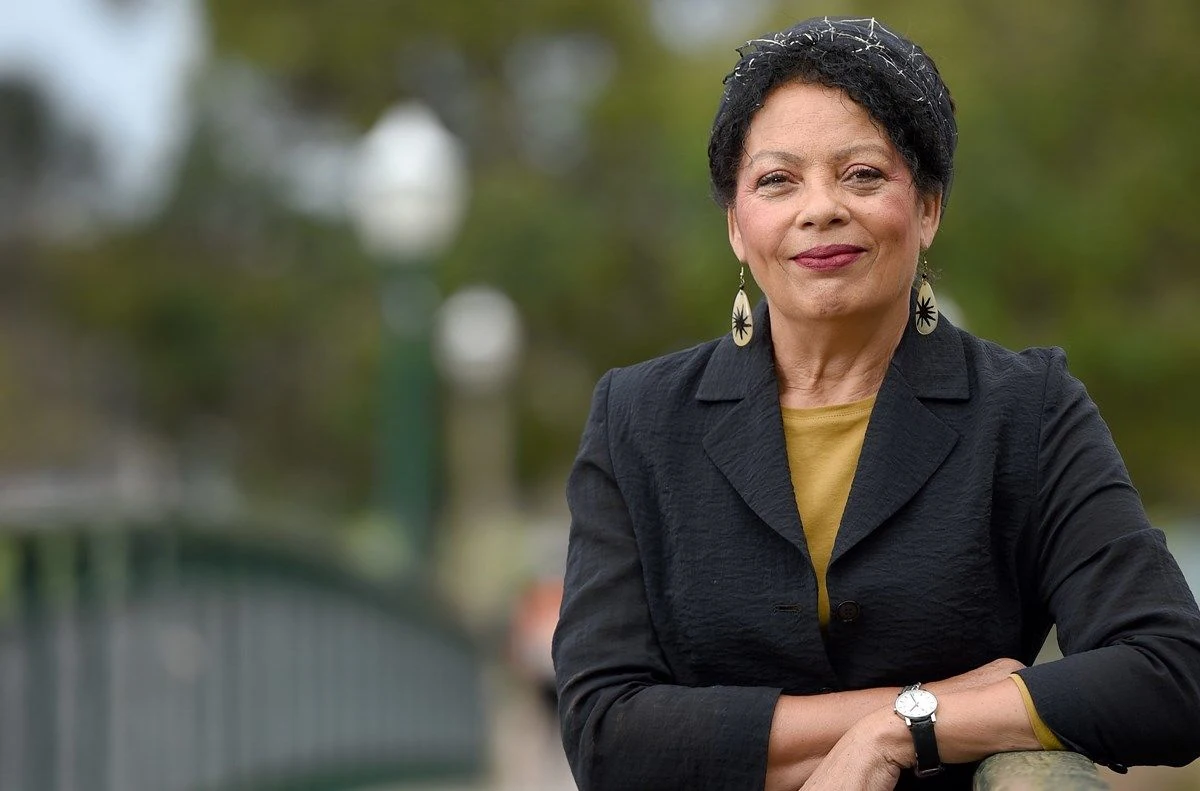
Charlotte Williams has asked Wales to look more fully at its own history: who belongs in its national story, whose experience public institutions recognise, and what children learn about the country they live in. A social-policy scholar, writer and public commentator, she has brought questions of race, citizenship and belonging into debates about devolution, literature and education. Her contribution is especially visible in Wales, where she chaired a government working group on how the new curriculum should represent the contributions and experiences of Black, Asian and minority ethnic communities.
Williams’s work joins scholarship to public life. She has examined how policy and national identity affect minority communities, written about Welsh-Guyanese heritage and mixed-race identity, and helped shape recommendations for teaching a fuller account of Wales. These strands are connected: each makes diversity part of the country’s history and present, rather than a subject to be mentioned only at the margins.
Growing up Welsh-Guyanese in north Wales
Williams grew up in Llandudno, in north Wales. The place is important to her work not as a scenic backdrop, but as part of the experience from which her questions about race and belonging developed. She has described social policy as the discipline through which she studies decisions affecting people’s welfare and wellbeing. Her writing also draws on the experience of growing up Welsh-Guyanese in a society whose familiar stories did not always make room for people like her.
That experience gives a particular grounding to the questions that recur in her work. Belonging is not simply a matter of declaring an identity; it is also shaped by the stories a community tells about itself, the institutions that make decisions about people’s lives and the histories those institutions recognise. Williams’s perspective connects a specific Welsh upbringing with wider questions about race and citizenship. Rather than treating Wales as a picturesque setting or a minor case study, she asks what its own history and public life reveal.
In Sugar and Slate, first published in 2002, Williams writes about Welsh-Guyanese heritage, mixed-race identity and the search for a language of belonging. The memoir won Wales Book of the Year in 2003. Its subject is personal, but its reach is wider: it connects family experience and life in north Wales with histories of movement and inheritance. Rather than forcing those strands into a single, uncomplicated identity, the book makes their coexistence central to the story.
That approach helps explain why the memoir has continued to find readers. Its Welsh setting is not separate from Black and Caribbean histories, and belonging is not presented as a choice between one inheritance and another. In writing about her own life, Williams also makes visible a Welsh experience that is easily missed when accounts of race in Britain focus on larger English cities or treat minority life in the smaller nations as peripheral. Its republication decades after its first appearance has brought the work to new readers, while the questions at its heart remain pertinent.
Williams has written in several forms, including scholarship, memoir, essays, reviews, short fiction and commentary. That range has allowed her to address readers beyond the university. Sugar and Slate is a notable example of the way her literary work and public concerns meet: it explores identity through individual experience while opening onto wider questions about how people and places are remembered. The memoir’s recognition as Wales Book of the Year also places that personal account within the country’s literary culture.
Race, policy and the meaning of devolution
Williams’s academic field is social policy. Her work has addressed race, ethnicity, welfare, nationhood and education, with a focus on how institutions operate for minority communities. A central concern is whether ethnic diversity is treated as part of the social fabric or as an exception to it. That distinction matters in practice: it affects which experiences policy acknowledges and whose needs public services take into account.
In 2006, Williams and Philomena De Lima published Devolution, multicultural citizenship and race equality: From laissez-faire to nationally responsible policies. They considered what devolution meant for race equality in Wales and Scotland. Their argument was that devolved government created a test: would national institutions turn the language of inclusion into recognition, rights and representation for ethnic minorities? They identified a move away from a relatively undeveloped approach towards policies for which devolved nations took responsibility. Their analysis posed a question about the direction of policy, rather than declaring that the work of equality was finished.
This framing made race equality part of the discussion about what devolution was for. Devolution concerned more than constitutional arrangements and administrative responsibilities. It also raised questions about who could claim a place in the nation, whose needs were reflected in public services, and how Welsh civic identity would respond to citizens whose histories did not fit older assumptions. The contribution of Williams’s analysis lies in putting those questions alongside the constitutional ones, rather than assuming that a new political settlement would itself resolve inequality.
Her co-edited volume A Tolerant Nation? Revisiting Ethnic Diversity in a devolved Wales extended that discussion into Welsh studies and public debate. Together, this work challenged the idea that Wales could be understood through an uncomplicated or uniform account of national life. It asked readers and institutions to consider the racial histories, experiences and policy choices specific to Wales, while placing them within the broader story of modern Britain.
That Welsh focus is significant in a wider British conversation. Accounts of race can too easily centre on large English cities and leave the histories of the other nations less visible. Williams’s work does not argue that Wales is interchangeable with any other place. It makes the case, through its focus on Wales, that questions about race, citizenship and public services need to be understood in their national and institutional settings. Devolution made those settings especially important: devolved governments had responsibilities and could be judged on how they used them.
Making a fuller Welsh story visible
Williams’s significance is not confined to academic work. As a cultural critic and public commentator, she has helped bring questions of race and belonging into wider conversations about Wales. Moving between scholarship, literary culture and public discussion has mattered because each setting makes different demands: academic analysis can examine how institutions work, while memoir and commentary can give readers a vivid account of what policies and public narratives mean in human lives.
That work also challenges a familiar imbalance in British discussion of race. When debate concentrates on cities in England, the experiences of minority communities in Wales can seem secondary or derivative. Williams’s writing instead treats Wales as a place with its own histories, institutions and possibilities for change. This does not separate Welsh experience from Britain’s wider history. It makes clear that a national account of Britain is incomplete if it overlooks the different ways race and belonging have been experienced across its nations.
Sugar and Slate gives this argument a literary form. The memoir holds together different memories, places and inheritances without reducing them to a simple formula. Its recognition through the Wales Book of the Year award and its later republication have helped bring that account to new readers. The book’s continued life also reflects the value of writing that can be specifically Welsh while speaking to broader questions about identity and shared history.
Williams’s work offers more than a call to include additional stories. It asks what changes when those stories are treated as part of the nation’s history, rather than as occasional additions to it. In policy, that question concerns whose needs institutions recognise. In literature, it concerns whose lives can be understood as Welsh. Across both fields, her work has pressed for an account of Wales that is more exact because it is more inclusive.
The range of her writing makes this work available in more than one register. Scholarly publication can identify patterns in policy and institutional practice; memoir can show how national stories are felt in an individual life; essays, reviews and commentary can carry those questions into public discussion. Williams has worked across these forms, connecting debates that might otherwise remain separate. This breadth is not a substitute for specialist analysis: it extends the audience for it and helps make the relationship between policy and lived experience legible.
Changing what schools teach
In 2020, the Welsh Government appointed Williams to chair the working group on Black, Asian and Minority Ethnic communities, contributions and cynefin in the new curriculum. The group’s task was to consider how Wales could teach its history and present more fully, including how resources and professional learning should support that change. The appointment brought her long-standing interests in social policy, race and Welsh identity into a practical national project.
The group’s final report, published in March 2021, set out a broad ambition: learners should be able to explore the experiences and contributions of Black, Asian and minority ethnic peoples in Wales, past and present. Teachers across areas of learning and experience should have the resources and preparation to do so. The aim was not to confine such material to a commemorative occasion or a single history lesson, but to make it part of the wider curriculum.
This breadth matters. A curriculum is more than a list of topics for one subject or one term. If pupils are to understand the country’s history and present, the experiences and contributions of its communities need to appear across what they learn. The report’s ambition was therefore not simply to insert additional material into an existing account. It set out a wider expectation for learners and for teachers, so that teaching could reflect the diversity of Wales over time.
The recommendations addressed the conditions needed to put that ambition into practice. They considered teaching resources and professional development as well as classroom content. That system-wide approach reflects Williams’s background in social policy: stating a principle is not the same as giving schools the means to act on it. If the curriculum is to represent a diverse country, teachers need support to develop and teach that account. The recommendations thus addressed both what pupils might encounter and the professional provision required to make change workable.
In a 2024 statement on the recommendations, the Welsh Government said Wales had become the first UK nation to make the teaching of Black, Asian and minority ethnic history mandatory. It linked that progress to the work initiated by Williams’s review. The statement also connected the work with professional learning and efforts to attract more ethnic minority applicants into initial teacher education. These developments give the curriculum project a concrete significance: the question of whose history is taught has become part of how education is organised.
The distinction between a recommendation and its implementation remains important. Williams chaired the working group and its report set out proposals; the later account of progress came from the Welsh Government. Keeping those stages clear shows how policy work travels: a review makes recommendations, public bodies respond, and educational systems must then equip teachers and schools to put changes into practice. The outcome described by the government is a notable consequence of the process, not a reason to overlook the practical work that sustained curriculum reform requires.
Public service and academic life
Williams received an OBE in 2007 for services to ethnic minorities and equal opportunities in Wales. The honour recognised public service in an area that has remained central to her scholarship and writing. Her career has linked analysis of social policy with questions about representation and national identity, and her public work has brought those concerns into institutions beyond the university.
She has also held a senior academic role at RMIT University in Melbourne. She is now Professor Emeritus at Bangor University and a Visiting Professor at the University of South Wales. These roles place her within Welsh higher education while acknowledging an academic career that has also included work abroad. Her international experience sits alongside, rather than displacing, the Welsh focus that gives much of her writing and public contribution its particular character.
Her professional and literary lives illuminate one another. Social policy asks how decisions shape people’s welfare and wellbeing; memoir and commentary can make those decisions’ human context more apparent. Conversely, the questions raised by lived experience can challenge an institution to reconsider the categories and assumptions that guide its work. Williams’s career has moved between these perspectives, giving her a means to examine both public systems and the ways people understand their place within them.
This combination is also why her contribution cannot be reduced to a single book or government appointment. Her writing has brought Welsh-Guyanese experience into literary discussion; her scholarship has examined race equality and devolved policy; and her curriculum work has addressed how public education can reflect a fuller national history. Each strand approaches the same broad concern from a different direction: what happens when people and histories previously treated as marginal are recognised as part of the country’s life.
Why Charlotte Williams deserves a place in British Legacy
Charlotte Williams deserves a place in British Legacy because her work has made a more complete account of Wales possible in both public debate and education. Through scholarship on race equality and devolution, she helped frame inclusion as a test of how devolved institutions serve their citizens. Through her work on the curriculum, she helped move that question from analysis into recommendations about what pupils should learn and what teachers need to teach it. The Welsh Government’s later statement that Black, Asian and minority ethnic history had become mandatory in Wales makes the practical consequence of that work particularly clear.
Her literary contribution is equally important to this legacy. Sugar and Slate gives Welsh-Guyanese and mixed-race experience a place in Welsh writing without treating identity as simple or fixed. It connects an individual life with wider questions about history, family and belonging, showing why a national story changes when people previously left out of it can describe their own experience. The memoir’s award and continued republication point to a work that has reached beyond its original moment, while keeping its particular Welsh setting and personal perspective in view.
These achievements matter in Britain because a national story is made from the histories of its constituent nations and the people who live in them. Williams’s work challenges the habit of treating Welsh minority experience as an offshoot of a larger English story. It gives Wales its own place in discussions of race, public policy and belonging, and shows how those discussions connect with wider questions of citizenship. That is a specific contribution to British life, not a generic claim about diversity.
Her scholarship, writing and public service reinforce one another: they challenge institutions to recognise a wider range of lives, give readers language for complex identities, and help schools pass on a fuller account of the country. The curriculum work is especially consequential because it concerns not only present-day policy but what future learners will be equipped to know about Wales. Williams’s legacy lies in that combination of intellectual argument, literary achievement and practical influence: a sustained effort to make recognition part of how a nation understands itself.