Chris Eubank’s boxing career was built on more than titles. He became a world champion at middleweight and super-middleweight, but his composure, ring entrances and extravagant public style made him a character audiences recognised well beyond the sport. His first contest with Nigel Benn, in 1990, brought those qualities together in a demanding fight that ended with Eubank taking the WBO middleweight title. His career would span three weight divisions, several defining rivalries and a public life that continued long after his final fight.
From south London to the New York gym
Christopher Livingstone Eubank was born in Dulwich, south London, on 8 August 1966. He spent his early childhood in Jamaica before returning to England, where he lived in several parts of London. He attended Northwold Primary School, Bellenden Junior School and Thomas Calton Secondary School in Peckham. After being suspended repeatedly, he was expelled; he later spent time at Orchard Lodge Regional Resource Centre in Anerley.
When Eubank was 16, his father sent him to New York to live with his mother in the South Bronx. There, he began training at the Jerome Boxing Club, following the example of his older twin brothers, who boxed in England. He went to the gym daily and worked as a caretaker to support himself. In 1984, he won the Spanish Golden Gloves tournament and reached the semi-finals of the main Golden Gloves competition at Madison Square Garden.
Eubank turned professional in 1985, shortly after his nineteenth birthday, making his debut against Tim Brown in Atlantic City. His early fights attracted little notice. A victory over Anthony Logan in 1989, on a card headlined by Nigel Benn, helped put him on the path towards the rivalry that would define the next stage of his career. He adopted Brighton as his home town in England and set his sights on Benn.
The Benn fights and two world titles
After a run of wins, Eubank claimed the WBC International middleweight title in 1990. Later that year, he challenged Benn for the WBO middleweight championship. The fight was a hard contest: Benn was narrowly ahead on points when Eubank stopped him in the ninth round. Eubank took the title and ended Benn’s unbeaten run. He defended it against Dan Sherry and Gary Stretch before meeting Michael Watson in June 1991, winning a close majority decision over 12 rounds.
In September 1991, Eubank and Watson met again, this time for the vacant WBO super-middleweight title. Eubank was behind on the scorecards when he knocked Watson down late in the tenth round. He stopped him in the twelfth to win the championship. Watson suffered a near-fatal injury and collapsed in his corner after the fight. The aftermath profoundly affected Eubank, who later said that he had lost his instinct to finish fights. He continued boxing, but thereafter tended to seek points victories rather than knockouts.
Eubank defended his new title against a succession of challengers, including Thulani Malinga, Lindell Holmes and Ray Close. In 1993, he met Benn again in a super-middleweight title unification bout. Their second contest ended in a draw, with Eubank retaining his WBO title. The rivalry was one of the central storylines of British boxing in that period, though the two fights had different outcomes: Eubank won the first and neither man won the rematch.
In 1995, Eubank lost his title to Steve Collins by unanimous decision. He lost their rematch in Ireland by a split decision, then announced his retirement, only to return to the ring the following year. In 1997, he took a short-notice fight against Joe Calzaghe for the vacant WBO super-middleweight title. Calzaghe won on points after knocking Eubank down twice, but Eubank’s ability to complete the fight against a favoured opponent drew renewed attention.
One career, three divisions
Eubank later moved up to cruiserweight and challenged Carl Thompson for the WBO title. He knocked Thompson down in their first fight, but Thompson recovered and won by unanimous decision. The men met again three months later. Eubank started well, but damage around his left eye from the earlier contest worsened, and the fight was stopped after the ninth round. It was the final bout of Eubank’s professional career, which ran from 1985 to 1998.
His record was 45 wins, five losses and two draws, with 23 victories by knockout. Across middleweight, super-middleweight and cruiserweight, he remained a prominent presence in British boxing for more than a decade. The record gives a measure of his longevity; the contests with Benn, Watson, Collins, Calzaghe and Thompson show the level and variety of opposition he faced.
A public persona beyond the ropes
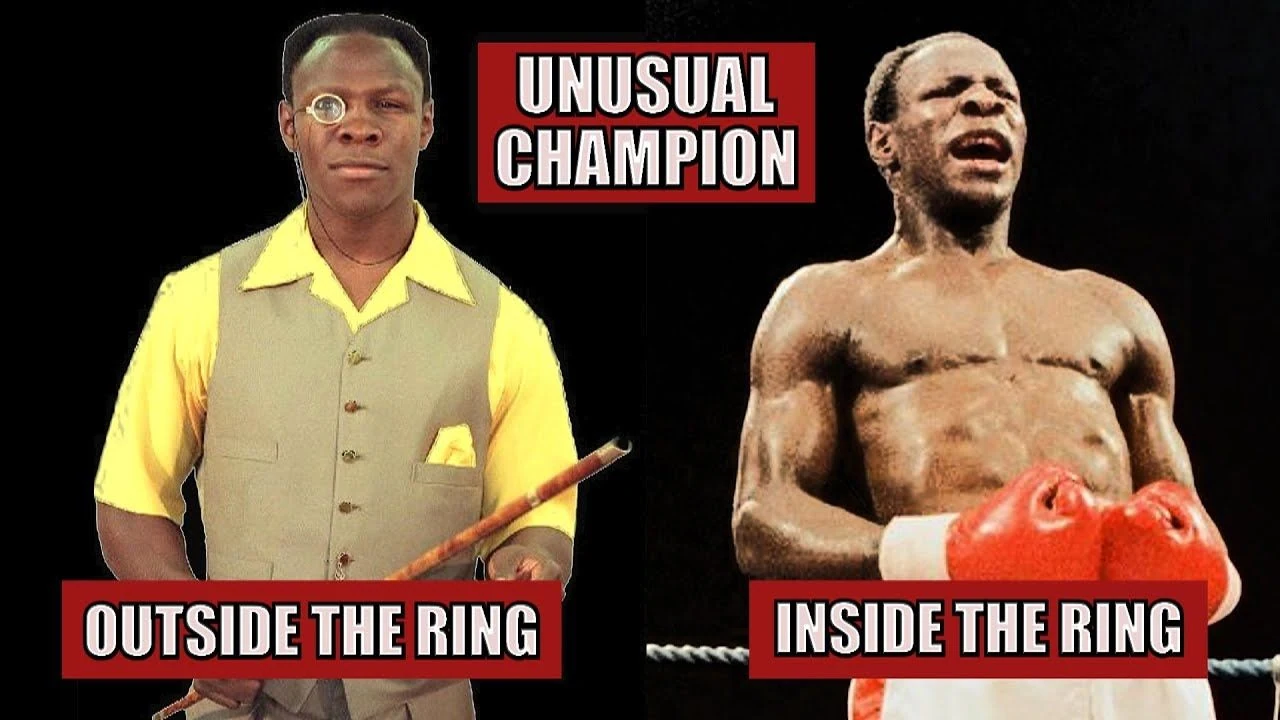
Eubank’s ring persona was as distinctive as his results. He entered by vaulting over the ropes, often striking a pose between rounds, and used Tina Turner’s “Simply the Best” as his theme tune. He cultivated an upper-class style of dress and speech, with a bowler hat, riding clothes, monocle and silver-tipped cane among the items associated with his public image. That carefully conspicuous manner brought admiration from some and criticism from others; the tabloid press often presented him as an arrogant or provocative figure.
His public profile extended into television and fashion. He appeared as a puppet on Spitting Image, presented Top of the Pops in 1996, and later took part in programmes including Celebrity Big Brother and I’m a Celebrity...Get Me Out of Here!. He also fronted a Talk Radio programme, Eubank’s People, and appeared in documentaries and reality television. His interest in clothes became professional work: in 2010, he began designing tailored suits for Savile Row company Cad and the Dandy.
His life outside boxing included public acts that were more than performance. In 1994, he took over a site in Brighton, retained its Grade II-listed façade and developed 69 flats for homeless people, using £1.25 million of his own money; the building was sold for redevelopment in 2000. He also became known for his large American truck. In 2003, he drove it around Parliament Square with an anti-war message displayed on it, protesting against the Iraq war. These episodes sit alongside his television appearances and show a public figure willing to use spectacle for causes as well as self-presentation.
Why Chris Eubank deserves a place in British Legacy
Chris Eubank deserves a place in British Legacy because his sporting achievements are specific and substantial: he held the WBO middleweight title from 1990 to 1991 and the WBO super-middleweight title from 1991 to 1995. Those championships were earned through demanding contests, including his ninth-round stoppage of Nigel Benn and his first meeting with Michael Watson. Eubank’s career also shows the breadth of elite boxing competition across weight divisions. He moved from middleweight to super-middleweight and then cruiserweight, finishing with a professional record of 45 wins in 52 fights.
His wider legacy is not simply that he attracted attention. Eubank helped make the characters and rivalries of boxing part of British popular culture: his theatrical entrances, distinctive dress and outspoken manner made him immediately recognisable, while the Benn rivalry gave audiences a sporting story that continued across two world-title fights. His investment in 69 flats for homeless people in Brighton provides a more concrete measure of public contribution beyond the ring. Together, the championships, rivalries, public persona and housing development make his place in British sporting history distinctive. They also preserve a useful account of how an athlete could shape a public identity on his own terms, while competing at the highest level of his sport.
Sources
Chris Eubank — revision 1375537357 · Chris Eubank
Adapted in part from Chris Eubank by Wikipedia contributors, under CC BY-SA 4.0. Text has been edited and combined with the existing article; this adapted text is shared under the same licence. Contributor history.