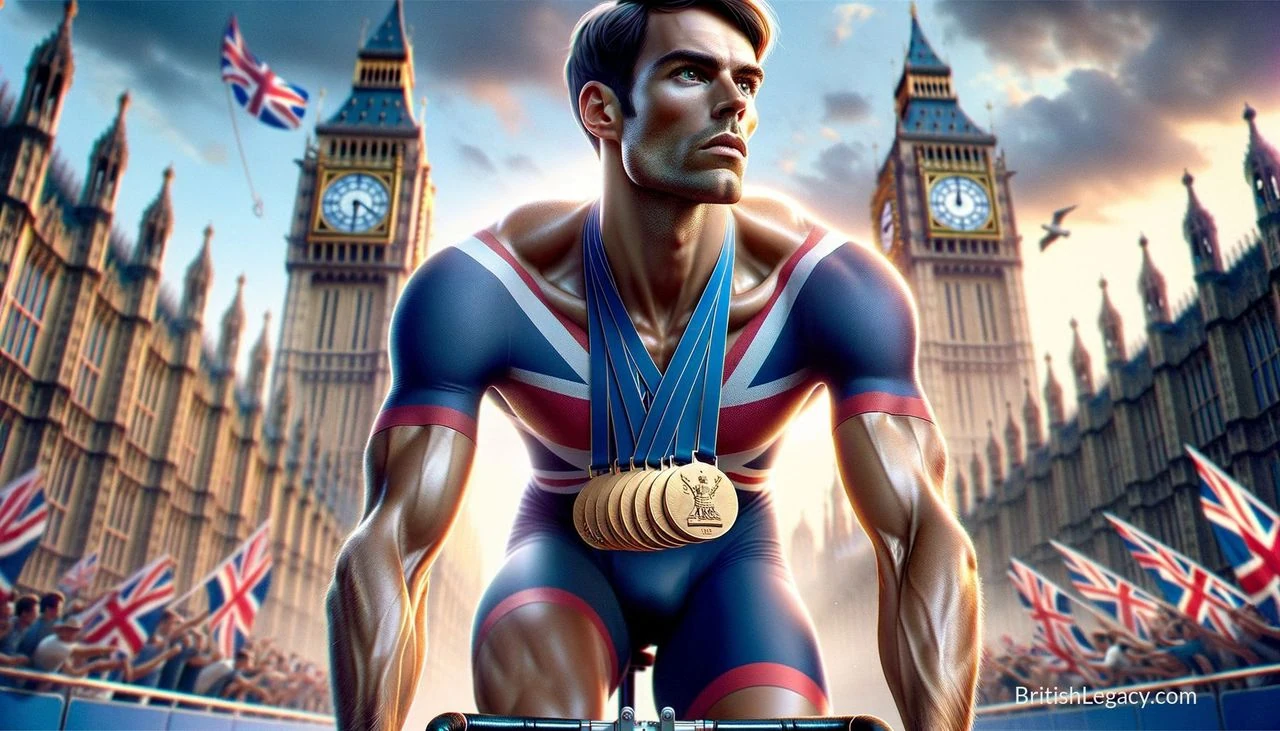
Sir Chris Hoy’s Olympic career began with a silver medal in Sydney and reached its high point in Beijing, where he won three golds in a single Games. Across four Olympics, the Edinburgh-born cyclist collected six gold medals and one silver. His progress from BMX racing to victories in the kilometre time trial, sprint, team sprint and keirin made him one of the defining riders of British track cycling’s rise.
From BMX to the velodrome
Christopher Andrew Hoy was born in Edinburgh on 23 March 1976 and grew up in Murrayfield. He began cycling at six after seeing the BMX bike in E.T. the Extra-Terrestrial. Before turning his attention to the track, he raced BMX from the age of seven to 14, reaching second in Britain, fifth in Europe and ninth in the world. He received sponsorship and competed in Europe and the United States.
A televised performance by Scottish sprinter Eddie Alexander at the 1986 Commonwealth Games first drew Hoy’s attention to track cycling. He joined Dunedin Cycling Club in 1990, aged 14, and began concentrating on track racing in 1993, after joining the City of Edinburgh Racing Club. He also rowed for Scotland’s junior team, finishing second in the 1993 National Rowing Championships in the coxless pairs with Grant Florence.
Hoy’s early international breakthrough came in the team sprint. He won silver at the 1999 World Championships in Berlin and the same colour medal at the Sydney Olympics in 2000, riding with Craig MacLean and Jason Queally. The Olympic result came as British track cycling began a revival after the Atlanta Games. Hoy would become one of the riders most closely associated with that change.
Building an Olympic record
In Athens in 2004, Hoy won the one-kilometre time trial. He set a sea-level world and Olympic record of 1:00.711, adding Olympic gold to his world titles in the event. The kilometre was later removed from the Olympic programme, prompting him to develop in other disciplines. He turned increasingly to the sprint and keirin, events that demanded tactical judgement as well as power.
Hoy won three gold medals in Beijing in 2008: the individual sprint, team sprint and keirin. He was the first British male athlete in a century to win three golds at one Olympic Games, following Henry Taylor’s achievement in 1908. The results also made Hoy Scotland’s most successful Olympian at that point and brought his Olympic total to four gold medals and one silver.
At London 2012, Hoy carried the British team’s flag at the opening ceremony before winning gold in the team sprint with Jason Kenny and Philip Hindes, setting a world record, and in the keirin. Those victories took his career total to six Olympic golds and one silver. He became Britain’s most successful Olympian at the time; subsequent medal counts have changed that standing. Across the Games, he won gold in four different events: the kilometre, individual sprint, team sprint and keirin.
World titles and a new sporting chapter
Hoy’s record extended well beyond the Olympics. He won 11 world titles, including championships in the kilometre, sprint, team sprint and keirin, and also earned medals at the Commonwealth Games while representing Scotland. His results show a rider who adapted as his strongest events changed: from the power-based kilometre and team sprint towards the more tactical individual sprint and keirin.
After announcing his retirement from competitive cycling in April 2013, Hoy moved into motorsport. In 2015, he won the LMP3 class title in the European Le Mans Series with team-mate Charlie Robertson. The following year, he competed in the 24 Hours of Le Mans, finishing 17th overall and 12th in class. The move gave him a second competitive career, distinct from the track cycling in which he had made his name.
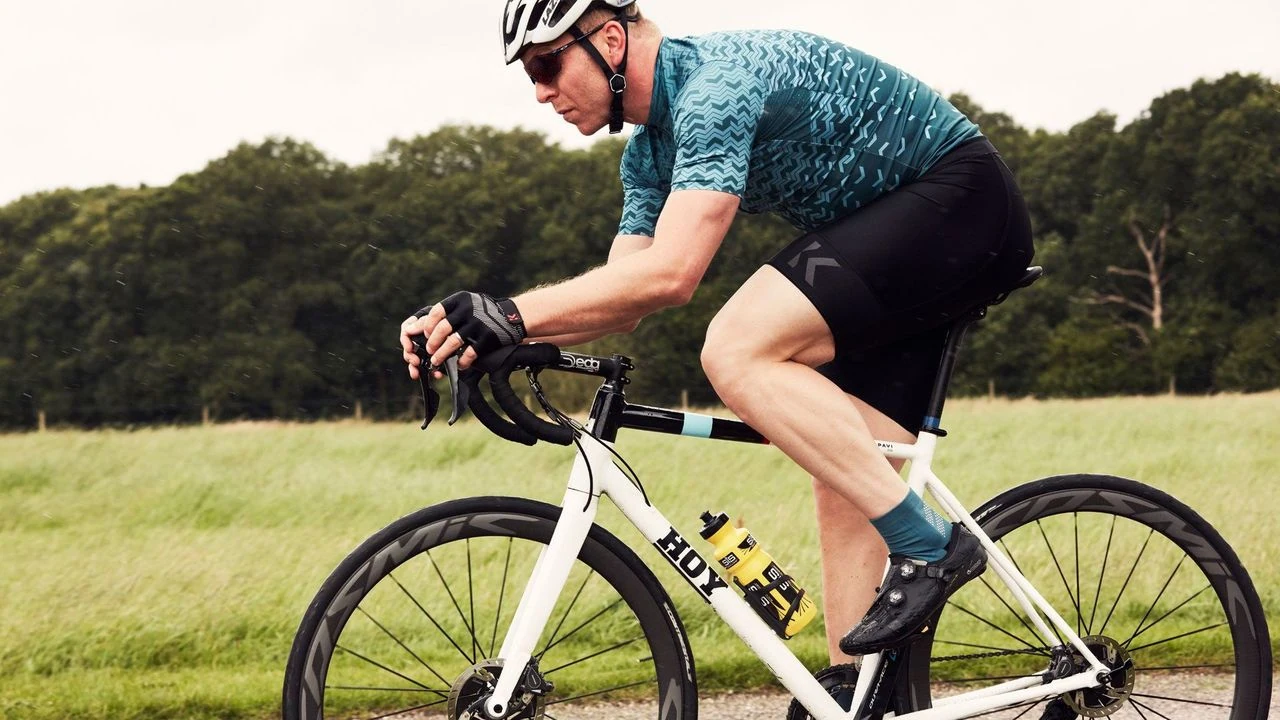
Hoy also lent his name to a range of bicycles, launched in 2012. Its first line included road, city and track bikes, and the range later expanded to include designs for children. Away from competition, he worked as a cycling commentator for the BBC and wrote both an autobiography and books for younger readers, including the Flying Fergus series.
Recognition and public life
Hoy was appointed an MBE for services to cycling in 2005 and knighted in 2009. He won BBC Sports Personality of the Year in 2008 and received the award’s Lifetime Achievement Award in 2014. The Sir Chris Hoy Velodrome in Glasgow, built for the 2014 Commonwealth Games, bears his name. He has also supported UNICEF UK and Scotland’s Action for Mental Health.
In September 2023, Hoy was diagnosed with stage four prostate cancer. He made the diagnosis public in February 2024 and later disclosed that the disease was terminal and had spread to his bones. In October 2024, he said he had been given between two and four years to live. After Hoy called for change, the UK health secretary announced a review of prostate cancer screening in November 2024.
Why Chris Hoy deserves a place in British Legacy
Chris Hoy’s place in British sporting history rests first on achievements that can be counted: six Olympic gold medals, one Olympic silver and 11 world titles. But the significance of that record is also in its range. Hoy won in the kilometre, sprint, team sprint and keirin, adapting to new events after the kilometre left the Olympic programme. His three golds in Beijing made him the first British male athlete in a century to win that many at one Games. In London, he added two more in front of a home crowd and helped make the velodrome a focal point of the 2012 Olympics.
His career also connects Scottish sporting achievement with Britain’s wider Olympic story. Hoy represented Scotland at the Commonwealth Games and Great Britain at the Olympics and World Championships; his success formed part of the resurgence of British track cycling that began around the turn of the century. He continued to compete after leaving the velodrome, winning a European Le Mans Series class title, and gave his name to bicycles intended for different kinds of riders. His work in broadcasting, children’s books and support for charities extended his public contribution beyond medals. Taken together, these achievements make Hoy’s legacy one of sustained excellence, adaptation and a visible link between Scottish cycling and Britain’s Olympic history.
Sources
Chris Hoy — revision 1374039936
Adapted in part from Chris Hoy by Wikipedia contributors, under CC BY-SA 4.0. Text has been edited and combined with the existing article; this adapted text is shared under the same licence. Contributor history.