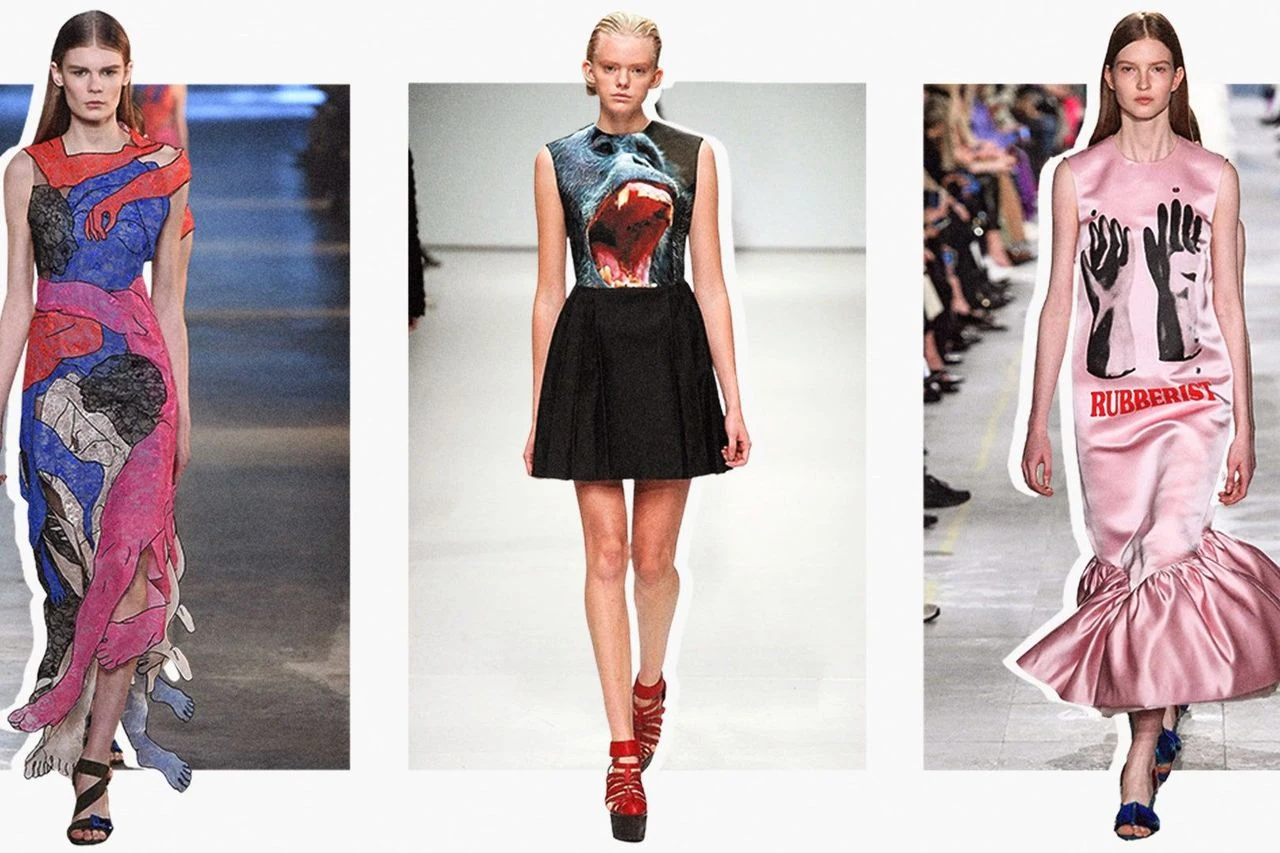
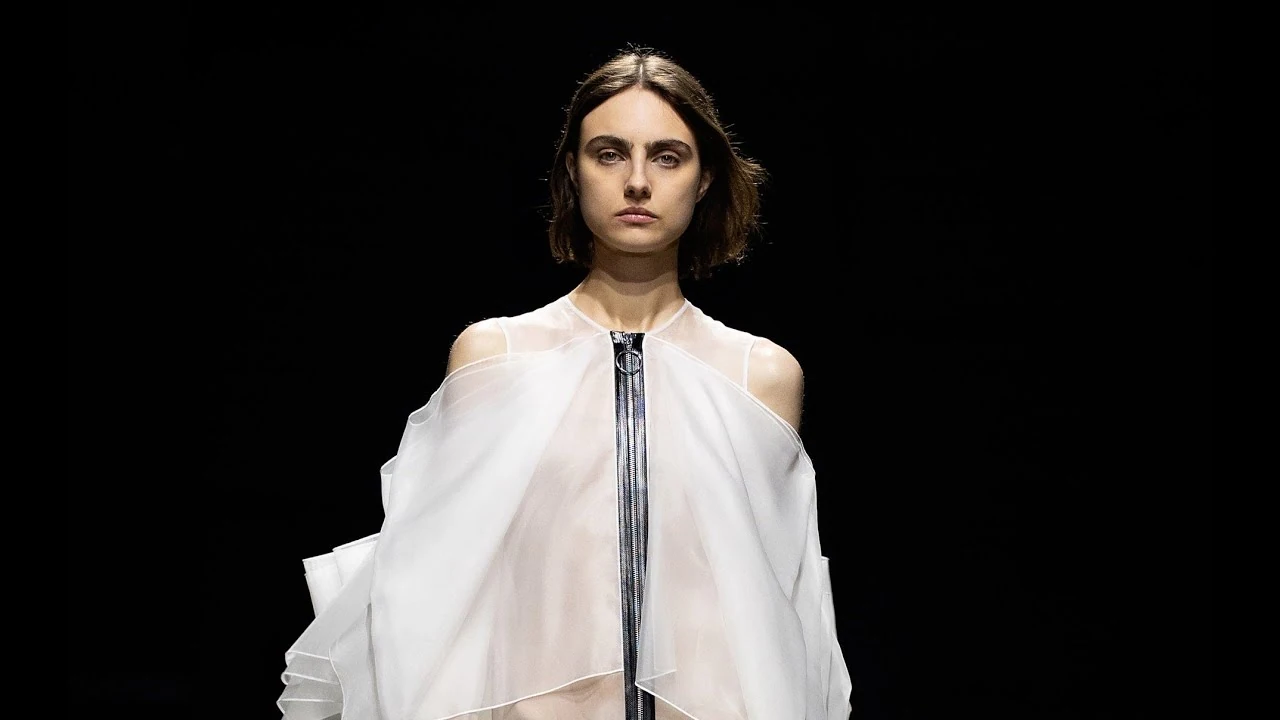
Christopher Kane’s first independent fashion show, in September 2006, presented super-short bandage dresses in neon shades. It was a striking entrance for a designer who would make change itself a feature of his work: later collections moved from velvet and leather to plastic sequins, chiffon and other unexpected combinations. Born in Newarthill, Scotland, Kane established his London-based label in the same year he graduated from Central Saint Martins. His career links Scottish roots and British fashion institutions with an experimental approach to design.
From Newarthill to Central Saint Martins
Kane was born in Newarthill, North Lanarkshire, on 26 July 1982, the youngest of five children. His father was an engineer and draughtsman and his mother a homemaker. He attended Taylor High School before studying at Central Saint Martins College of Art and Design in London. While still a student, he worked for designers Russell Sage and Giles Deacon.
In 2005, Kane won the Lancôme Colour Award, bringing him to the attention of Donatella Versace. The following year brought a run of opportunities. His MA graduate collection, made up of stretch-lace dresses decorated with brass rings, won the Harrods Design Award. The prize included £1,500 and a window display at Harrods. Versace hired him to work on its Atelier couture collection and consult on shoes and accessories. Kane graduated from Central Saint Martins in 2006.
That April, he was named Young Designer of the Year at the Scottish Fashion Awards. In September, his first independent show introduced the neon bandage dresses that became a defining early image of his work. Kane said he had used neon because it was his first collection and he wanted to make it as bright as possible. He and his sister Tammy established the Christopher Kane label that year. Tammy, who studied at the Scottish College of Textile Design, took on the financial side of the business and contributed to fabric creation and design.
A practice built on changing direction
Kane did not settle into a single signature. His second collection, shown in February 2007, moved away from the tightly fitted look towards velvet and leather in looser silhouettes. It also began a collaboration with shoe designer Manolo Blahnik. The following collection, presented in September, paired snake-print chiffon with denim. Later work continued to turn materials and familiar shapes in new directions: a 2008 collection included layered organdy, plastic sequins, cable-knit cashmere and heavily embellished jackets.
His September 2008 collection developed circular sequins into large forms in chiffon and leather, with a visual inspiration drawn from Planet of the Apes and The Flintstones. It sold out on Net-A-Porter within 24 hours of its launch in February 2009. That month, a further collection of nude chiffon dresses was praised for its construction and more mature approach. Kane also worked with Versace on accessories for the younger Versus line, shown in March 2009.
His work crossed into music, performance and beauty. Kane designed costumes for Kylie Minogue’s video for “2 Hearts” and collaborated with Beth Ditto on a Swarovski Fashion Rocks show at the Royal Albert Hall in 2007. He was also part of Atelier Swarovski, a group of designers creating special jewellery collections. In 2008 he became an ambassador for VisitScotland, marking the role with a Burns Night trunk show and party. A limited-edition Lancôme Juicy Tube gloss, called Burns Night, followed that February.
Growing a label and weathering change
Kane’s label attracted support as it grew. In January 2013, Kering acquired a 51 per cent stake in the brand, with the stated aim of developing the business in partnership with its creator. The arrangement also envisaged a first freestanding Kane boutique. In 2019, Kering sold its stake back to Kane.
Commercial pressures have also formed part of the label’s story. In 2023, it was reported that the business had appointed insolvency firm FTS Recovery to seek an investor to refinance its debt or buy out the company. The supplied account does not establish the eventual outcome, so the appointment is best understood as a reported attempt to secure the business, not as evidence of its final status.
Kane’s designs have also entered public collections. A pink dress from 2013, trimmed with lace and gaffer tape, was selected by blogger Susanna Lau for the Fashion Museum, Bath’s Dress of the Year collection. The outfit was paired with a Nasir Mazhar hat and Sophia Webster shoes. In 2024, Kane designed a capsule collection for the London-based label Self-Portrait.
Recognition and new roles
Kane received the New Designer of the Year award at the British Fashion Awards in 2007. At the 2013 awards, he was named Womenswear Designer of the Year. Those distinctions sit alongside the earlier Scottish Fashion Awards honour and the Harrods Design Award, marking recognition at different stages of his career rather than a single breakthrough.
His connection with Scotland has extended beyond his birthplace. As a VisitScotland ambassador from 2008, he took part in a Burns Night event that brought his collection to Harvey Nichols. In 2014, he was among 200 public figures who signed a letter to The Guardian opposing Scottish independence ahead of the referendum. These documented public roles form part of his profile; they do not replace the work of designing and developing a label.
In 2026, British brand Mulberry announced Kane as its new creative director. His debut collection was shown at London Fashion Week on 20 September, in the company’s first catwalk show since 2017. The appointment gives his next chapter a different setting from the independent label he founded, while keeping him within the British fashion industry.
Why Christopher Kane deserves a place in British Legacy
Kane’s place in British Legacy rests on a career that is both recognisably individual and connected to the institutions and businesses of British fashion. He came from Newarthill, trained at Central Saint Martins, received early recognition from the Scottish Fashion Awards and Harrods, and established his own label in London. His neon debut made an immediate visual impression, but the longer story is one of continued experimentation: bandage dresses gave way to velvet, leather, organdy, sequins, chiffon and plastic. The work’s significance lies not in a claim that every collection transformed fashion, but in the clear record of a designer willing to change his materials, silhouettes and references.
His career also shows the many relationships that sustain design: Tammy Kane’s contribution to the label, work with Versace and Manolo Blahnik, collaborations involving music and Swarovski, and business investment from Kering. The reported search for financial support in 2023 is a reminder that critical attention and commercial security are not the same thing. Kane’s subsequent work for Self-Portrait and appointment at Mulberry demonstrate that his design career has continued in new forms. Together, these achievements give his British connection substance: he has helped shape a distinctive contemporary fashion practice through education, enterprise, collaboration and work presented on the British fashion stage.
Sources
Christopher Kane — Wikipedia revision 1375888392
Adapted in part from Christopher Kane by Wikipedia contributors, under CC BY-SA 4.0. Text has been edited and combined with the existing article; this adapted text is shared under the same licence. Contributor history.